


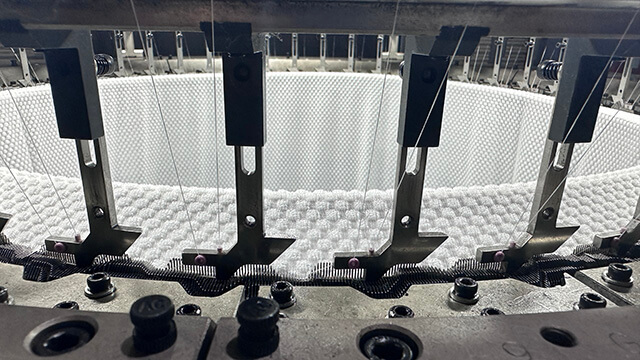

Loop starting point
Record the 1.5–5.0 mm sinker choice with the yarn and settings; it does not guarantee the same measured height after washing, raising or shearing.
 Price:
Negotiable
Price:
Negotiable
Model:
NET Weight:
Diameter:
18’’-52’’
Gauge:
7G-28G
Feeder:
36F-104F
Certification:
CE, ISO
Applicable Yarn Material:
RPM:
15-25rpm
Wooden Box Size:
2.25M*2.23M*2.25M
Place of Origin:
CHINA.
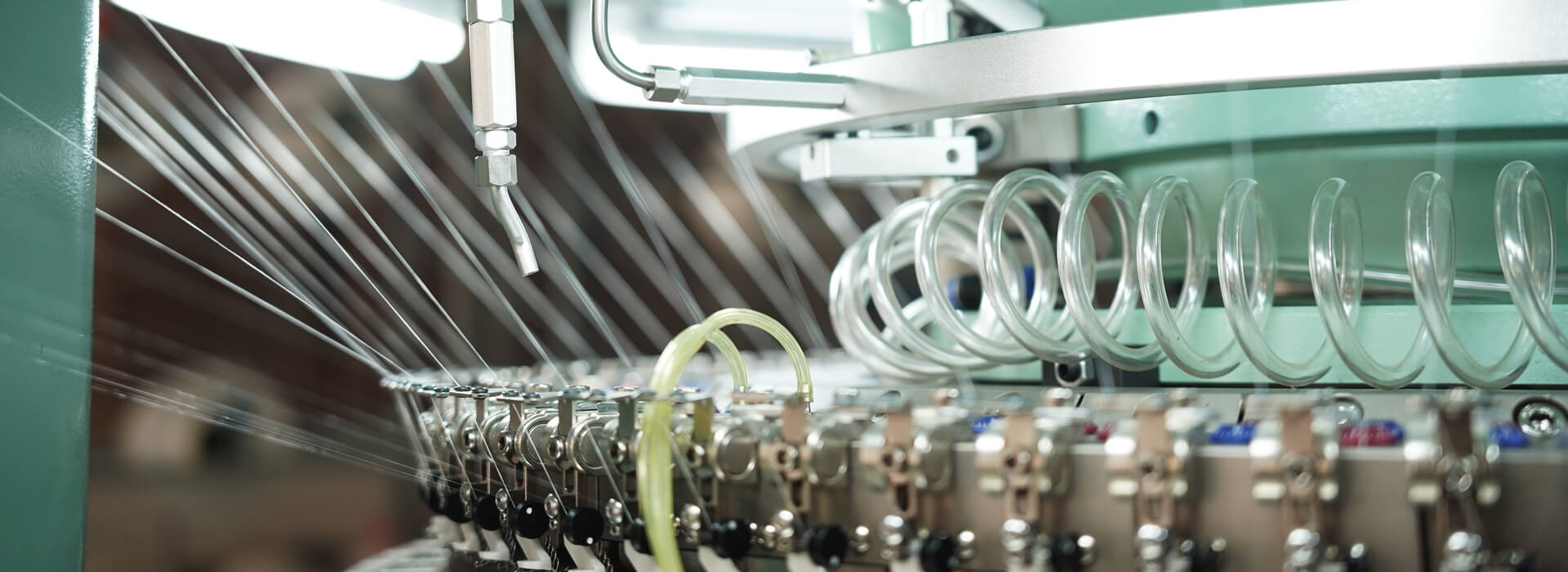
Terry jacquard fabric combines a patterned structure with a controlled loop surface. The first sample should define which side carries the loop, the target loop height, ground coverage, yarn allocation and the finishing route. The archived Kunyuan record lists TM/PM, 18–52 inch diameter, 7G–28G, 36F–104F for XF-TM and 28F–84F for XF-PM. It also records optional loop sinkers from 1.5 mm to 5.0 mm and knit, tuck and miss cam options.
These ranges are broader than the computerized terry-jacquard record on ID 8. The archived page does not establish that every TM/PM configuration uses the same computerized controller, so the buyer should ask exactly how jacquard selection is performed and what pattern/change parts are included. This prevents two related product names from being treated as interchangeable.
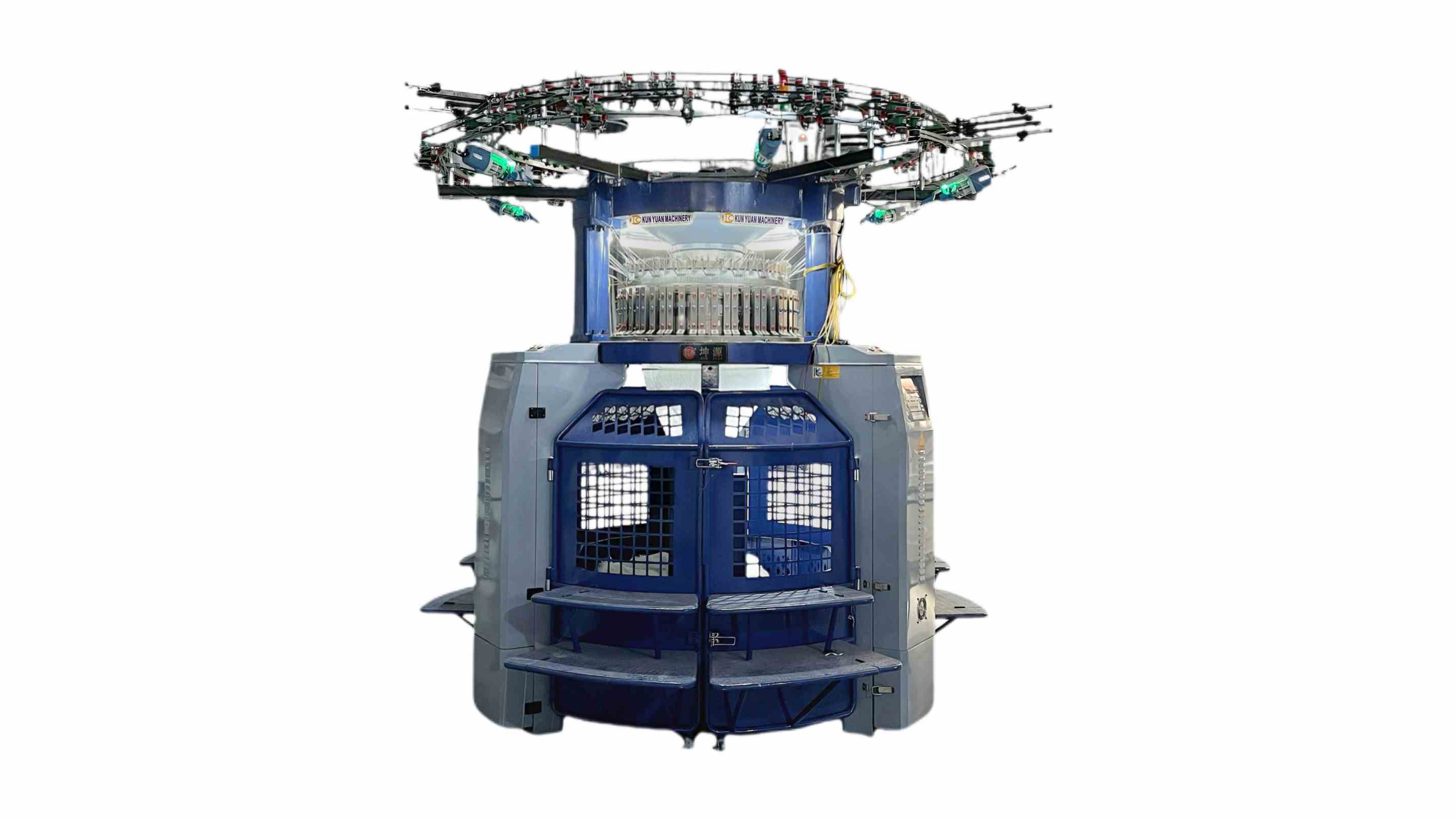
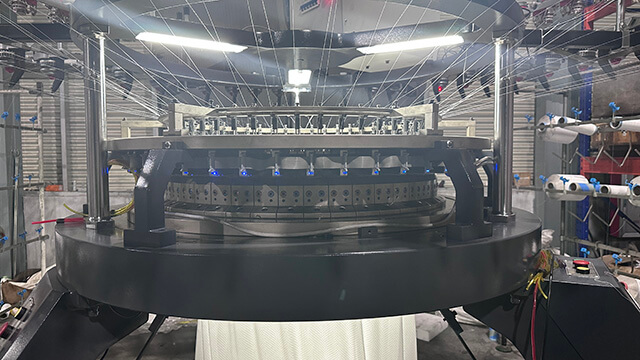
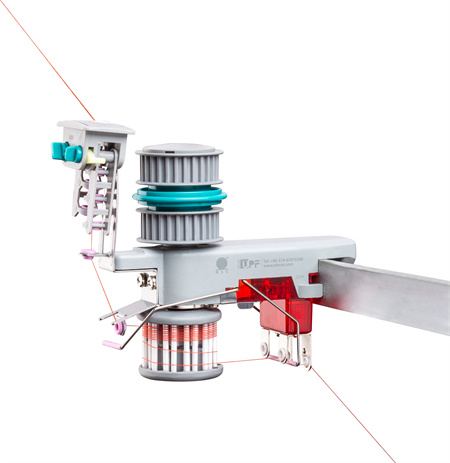
The sinker choice influences the loop that leaves the knitting zone, but it does not by itself guarantee the finished pile height. Yarn shrinkage, tension, take-down and later washing, raising or shearing can change the surface. A 1.5 mm option and a 5.0 mm option therefore need separate fabric trials with the intended yarn and finish.
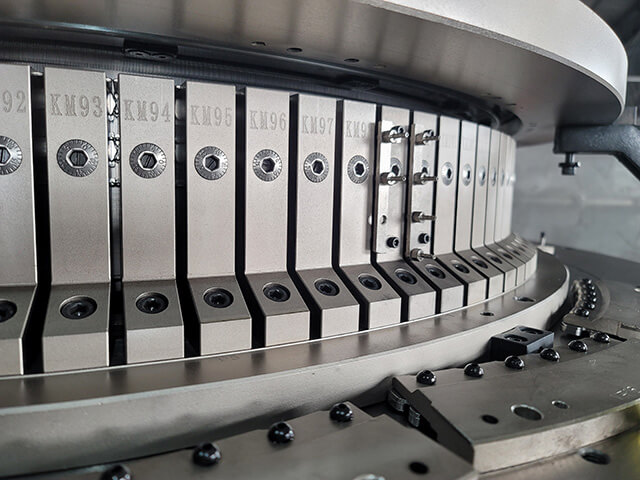
Knit, tuck and miss cams add structural choices. Ask Kunyuan to mark which cams are standard, which are optional and how they correspond to the submitted fabric. For TM and PM, request a configuration diagram showing ground/pile yarn positions, feeder count and the selected loop sinker.
| Point to confirm | Why it matters | Document/sample |
|---|---|---|
| TM or PM arrangement | Identifies the offered terry route and feeder family | Marked configuration drawing |
| Loop sinker length | Sets a knitting starting point for loop geometry | 1.5–5.0 mm selection tied to sample |
| Knit/tuck/miss cams | Determines available structures and change work | Standard/optional cam list |
| Ground and pile yarns | Controls backing, surface and processing response | Yarn allocation and lot sheet |
| Finishing process | Can move loop height, hand, width and weight | Paired greige and finished fabric |
Run the planned ground and pile yarns, label the TM/PM setup, sinker, cam selection, speed and take-down, and take samples across the roll. On greige fabric, inspect missed loops, uneven loop height, ground coverage, needle lines and repeated feeder marks. Measure width and weight at agreed positions.
Process part of the same sample through the real finishing route. Then compare loop openness, surface direction, flattened areas, pattern definition and dimensional change. If shearing or raising is involved, name the process and acceptance method; the knitting machine cannot be credited with the final surface without that downstream evidence.
Store the cam and sinker set used for each approved construction. After a change, record the parts, yarn path and first accepted roll rather than relying on operator memory. Watch pile-yarn delivery, stop motions, lint, sinker condition and take-down during production. A defect that repeats with the pattern may have a selection/cam cause; a fixed circumference line points to a mechanical location.
The old speed guide lists 15–25 RPM for examples such as 24, 30 and 34 inch machines. Do not combine that guide with an unrelated feeder or gauge. Confirm the exact offered configuration and reduce speed if loop control or pattern definition begins to move. Isolate the machine before sinker, cam or needle work.
This record centres on TM/PM, loop-sinker and cam options. Ask whether the offered model includes computerized selection, which controller it uses and which pattern files are supported rather than assuming the ID 8 specification applies.
No. It is a machine option affecting loop formation. Yarn, settings, take-down and finishing can change the measured surface, so approve it from a labelled finished sample.
State TM or PM, diameter and gauge first. The archive records 36F–104F for XF-TM and 28F–84F for XF-PM; Kunyuan should identify the exact count on the offered model.
Keep the setup drawing, sinker/cam list, ground and pile yarn lots, speed, take-down, stop record and paired greige/finished samples from the same run.
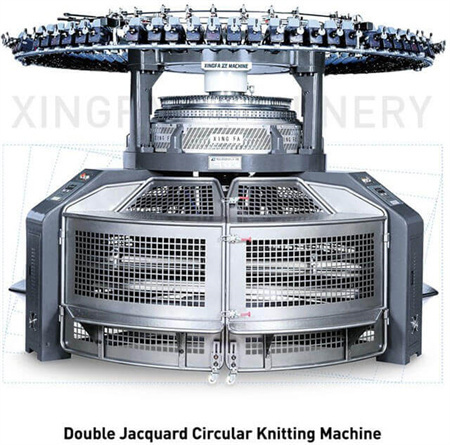
Terry Jacquard Circular Knitting Machine is best compared through its TM/PM arrangement, loop sinker, cam choices and finishing evidence. The 18–52 inch, 7G–28G and feeder ranges describe the archived scope; a clearly identified selection system and paired greige/finished trial establish what the proposed machine can produce.
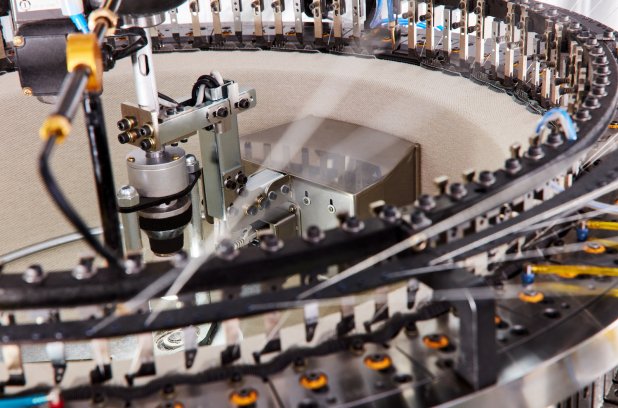
The ordered route combines ground and pile yarn feeding with a selected loop sinker and cam set. Its result must be checked before and after the named finishing process.
Record the 1.5–5.0 mm sinker choice with the yarn and settings; it does not guarantee the same measured height after washing, raising or shearing.
List standard and optional knit, tuck and miss cams and connect each change set to its own labelled fabric construction.
Keep the arrangement drawing and feeder family with the offer so the broad archived ranges are not mixed into an impossible single configuration.

 Tel: +86-13859034518
 Email: info@kunyuanmachine.com
 MP/WhatsApp: +86-13859034518
 Manufacturer Address:Bacuo Village, Yonghe Town, Jinjiang City, Fujian Province




Archived feedback emphasized jacquard definition, terry fabric consistency and smooth operation.2025-07-11

Compiled archived feedback for Terry Jacquard Circular Knitting Machine highlights terry loop quality, jacquard definition and repeatable running; open the full summary for source notes and model-specific buyer checks.2026-08-20