


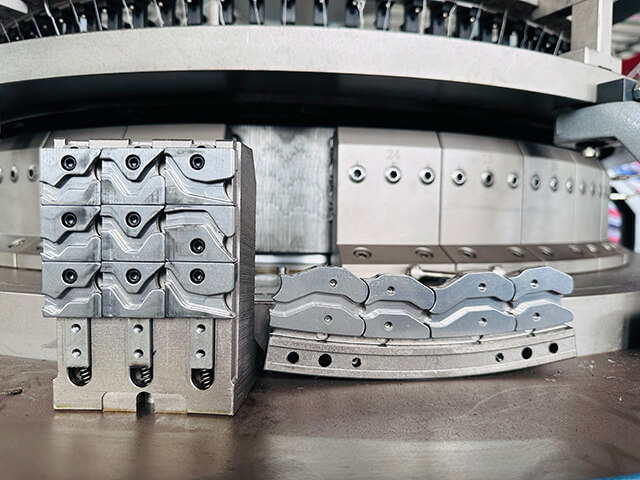
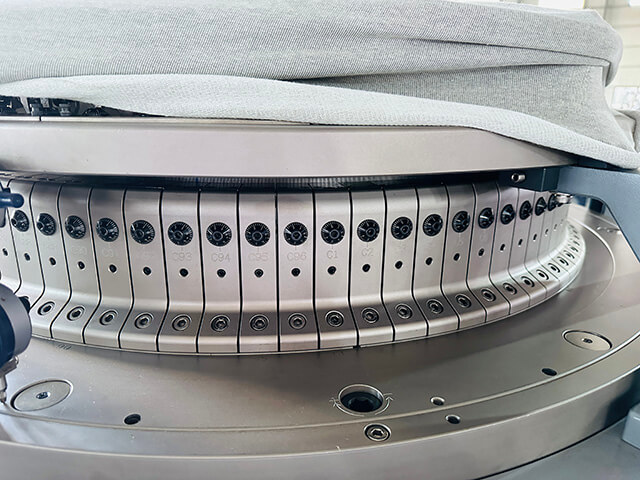

Three yarn duties
Label each yarn position and verify face coverage, tie anchoring and fleece-loop formation rather than adjusting all feeds as if they were interchangeable.
 Price:
Negotiable
Price:
Negotiable
Model:
NET Weight:
Diameter:
30’’
Gauge:
8G-28G
Feeder:
90F
Certification:
CE, ISO
Applicable Yarn Material:
Cotton, Chemical fiber, blended yarn, silk and wool etc.
RPM:
20-30RPM
Wooden Box Size:
2.7M*2.3M*2.5M
Place of Origin:
CHINA.
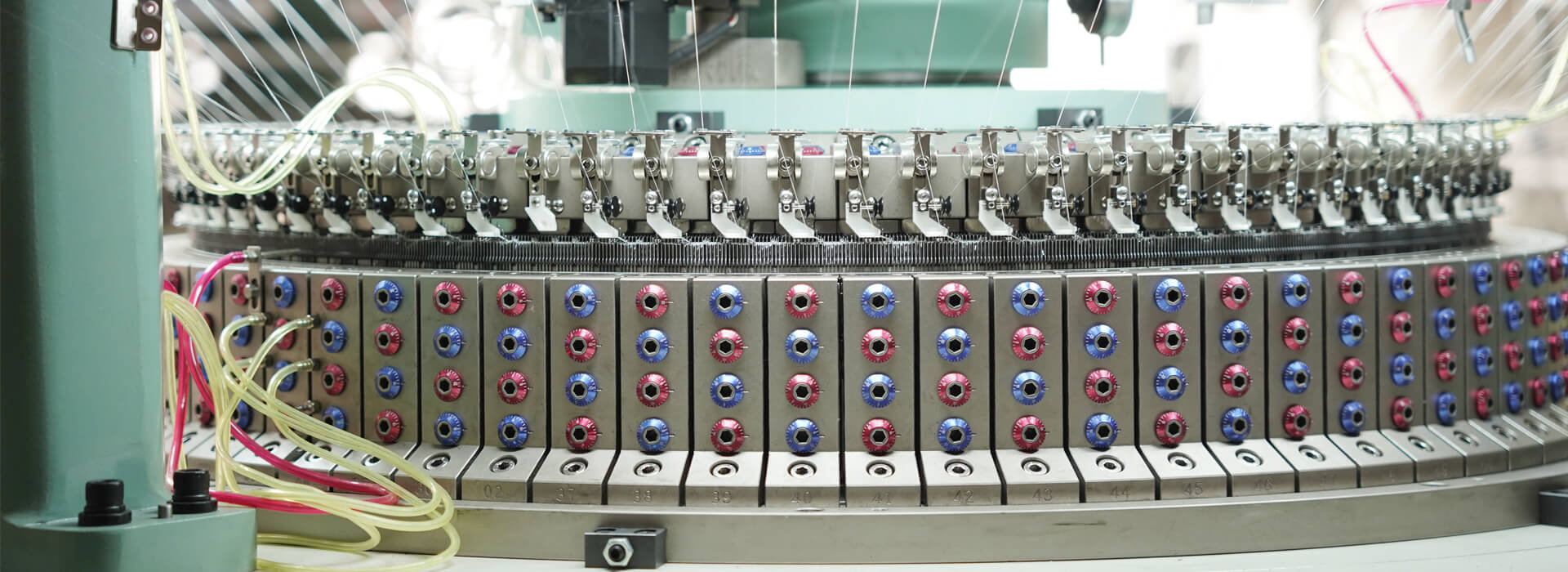
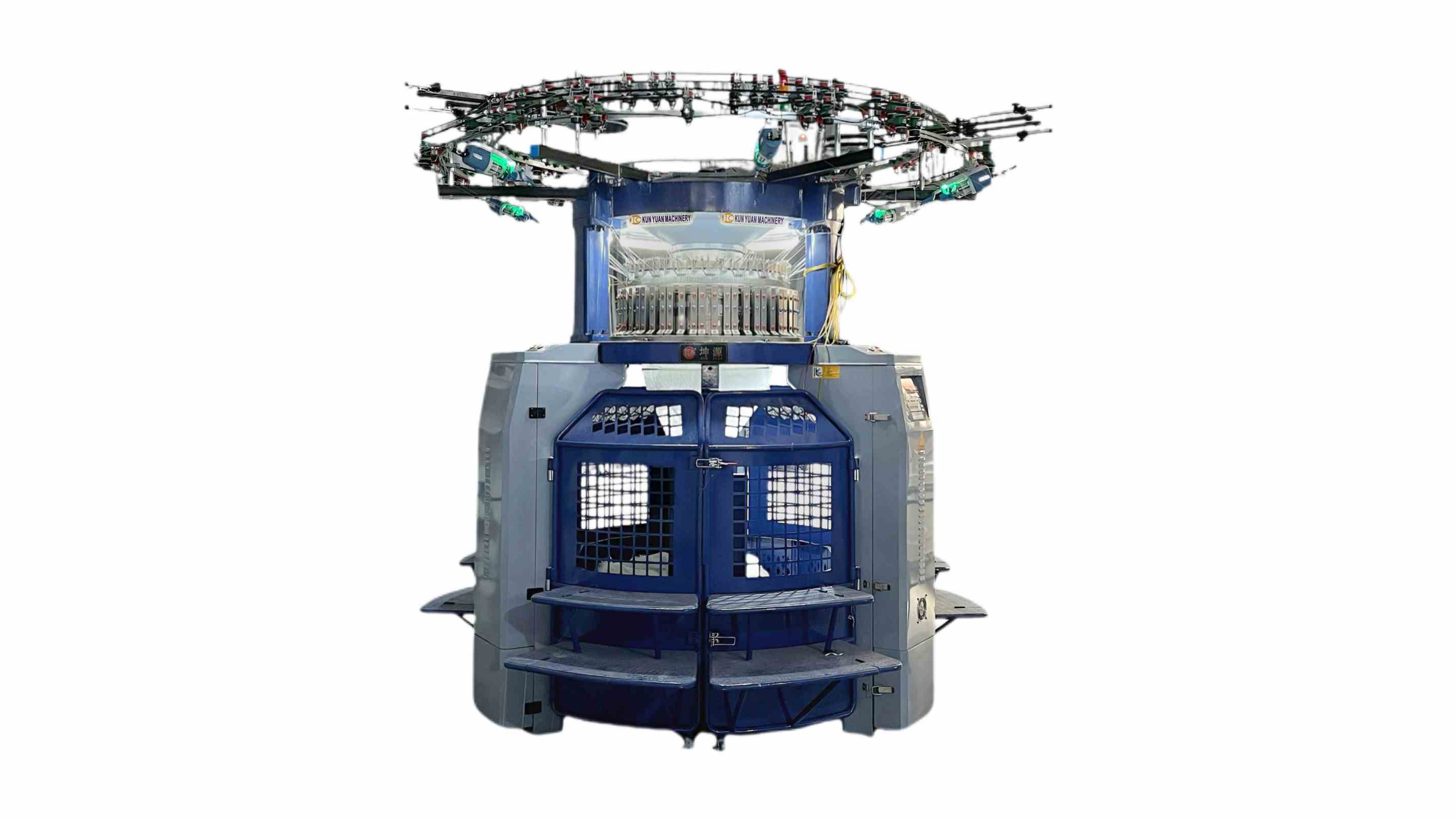
Three-thread fleece is not one yarn repeated three times. The face yarn sets the visible front, the tie yarn anchors the structure, and the fleece yarn creates the loop that may later be raised or brushed. The old Kunyuan record identifies model FL, a 30 inch diameter, 8G–28G gauge and 90F feeder reference. It also lists 32–36 inch examples and reference combinations such as 20G and 26G with different yarn counts and GSM. These are useful archive facts, not a promise that every yarn recipe will run at the same speed or produce the same hand.
Use this machine when the order is built around sweatshirt, hoodie, sportswear, babywear or loungewear fleece and the finishing route is known. If the buyer only has a vague “soft fabric” target, the correct first step is a fabric brief: face appearance, loop side, target weight, finished width, stretch, raising/brushing process and acceptable pilling or shedding level.
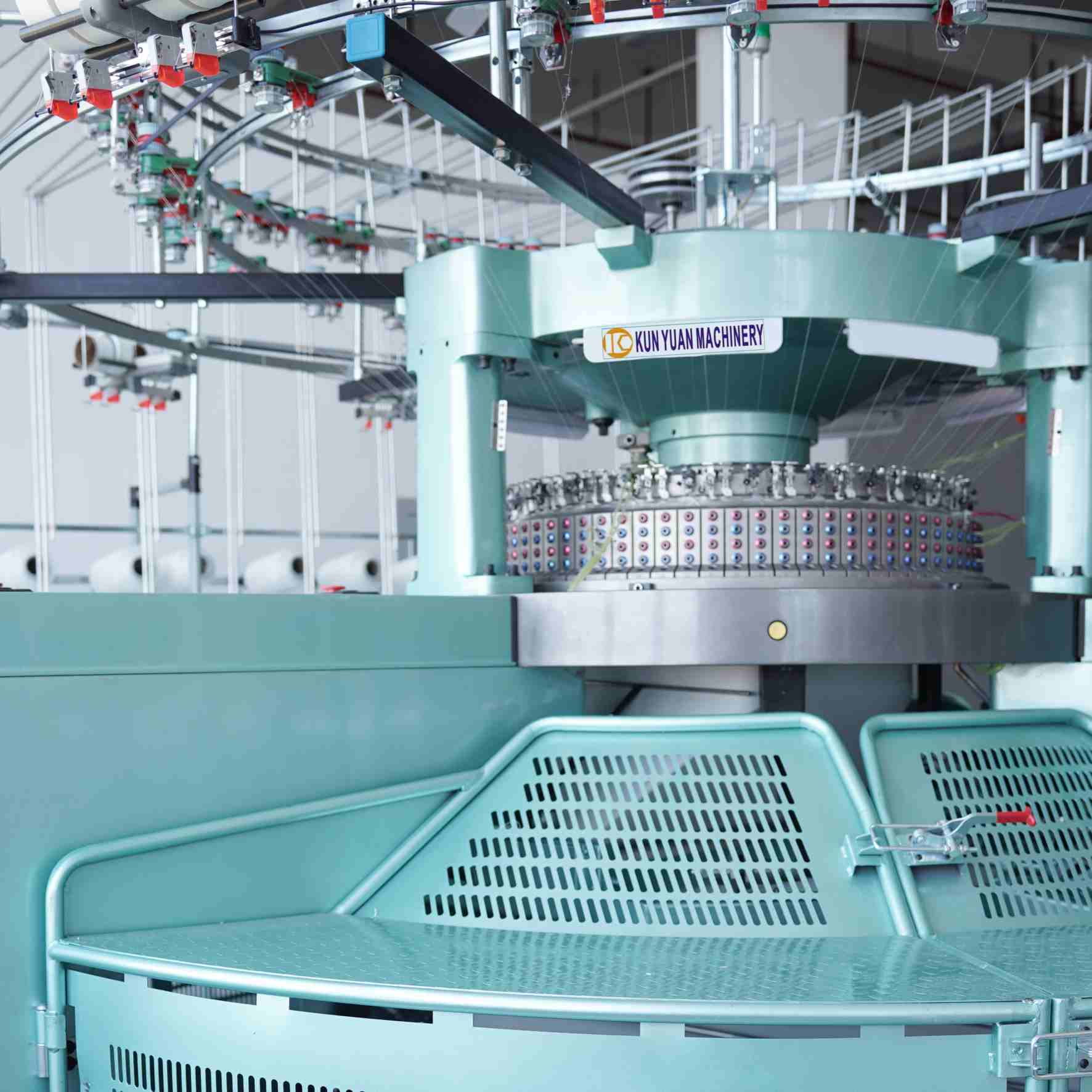

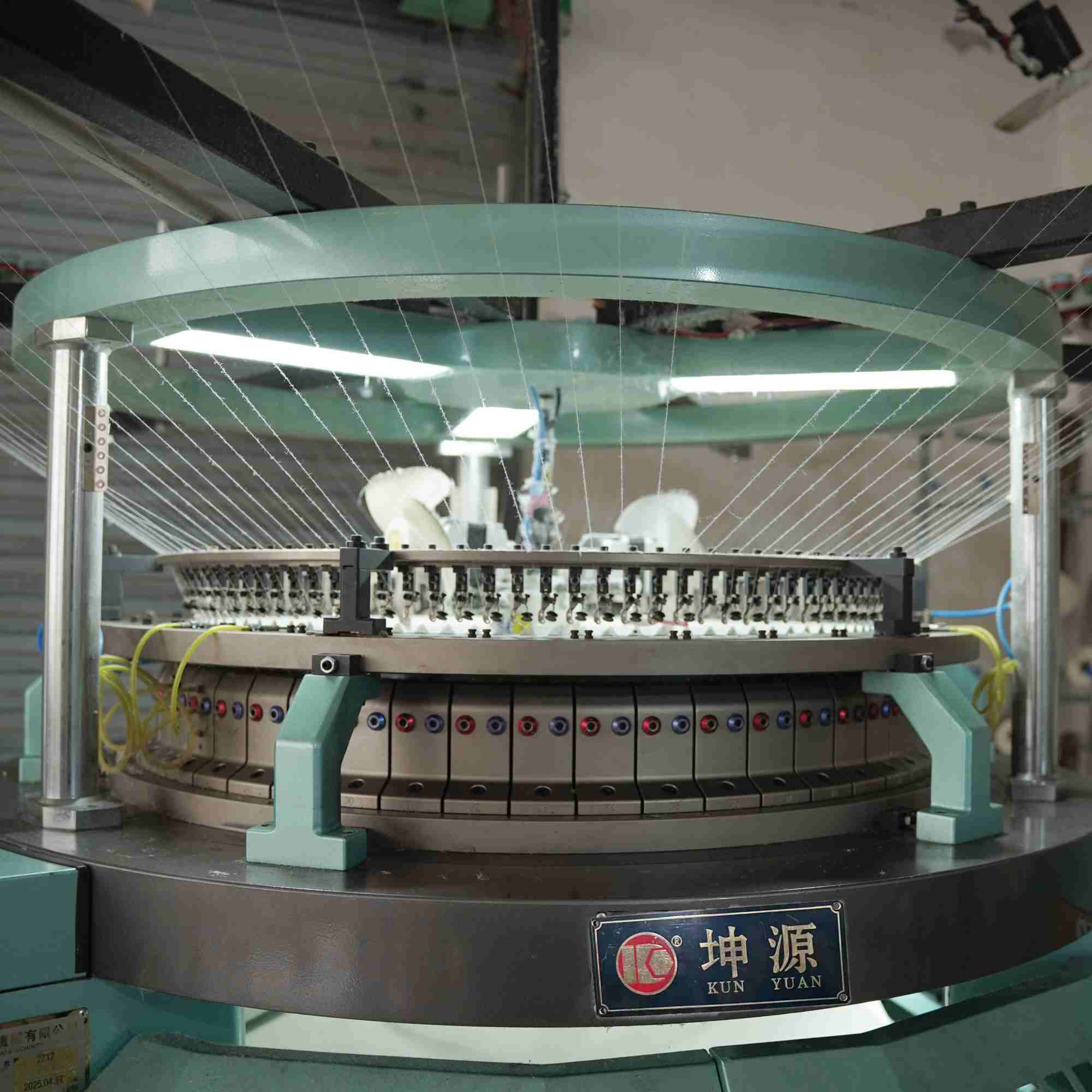
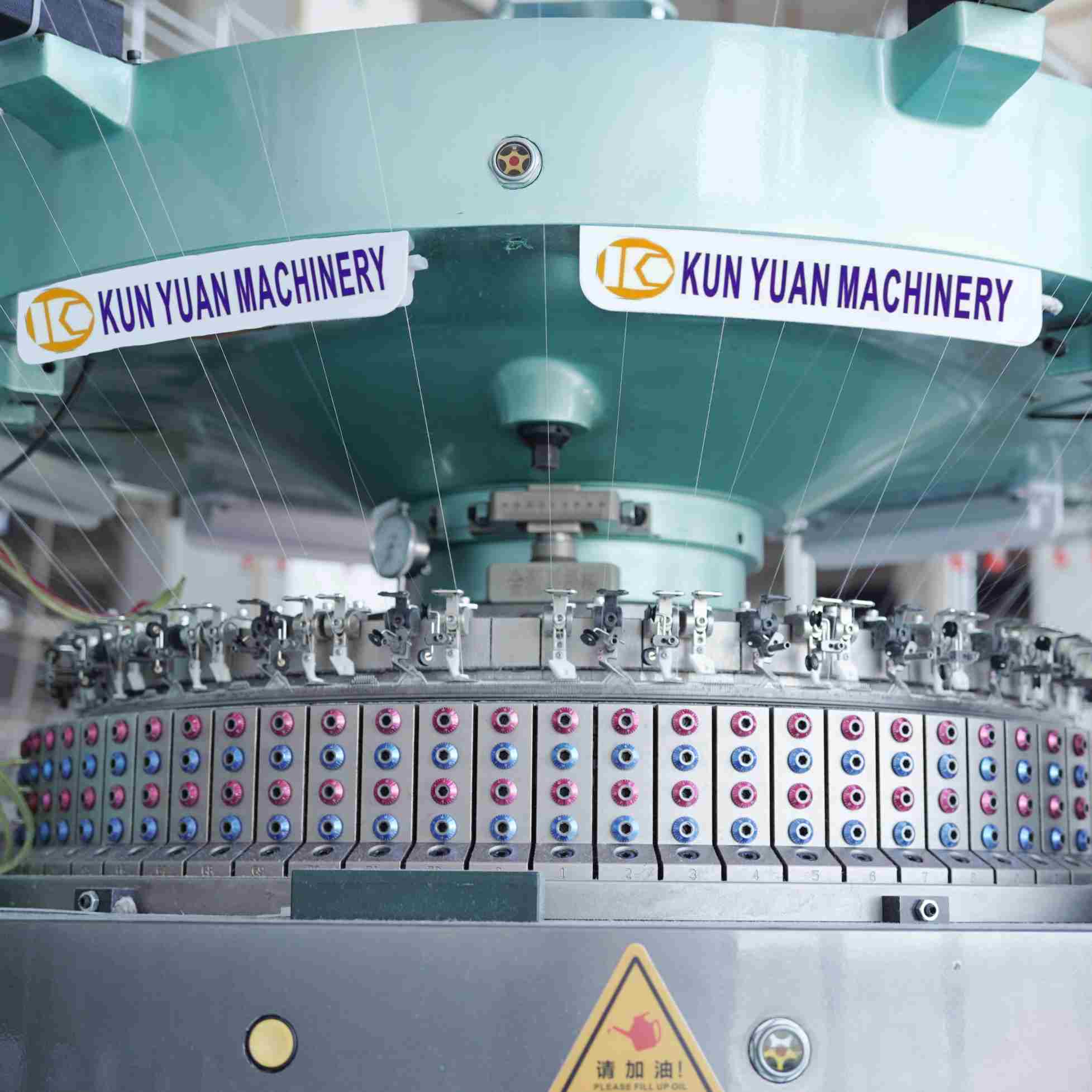
The circular knitting zone brings the three yarn paths together. The relationship between loop length, ground coverage and take-down determines how much material is available for raising. A setting that looks acceptable in greige can change after brushing, compaction or dyeing. That is why the trial must keep greige and finished samples together.
The archived guide gives 20–30 RPM as a reference range for some diameters and gauges. It also records 265–320 g/m² examples at 20G and 200–290 g/m² examples at 26G. Treat these numbers as starting points only; the exact yarn, machine diameter, stitch setting and finishing route must be written beside any target GSM.
| Fleece decision | Why it changes the fabric | Evidence to attach |
|---|---|---|
| Face, tie and fleece yarns | Each path affects appearance, anchoring and raising potential | Yarn counts/composition and allocation sheet |
| Gauge and diameter | Changes loop geometry, width and weight range | Proposed 20G/26G or other setup with sample |
| Feeder plan | 90F is recorded for FL; other diameters may use different counts | Exact feeder map and change parts |
| Raising or brushing route | Surface height and hand are created after knitting | Named finishing route and before/after samples |
| Take-down and tension | Controls roll build and can crush or distort loops | Settings, roll record and width measurements |
Run production yarn for the face, tie and fleece positions. Label the yarn lot, gauge, diameter, feeder setup, stitch settings, speed and take-down. Take samples before finishing and after the actual raising/brushing process. Compare surface coverage, loop anchoring, finished weight, width, skew, stretch and dimensional response. Rub or handle the surface using the mill’s normal inspection method and record loose fiber or early pilling as an open quality item.
Look across the roll, not just at one attractive section. A feeder-related stripe, a missing loop or a change in fleece height can become more obvious after finishing. If the buyer plans more than one GSM or width, run each recipe separately and keep the settings with its sample. Approval should name the accepted finish; “fleece quality” without a finishing condition is not a measurable standard.
At the start of a shift, inspect the three yarn paths, yarn tension, sinker/cam area, stop motions and take-down. Keep lint and fiber from accumulating around the knitting zone; follow the supplied cleaning interval and isolate the machine before service. A change in loop formation, a rough face, or a roll that builds unevenly should be logged before the operator adjusts speed.
When a defect repeats at one circumference position, trace it to the corresponding feeder, needle, sinker or cam location. When defects are random, check yarn preparation, knots, tension and handling. Store the accepted recipe, greige sample, finished sample and finishing notes together so the next shift does not “tune by feel.”
The fleece position is the yarn path intended to form the loop that can be raised or brushed. Confirm the face, tie and fleece allocation in the technical file and label each yarn on the trial sheet.
No. It is a recorded reference example. GSM depends on yarn, stitch length, diameter, take-down and finishing. Approve the target from a labelled greige and finished sample made with the buyer’s yarn.
Not automatically. State who supplies or controls the raising/brushing step, what finish is expected, and which before/after sample will be used for acceptance. The knitting machine trial alone cannot prove the final brushed surface.
Run long enough to capture stops and gradual drift, retain the yarn lots and settings, and inspect the face, tie and fleece paths separately. Keep a defect map and compare the finished sample after the planned process.
Three-Thread Fleece Circular Knitting Machine is a coordinated yarn-and-finishing process. The FL record—30 inch, 8G–28G and 90F—helps define the starting configuration, while the face/tie/fleece allocation, greige-to-finished measurements and surface inspection decide whether the offer fits the buyer’s fleece program. A careful trial protects both fabric quality and the finishing investment that follows knitting.
Face, tie and fleece yarns have different duties. Their stitch settings, loop formation and take-down need to be recorded together with the finishing route that creates the final surface.
Label each yarn position and verify face coverage, tie anchoring and fleece-loop formation rather than adjusting all feeds as if they were interchangeable.
Retain paired samples before and after raising or brushing, then compare weight, width, surface coverage, loose fibre and dimensional response.
Inspect yarn paths, sinker and cam condition, stop causes and lint accumulation when loop height or surface uniformity begins to move.
Compare Terry Jacquard Circular Knitting Machine TM/PM configurations, loop sinkers, cam options and greige-to-finished terry acceptance checks....
Compare Single Jersey Circular Knitting Machine options by yarn, gauge, feeder count and finishing route, with a practical trial checklist for fabric mills....
A practical buying guide to Body Size Circular Knitting Machine programs, recorded SBD/DBD ranges, garment-size trials, and the checks that protect seamless apparel quality....
Engineer rib and elastic double-knit fabrics through cylinder-dial balance, yarn and elastane mapping, relaxed recovery tests, conversions and baseline restoration....
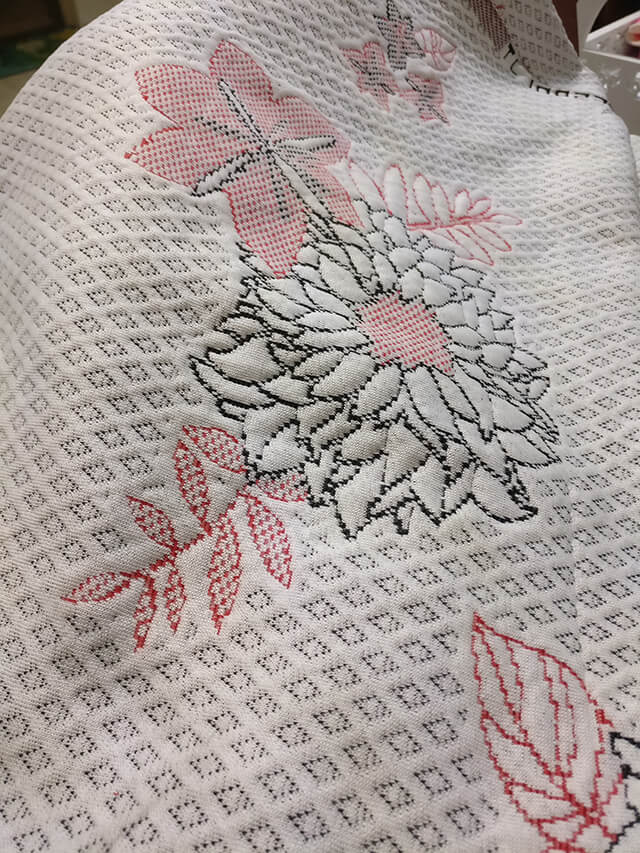
Develop double-jacquard patterned fabric by mapping face and back structures, needle selection, yarn allocation, difficult motif zones and repeat-order evidence....

 Tel: +86-13859034518
 Email: info@kunyuanmachine.com
 MP/WhatsApp: +86-13859034518
 Manufacturer Address:Bacuo Village, Yonghe Town, Jinjiang City, Fujian Province




Compiled archived feedback for Three Thread Fleece Circular Knitting Machine highlights fleece thickness, stable yarn feeding and durable construction; open the full summary for source notes and model-specific buyer checks.2026-08-20

Archived feedback focused on fleece thickness, warmth, stable operation and durable construction.2025-07-11