Open-width handling is valuable only when its slit line and roll condition improve the next process
Opening a circular-knit tube changes the handling route; it does not automatically improve every product. Compare tubular and integrated slitting options through usable width, crease risk, edge behavior and downstream acceptance.
Draw the route from knitting to the next operation. State whether dyeing, washing, compacting, printing, inspection, spreading or cutting expects a tube or open roll. Record technical face, structure, yarns, greige and finished dimensions, intended slit location, edge allowance, roll diameter, winding direction and acceptable tension profile. Include product features that make one wale or design zone unsuitable for cutting.
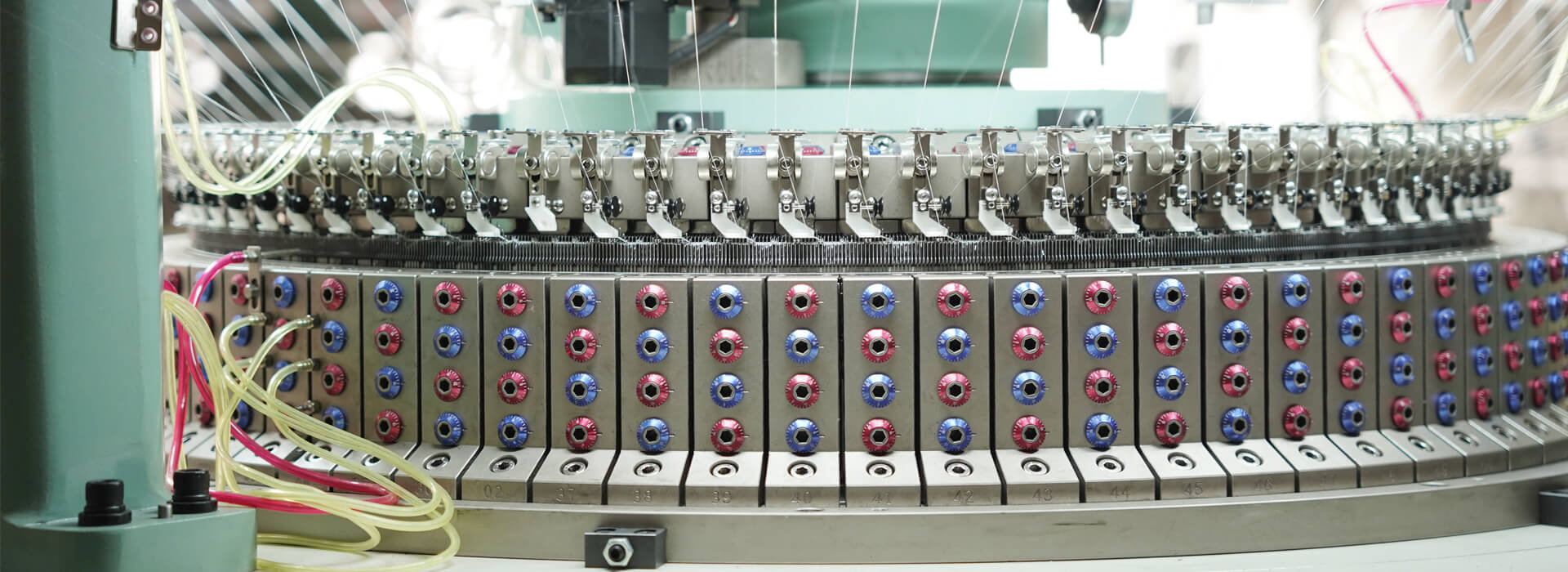
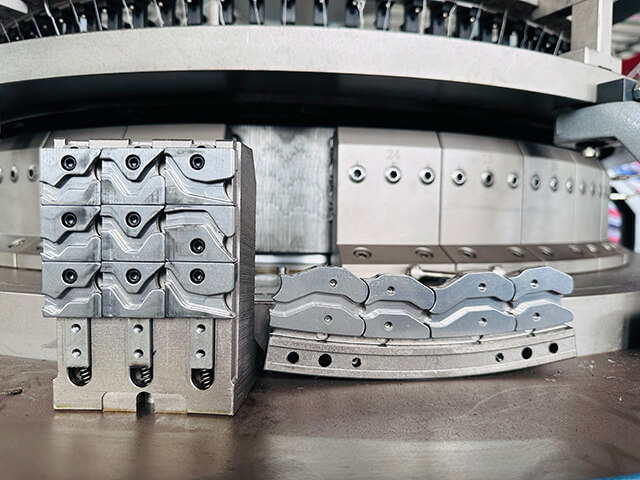
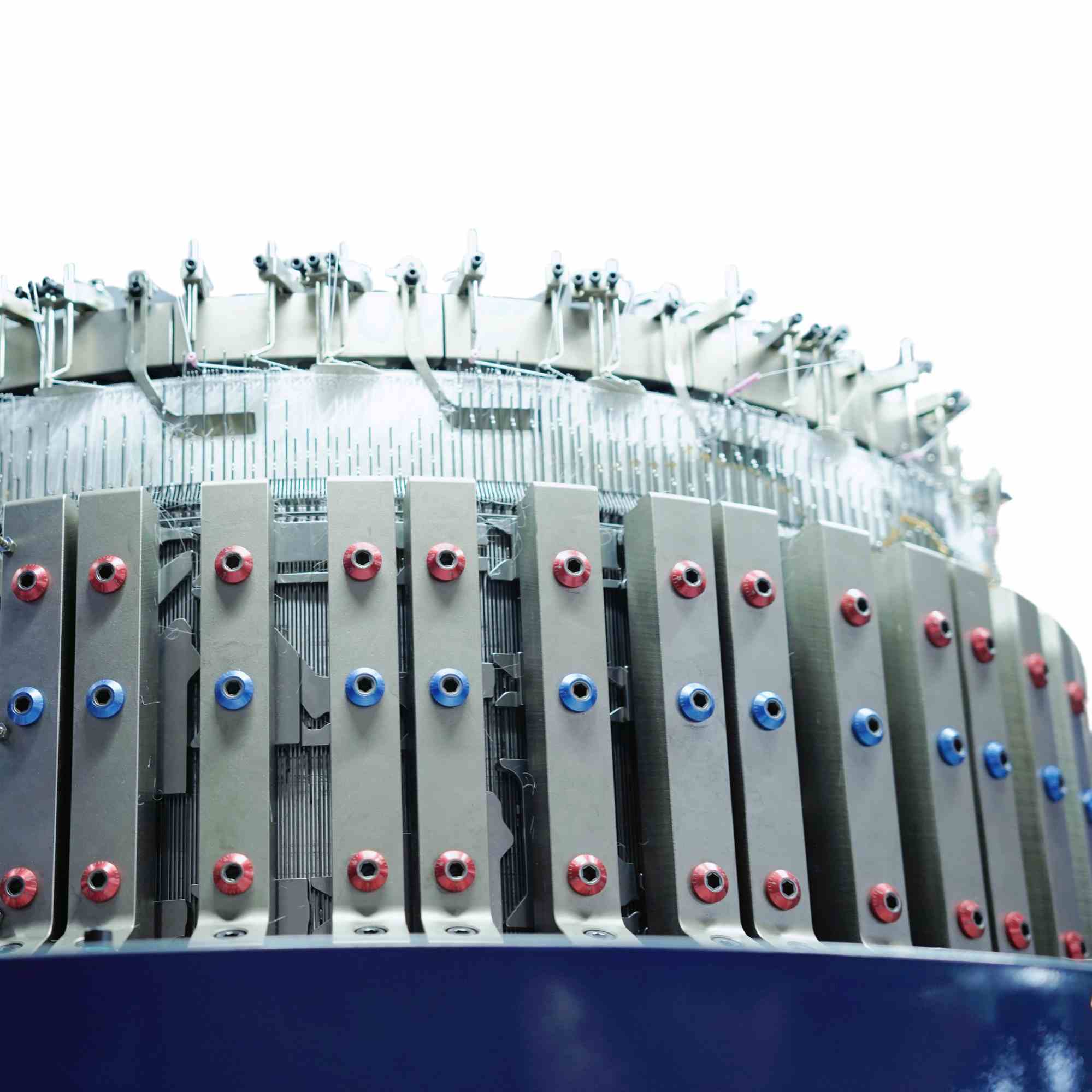
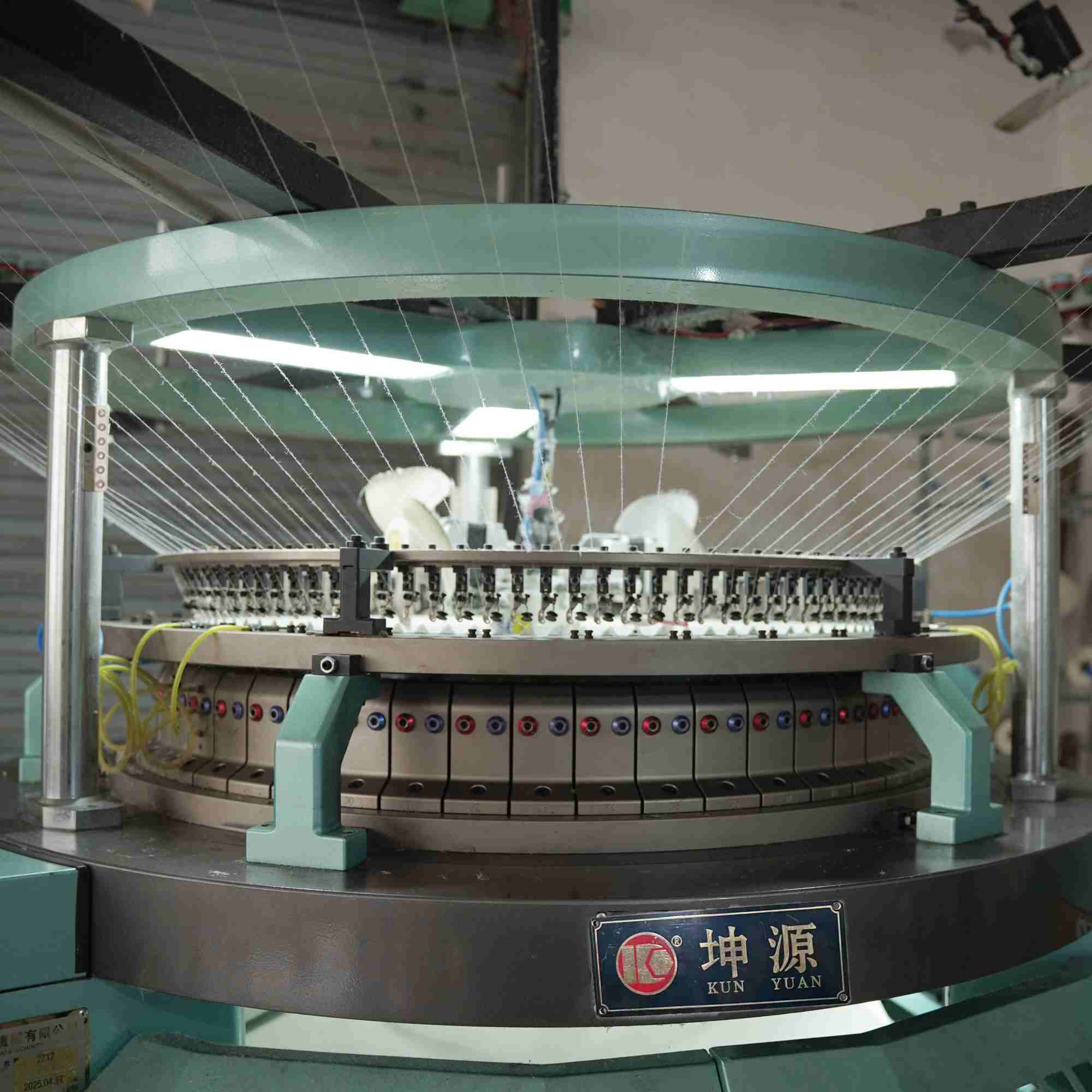
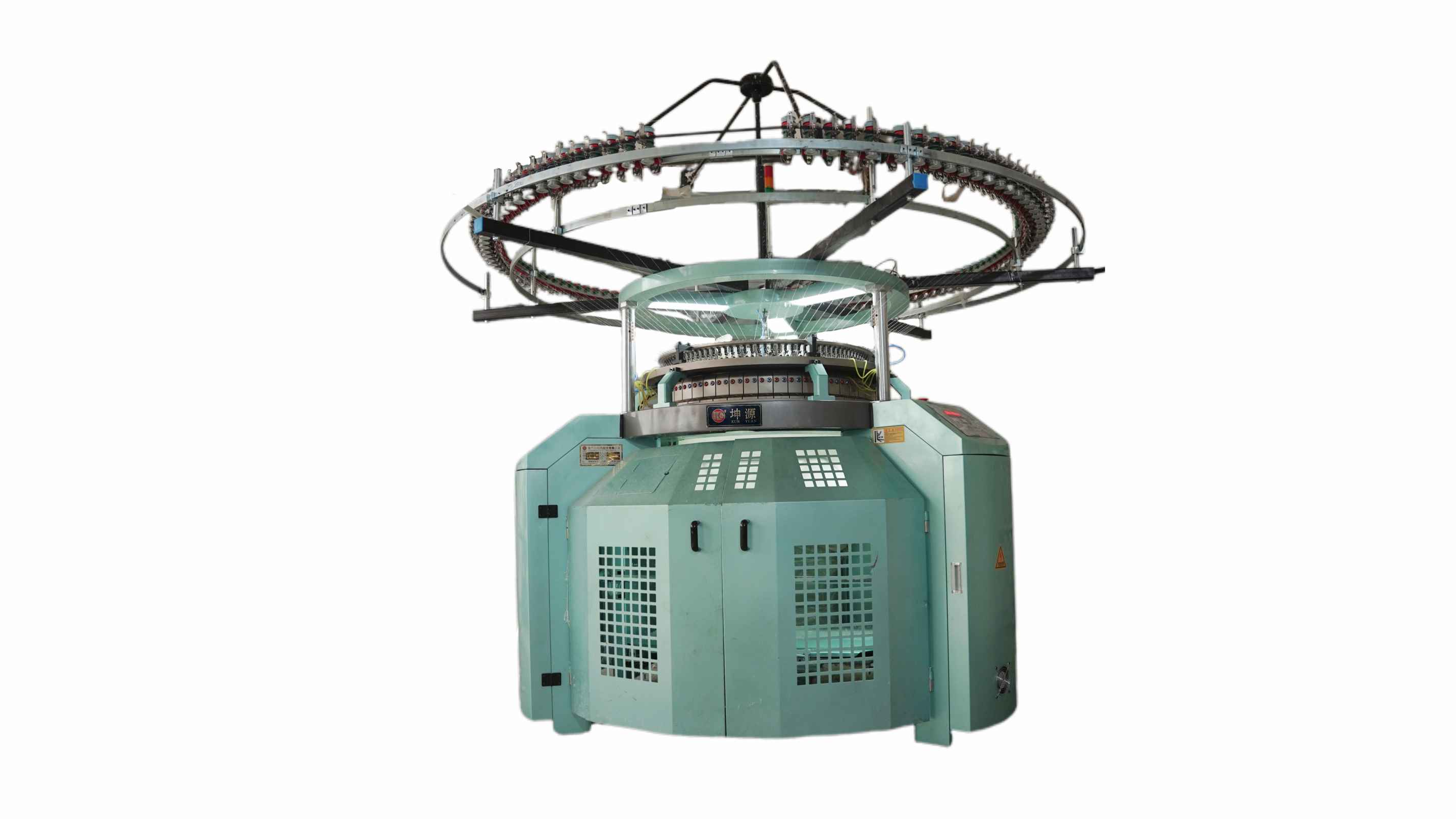
Official portfolios show distinct take-down and handling arrangements across circular-machine families. Those pages establish that tubular and open-width configurations are engineering choices, but do not prove a universal economic winner or one slitting setup. The exact offered build and a full-width buyer-fabric trial must show whether opening preserves loop quality and creates a roll the next process can use.
Route A: retain the tube when circumference continuity protects the process
Tubular collection keeps the knitted circumference intact and avoids choosing a slit wale at the machine. It can suit routes processing in tube form or postponing opening to a later controlled stage. Record how the tube is flattened, wound, stored and presented downstream. Inspect fold lines, internal alignment, roll pressure and circumferential distortion over enough length.
Price the later opening operation where required, including labor, equipment, edge allowance, inspection and waste. A deferred slit can give the next process more control over location, but can add handling and hide defects inside the tube. Use the actual product route and facility capability rather than assuming tubular output is always simpler.
Keep later opening and tube-fold evidence visible in Route A.
Route B: slit and spread at the machine when downstream control justifies it
An integrated open-width route adds slit-line control, spreading, edge guidance and winding. Mark the designated cut location in the structure and keep it clear of motifs or functional zones that must survive. Record how fabric transitions from tube to web, how edges are supported and which roll face and direction the next operation requires.
Inspect left, center and right for width, density, surface and tension differences. Watch for wandering cuts, stretched edges, curl, trapped folds, diagonal distortion or inconsistent roll hardness. The open roll should improve inspection or downstream feeding without converting good knitted fabric into edge loss. A clean center panel is not enough evidence.
Treat slit location, spreading and edge control as one Route B system.
Compare both routes through dyeing, printing, compacting, inspection and cutting
Ask downstream owners to define preferred input form, usable-width tolerance, roll size, winding direction, edge allowance, tension sensitivity and inspection method. Printing or automatic cutting may benefit from a stable web, while another dyeing line may be designed around tubes. Avoid declaring open width superior without facility-specific evidence.
Send labelled material from both routes through intended processing under comparable conditions. Measure width, skew or bow where applicable, surface, dimensional response, edge loss, setup time and rejected length. Include additional slitting, sewing, spreading or rewinding. End at the same finished or cut-ready condition rather than two unlike greige rolls.
Release the chosen route with a full-roll map and repeatable handover
Run representative yarn through warm-up, stable production, a planned stop and restart. Mark events and inspect circumference before opening or full width after opening. Record slit wandering, edge condition, roll hardness, creases, width profile and accepted quantity at several positions. Keep held sections in the yield calculation.
Deliver the roll to the named next process and collect setup, feeding, inspection and waste feedback. Repeat after a style change or cleaning task. Freeze take-down and handling records, slit reference, roll specification and ownership. The decision is complete when another trained shift creates a downstream-acceptable roll without undocumented correction.
Let the next process accept the complete roll and usable width.
Tubular and open-width fabric route comparison
Decision point
Tubular route
Integrated open-width route
Common evidence
Fabric form
Circumference retained
Tube slit and spread
Structure and cut line
Handling risk
Folds and concealed inside face
Edges, curl and width profile
Full-roll map
Downstream work
Possible later opening
Immediate flat-web feeding
Equivalent trial
Acceptance
Tube and later-process yield
Usable flat width and edge yield
Repeated roll
Open-width circular knitting questions
Does open width eliminate all creases?
No. It may reduce tube-fold issues but introduce edge, curl, tension or winding defects.
Where should the tube be slit?
Choose a controlled structural location respecting motifs, functional zones, allowance and the next process.
Is open width always better for printing?
It can support flat-web work, but the printer's width, tension, roll and edge requirements must be tested.
How should usable width be measured?
Use the buyer's condition and record left-center-right behavior, edge exclusions, finish and roll position.
What proves the handling route?
A full marked roll should pass the named downstream operation and be repeated by production.
Conclusion
Open-width circular knitting should be chosen as a complete handling route, not an accessory. Tubular output protects circumference but may defer opening work; integrated slitting creates a flat roll but adds cut-line and edge obligations. A paired downstream trial and repeated full-roll acceptance show which route reduces real process loss.






 Tel: +86-13859034518
 Email: info@kunyuanmachine.com
 MP/WhatsApp: +86-13859034518
 Manufacturer Address:Bacuo Village, Yonghe Town, Jinjiang City, Fujian Province