Three-thread fleece is approved when three controlled yarn paths produce a stable ground and a finishable fleece back
The three yarn roles do different work in the structure. Their names, paths and knitting actions must remain separate from the finishing process that raises or brushes the fleece surface.
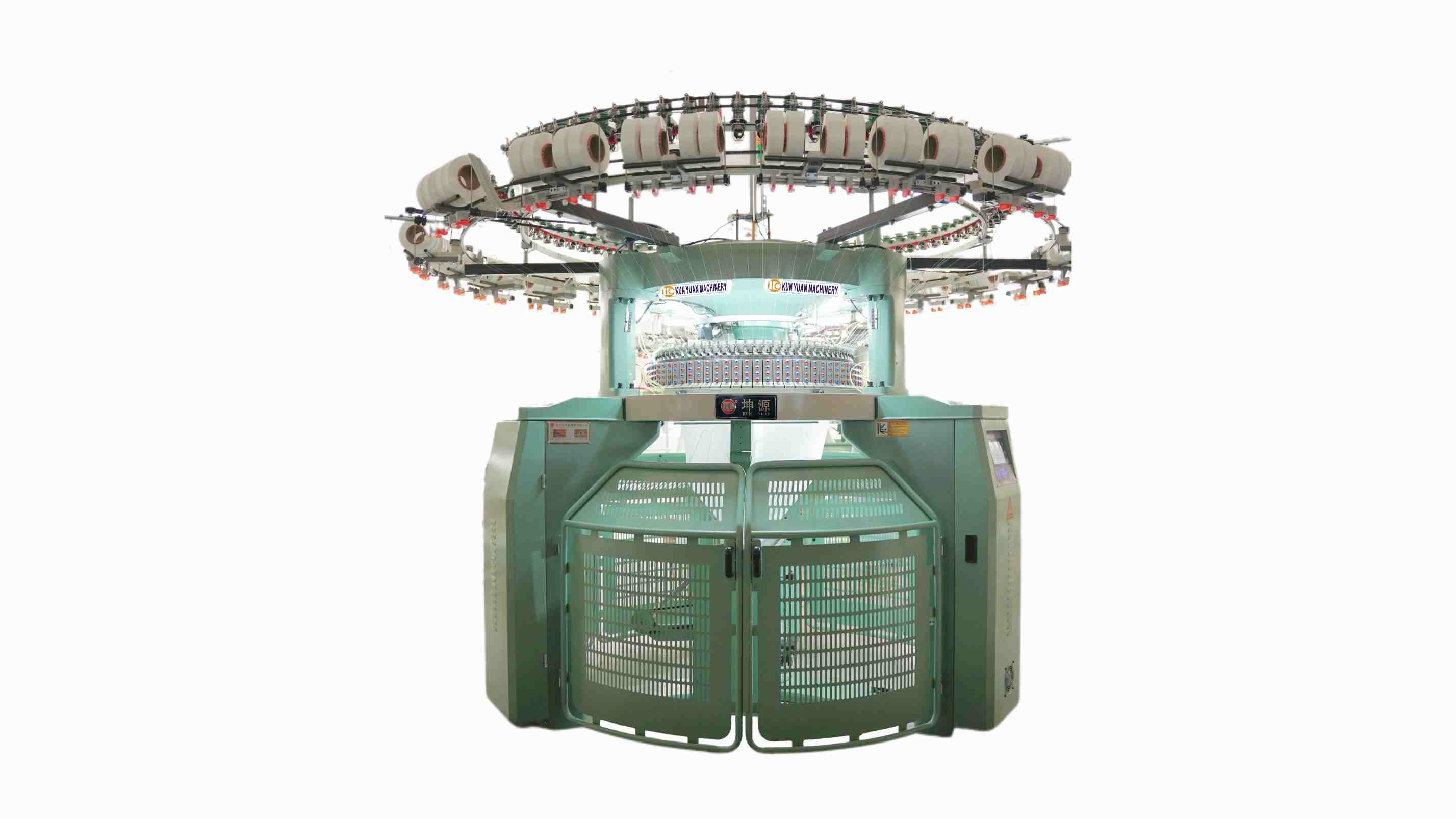
Mayer and Cie.'s official MBF 3.2 page describes ground, binding and fleece yarn roles for a named three-thread fleece machine, while its structure selector and Terrot's product range show that multiple machine models can serve three-thread fleece. These sources support the three-path framework and model-specific selection. They do not supply a universal threading diagram, yarn recipe or operating setting for another build.
Begin with the desired finished fabric: face appearance, back fleece effect, width, weight, stretch, warmth or handle target, dimensional limits, pilling or shedding requirement and intended garment. Then draw the delivered machine's own path map using its manual and supplier terminology. Mark the roll during knitting and carry the same coordinates through relaxation, raising, brushing, shearing or other agreed finishing. The application decision closes only when the face, tie and fleece functions remain stable together.
Assign ground, binding and fleece roles before discussing machine settings
Define the face or ground yarn that establishes the visible base, the binding or tie role that integrates the fleece component, and the fleece yarn intended for the back effect, using the exact terminology agreed with the supplier. Record fiber, count, twist or filament form, elasticity, finish and package build. If plating or color placement matters on the face, add a marked face-and-reverse sketch. Yarn substitutions require a separate boundary because withdrawal, loop formation and finishing response can change.
The fabric brief should state which side will be brushed or raised, whether selected areas remain unbrushed, and what the finished customer will inspect. Include weight, usable width, dimensional response, surface uniformity, shedding and pilling limits where applicable. Avoid choosing a machine from the phrase three thread alone. The target depends on how the offered configuration guides and knits the three roles and how the chosen yarn set responds later.
Follow every package to the knitting point and preserve plating evidence
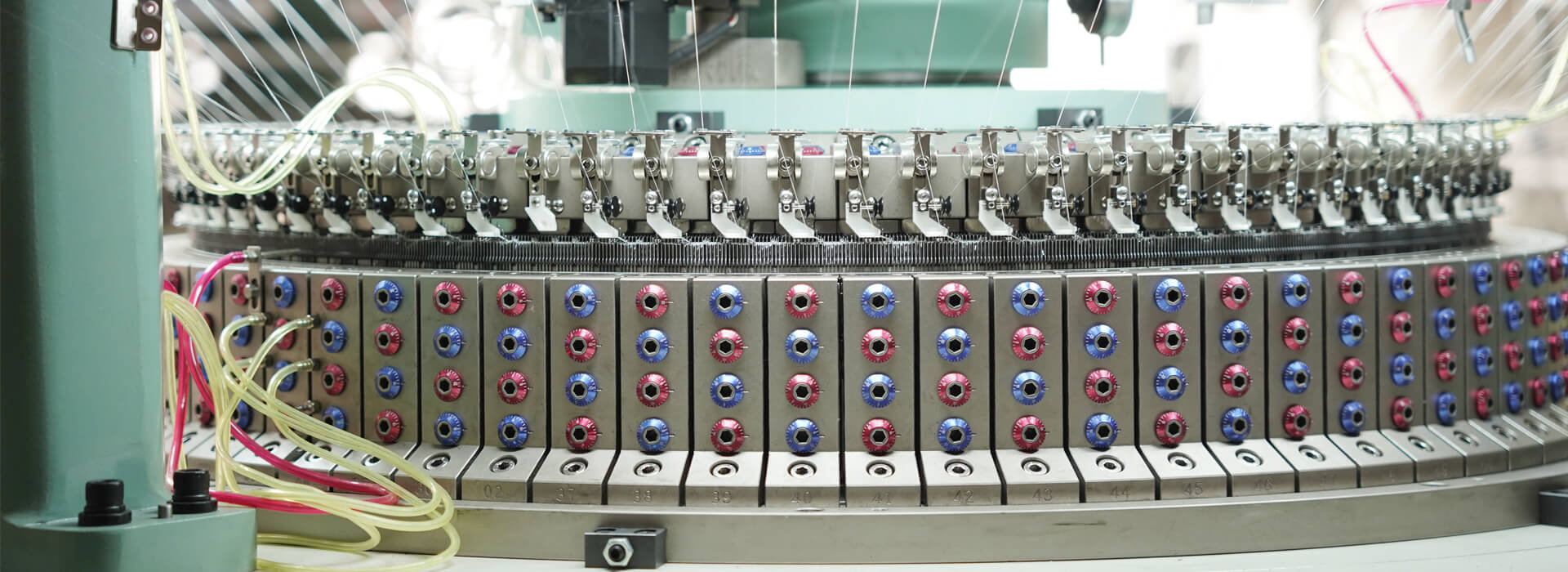
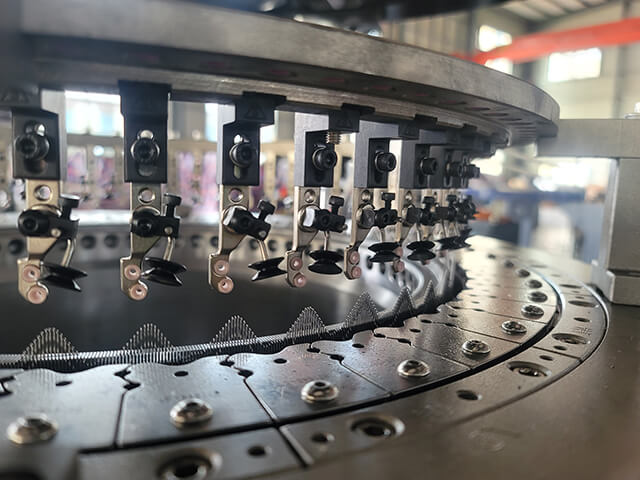
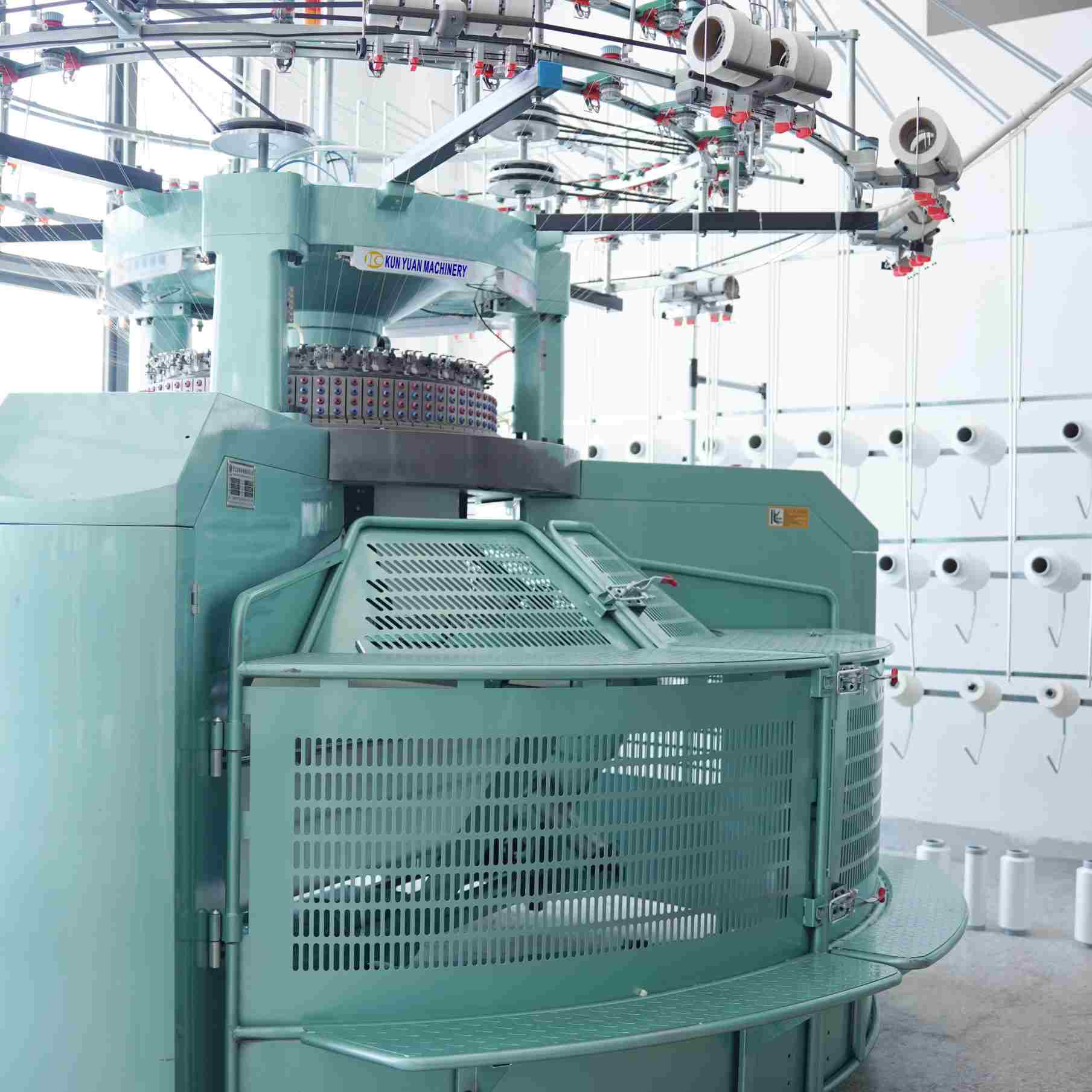
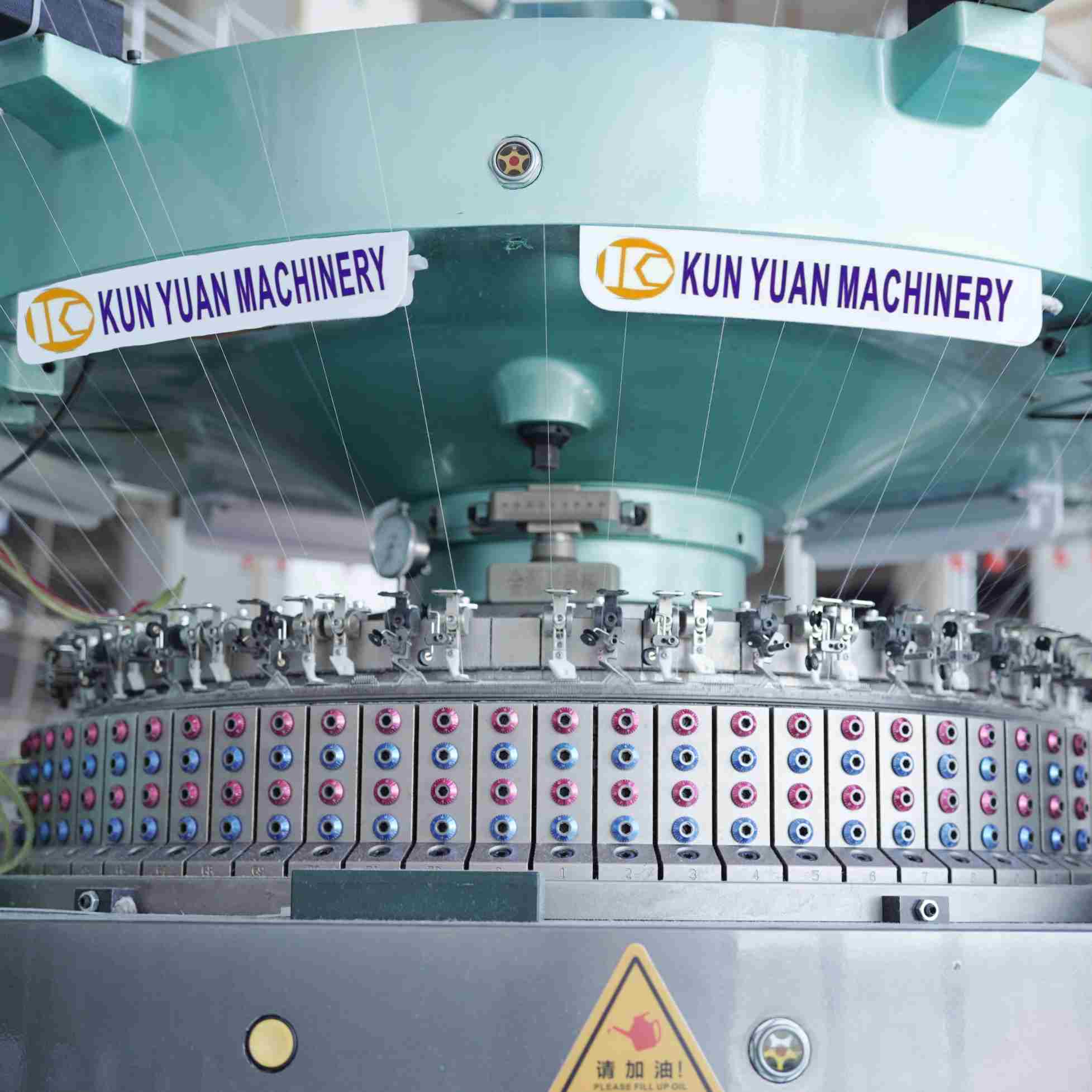
Label package positions and trace each role through its installed guides and delivery devices under the supplier's safe operating procedure. Photograph permitted path junctions where yarns can be crossed or misassigned. Record the knitting head, cam and sinker or other relevant arrangement only from the exact delivered documentation. Mayer and Cie.'s model page shows one distinctive three-thread route, but that description must not be converted into service instructions for a different machine.
During the trial, inspect technical face, binding integration and fleece-loop field around the full circumference. Mark yarn breaks, joins, stops and any manual correction. A face line, loose binding or missing fleece area should be mapped to roll length and machine position before changing several inputs. Compare the event with package identity and full path first, then use qualified service procedures for knitting-element checks. The fabric coordinate keeps material and mechanical hypotheses separate.
Test dense, light and restart-sensitive fleece conditions as named boundaries
Select the most demanding commercial fabric rather than an easy demonstration construction. If the range includes both lighter and heavier fleece, define separate trial conditions and do not imply a continuous universal window between them. After warm-up, record actual knitting time, gross output, stops, held fabric and defect coordinates. Inspect the face for plating or line faults and the back for fleece distribution and binding stability.
Include one planned stop and restart, then continue long enough to judge recovery. If an authorized adjustment is needed, mark the transition and preserve both samples. Return to the accepted job after another setup or routine cleaning and reproduce it from the saved record. This repeat is part of application proof because production often changes colors, lots or styles; a one-time specialist setup does not demonstrate a transferable process.
Carry marked fleece sections through the intended finish and garment-use checks
Send labelled sections through the buyer's intended relaxation and finishing route. Preserve one unprocessed reference from each condition. Record the sequence and production identity of raising, brushing, shearing, washing, heat treatment or other relevant steps without presenting one generic recipe. Compare back-surface evenness, exposed ground, shedding, pilling, handle, finished width, weight and dimensional behavior; also inspect whether the technical face was distorted or contaminated.
Separate knitting loss from finishing loss in the disposition. When a fault already appears in greige, return to the yarn-path and machine-position record. When matched greige fabric changes only after finishing, repeat a retained finishing control before altering the knitting setup. Release an application only when the exact build, yarn set, marked run and finished result share one file. Store the approved job, sample labels and trained-role boundaries for future recovery.
Label ground, binding and fleece roles before tracing the machine route.Inspect both sides and keep every event tied to a roll coordinate.Release the application only after the finish preserves face and dimensions.
Three-thread fleece path and application table
Evidence layer
What to identify
Fabric observation
Application decision
Yarn roles
Ground, binding and fleece packages
Face, integration and back-loop result
Materials match the brief
Physical paths
Guides, delivery and knitting positions
No crossed or intermittent role
Path is stable and traceable
Greige trial
Stable run, event marks and restart
Face quality and fleece distribution
Job repeats from its record
Finishing route
Matched sections and process identity
Raised surface, dimensions and loss
Finished application passes
Three-thread fleece yarn-path questions
Why are three yarn roles recorded separately?
They contribute different structural and surface functions, so a substitution or path fault can affect the face, binding or fleece back in different ways.
Does three-thread fleece always use the same threading route?
No. Follow the exact machine manual and supplier procedure; manufacturer examples describe named builds, not a universal threading diagram.
What should be inspected before brushing or raising?
Check the technical face, binding stability, fleece-loop distribution, repeat geometry, event marks, width and weight on the greige fabric.
Can a finished surface defect always be corrected at the machine?
No. Matched greige and finished sections are needed to determine whether knitting created the fault or finishing introduced or exposed it.
What proves a fabric can be handed to production?
A saved job should reproduce the marked greige condition after changeover, and the identified section should pass the agreed finish and application checks.
Conclusion
Three-thread fleece production is a linked material route. Separate yarn identities make the structure diagnosable, event-marked fabric proves greige stability, and matched finishing samples reveal the saleable surface. Keeping those layers joined by one record lets the mill choose a machine for a real application and recover the approved job later.






 Tel: +86-13859034518
 Email: info@kunyuanmachine.com
 MP/WhatsApp: +86-13859034518
 Manufacturer Address:Bacuo Village, Yonghe Town, Jinjiang City, Fujian Province