

Hot Keyword:
Author:KUNYUAN Machine Manufacturer TIME:2026-08-29
Fukuhara's official machine table lists distinct body-size, raceway, fleece, pile, jacquard, electronic and double-knit families. Correct selection starts by reading the columns together.
Write the fabric requirement on one sheet and the offered machine on another. The fabric sheet defines structure, yarn, finished weight and width, surface, pattern and finish. The machine sheet records exact model, suffix, diameter, feed or feeder basis, gauge, beds, tracks, selection, yarn controls, take-down and options.
The official Fukuhara table provides model ranges, but the selected combination may be narrower than the row's combined published envelope. Confirm availability in the model-specific quotation and use the exact machine for the trial. Never combine the widest diameter, finest gauge and highest feed entry unless the manufacturer states that combination. Where the table links a brochure, store that model document with the offer date so later revisions do not blur what was actually reviewed.
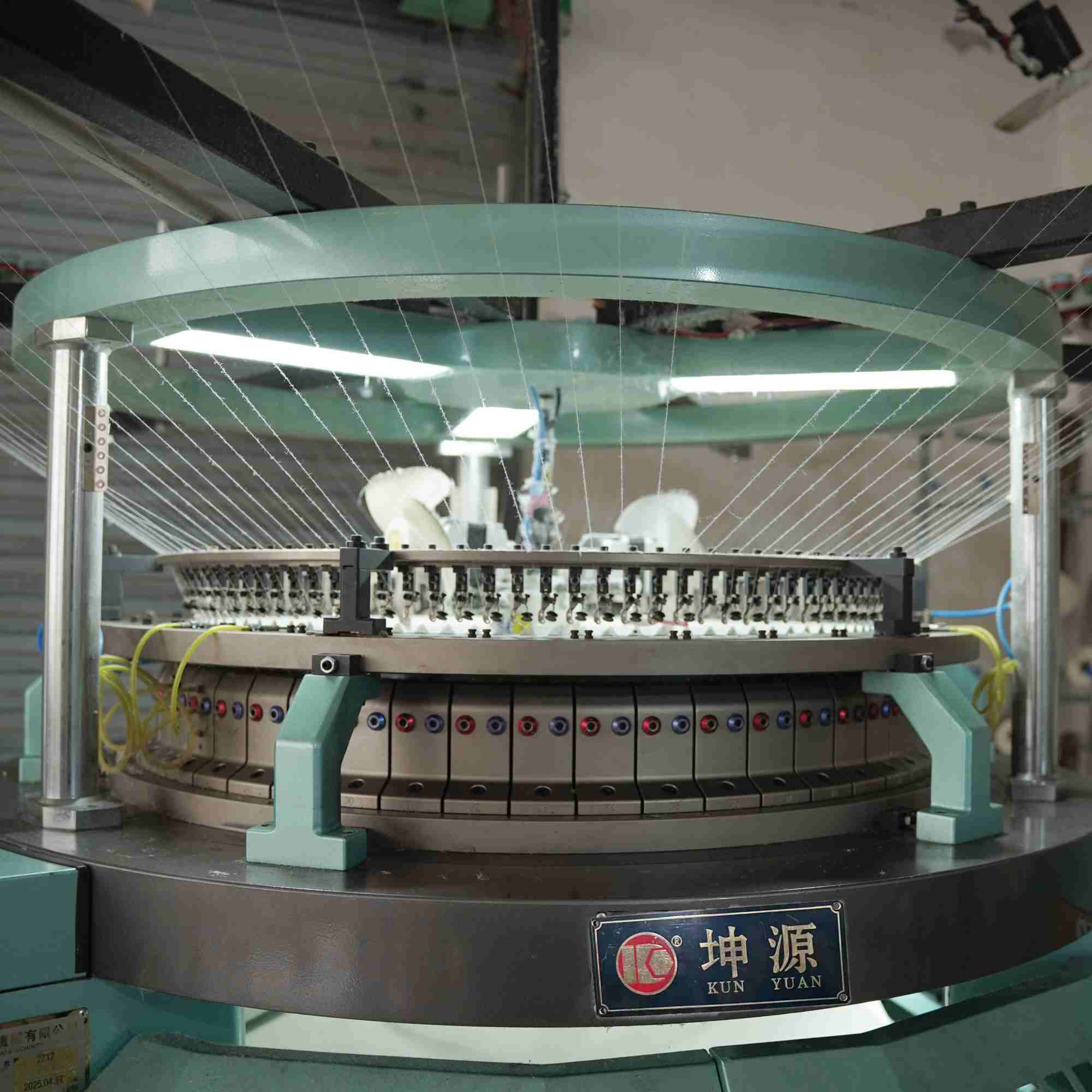
Identify whether the target is body-size single jersey, fleece, pile, striper, electronic jacquard, rib, interlock or another published family. Draw the loop structure and yarn roles.
A shared diameter or gauge does not make families interchangeable. Cylinder-only and cylinder-and-dial arrangements, sinker actions, selection and cam systems create different production envelopes.
Record the exact units shown by the manufacturer. A feed count and feeders per inch are not the same notation, and gauge describes needle density rather than finished fabric weight by itself.
Ask for the available combination for the selected model and structure. Add cylinder and dial needle counts or part references from controlled documents where needed for parts and setup.
List yarn devices, colour stripers, electronic selection, cams, take-down, open-width or tubular collection, lubrication, detectors, controller and included change parts. Mark optional and buyer-supplied items.
For any conversion claim, require approved parts, labour, downtime and a new sample. Published family relationships do not prove that the offered machine has every conversion kit.
Run the difficult target fabric through warm-up, a stable window, package change, stop and restart. Mark the roll and log speed, interventions, defects and settings.
Measure the commercial fabric after the intended relaxation or finish. File the accepted sample with model, suffix, diameter, gauge, feed configuration, options, yarn lots and date so purchasing and service refer to one controlled build.
| Column | What it identifies | Common mistake | Required confirmation |
|---|---|---|---|
| Model/family | Knitting purpose and system | Choosing by brand only | Exact suffix and build |
| Diameter | Nominal cylinder size range | Assuming all gauges combine | Quoted combination |
| Feed | Feed count or density basis | Mixing notation | Units and installed count |
| Gauge | Needles per inch basis | Treating it as fabric weight | Yarn/structure trial |
Not necessarily. Confirm the exact diameter, gauge and feed combination in the model-specific offer.
Gauge influences needle density, but yarn, structure, stitch setting and finishing also determine the result.
Suffixes can distinguish systems or revisions that affect parts, controls and fabric scope.
Only with the documented parts, setup and successful trial for that route.
Keep machine identity, installed options, yarn, setup, observation record and finish condition.
Fukuhara publishes a useful technical map, but selection depends on disciplined reading. Machine family, model, diameter, feed and gauge must remain one linked configuration and end in a buyer-yarn finished sample.
Apply the same linked-column method when comparing the industrial circular knitting machine range and reject any quotation that combines specifications without identifying one deliverable configuration.

 Tel: +86-13859034518
 Email: info@kunyuanmachine.com
 MP/WhatsApp: +86-13859034518
 Manufacturer Address:Bacuo Village, Yonghe Town, Jinjiang City, Fujian Province