
Language
Hot Keyword:
Author:KUNYUAN Machine Manufacturer TIME:2026-11-21
Request actual packed mass, external dimensions and approved handling interfaces for each crate before booking transport for a rib machine. Kunyuan publishes a four-ton net weight and a three-dimension box entry, but those catalogue values do not establish gross shipment mass, lifting access or the final packing arrangement.
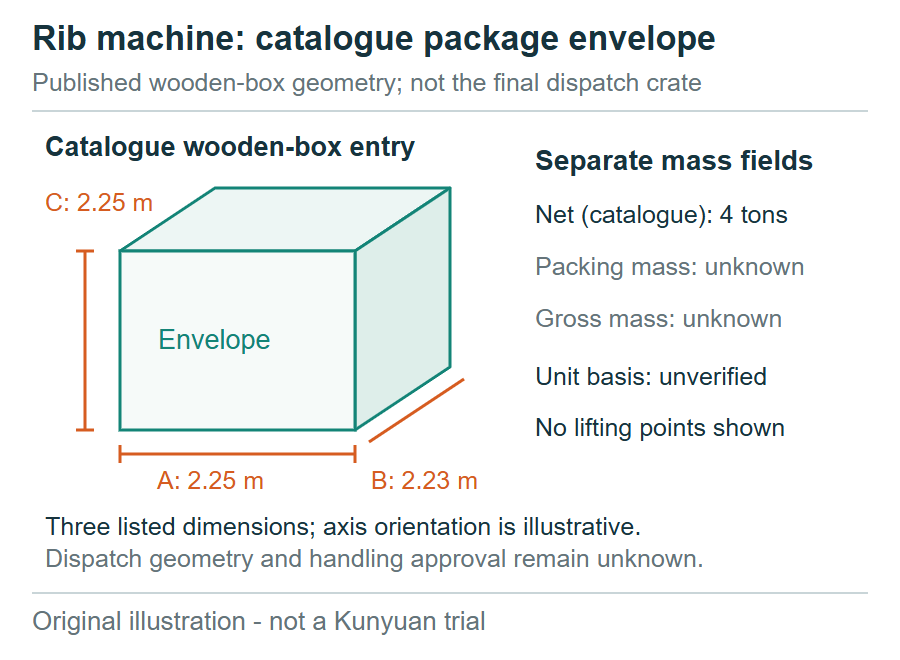
Kunyuan's rib product table, read on October 11, 2026, gives net weight as 4 tons and wooden-box size as 2.25M*2.23M*2.25M. Treat these as catalogue entries for an enquiry, not measured dispatch data. Confirm the unit convention and which package the dimensions describe.
The CTU Code discusses planning, load distribution and accurate cargo information. HSE's UK lifting guidance emphasizes competent planning for the actual operation. These primary sources explain why packing details matter; neither designs a Kunyuan crate or certifies the handling plan for the buyer's route.
Request a numbered package list showing the packed machine configuration, separately packed accessories and any items removed for transport. For every package, specify external length, width and height, orientation and measurement units. Ask whether the published box entry refers to one crate, a standard reference or the complete dispatch.
A machine's cylinder diameter is not a shipping width, and a catalogue box field cannot account for later packing changes. Require the supplier to identify the final offered packing arrangement on a drawing. Keep protrusions, protective bases and access needed for handling visible. The purpose is to give the transport specialist real package geometry, not to fit the machine into a container by guessing from a product photograph.
Ask for net contents mass, packing mass and packed gross mass for each identified package. Confirm whether the supplier's ton entry means a metric tonne, and record how dispatch masses will be determined. Do not substitute the published four-ton net figure for the weight of a crated machine with a base and accessories.
Request the packed center-of-gravity information and support or bearing interfaces needed by the specialist planning transport. The CTU Code treats concentrated loading and cargo distribution as real constraints; adequate total payload alone does not resolve them. Have the responsible packer and transport provider assess the actual arrangement. This RFQ asks for engineering inputs, without prescribing timber thickness, lashings, sling geometry or a forklift capacity.
Ask the supplier to mark approved crate handling points, any handling pockets and access restrictions. Then ask what changes after the crate is opened: the bare machine may have a different permitted handling method. A pallet-like base or visible frame member is not permission to lift there. Obtain the manufacturer's supplied instructions for both conditions.
Give these inputs to the competent provider responsible for the operation. HSE's planning discussion is useful technical context, but its UK legal framework must not be presented as universal law. The local requirements and exact equipment instructions apply. Keep the enquiry focused on missing information and responsibilities. It should not tell a mill worker to improvise a lift or infer load capacity from a crate photograph.
Ask how the package can be inspected, opened and stripped while preserving the machine and the supplier's approved handling access. Identify documents stored externally and those inside the crate. Record separately packed assemblies and their labels so the receiver can reconcile the dispatch without interpreting loose parts from memory.
Have the receiver and handling provider review the final external envelope and opening arrangement against their actual access. If the supplier proposes splitting or changing the packing, request a revised package list and handling information before shipment. Keep packing photos as evidence of what was dispatched, not proof of hidden structural strength. A useful RFQ response leaves the transport team with an identifiable load and the receiving team with an understood opening sequence.
| Published starting point | Missing detail | Requested response | Responsible reviewer |
|---|---|---|---|
| 4 tons net | Unit basis and packed mass | Per-package mass schedule | Supplier and transport specialist |
| 2.25 x 2.23 x 2.25 m box | Final envelope and package count | Numbered packing drawing | Packer and forwarder |
| Machine catalogue views | Permitted handling interfaces | Supplier-approved instructions | Competent handling provider |
| Crated delivery | Opening and contents access | Package labels and opening plan | Receiving team |
Not without confirmation. It is a published net entry; obtain the actual packed gross mass and the unit basis.
No. The provider must review the final external envelope, loading access, support, securing and actual transport equipment.
Do not assume so. Ask for approved handling instructions in both packed and unpacked conditions.
No. It is transport-packing guidance, not a design approval or trial of a Kunyuan crate.
An identified final package arrangement with complete masses, dimensions and handling information reviewed by the responsible specialists.
A useful packing offer describes the actual load rather than repeating a box size. Ask for each package's contents, external envelope, gross mass and permitted handling interfaces. Those details allow qualified transport and receiving teams to assess the real dispatch before an incomplete catalogue entry becomes an expensive handling assumption.
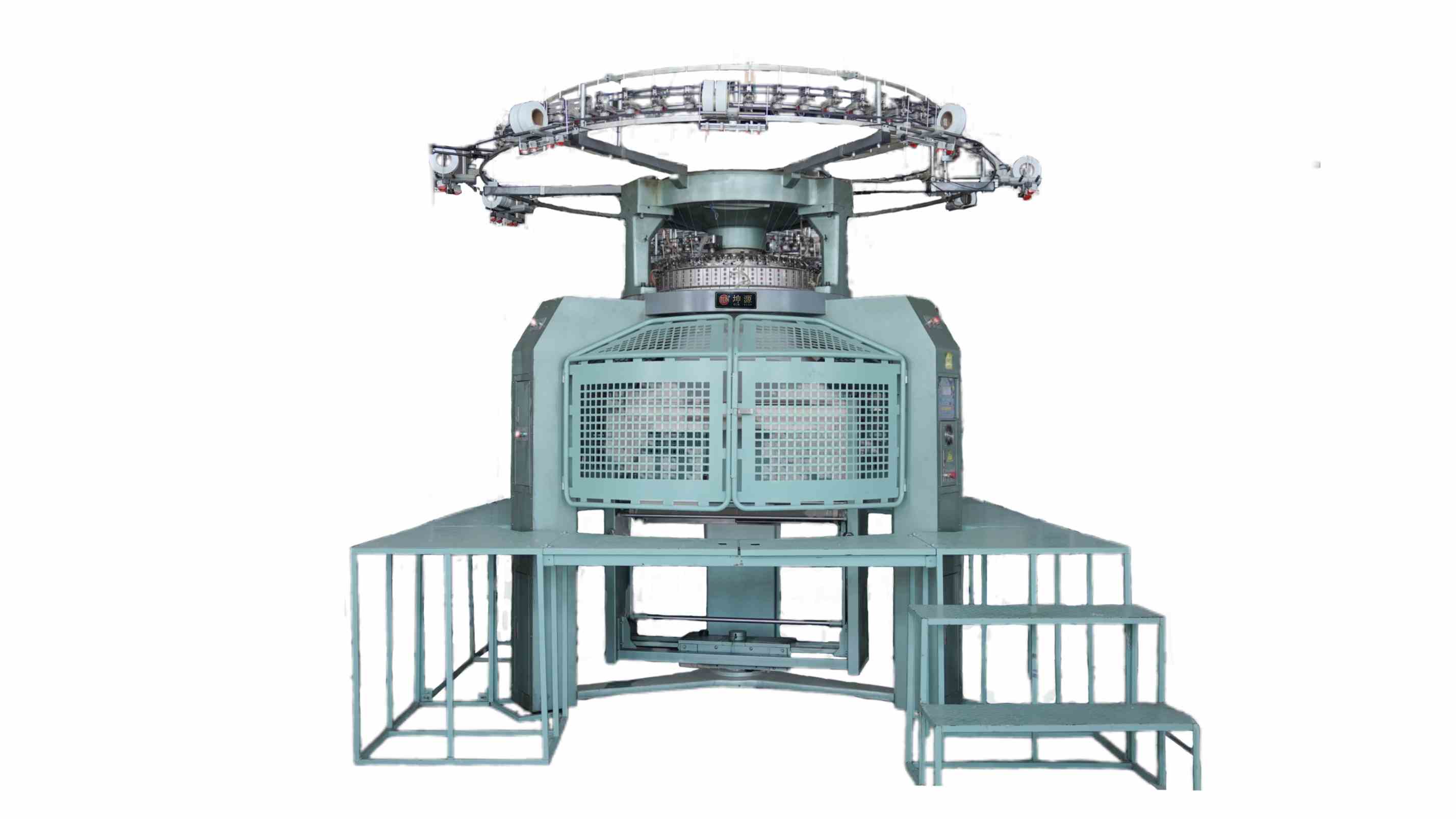
Attach this packing enquiry to the Rib Double Jersey Circular Knitting Machine catalogue quotation and request dispatch-specific package information.

 Tel: +86-13859034518
 Email: info@kunyuanmachine.com
 MP/WhatsApp: +86-13859034518
 Manufacturer Address:Bacuo Village, Yonghe Town, Jinjiang City, Fujian Province