A useful machine diagram explains where yarn becomes a loop and how the new fabric leaves the knitting zone
Industrial circular knitting is continuous: yarn is prepared and delivered to a ring of knitting elements, successive courses are formed, and take-down removes the growing tubular or open-width fabric under a controlled condition.
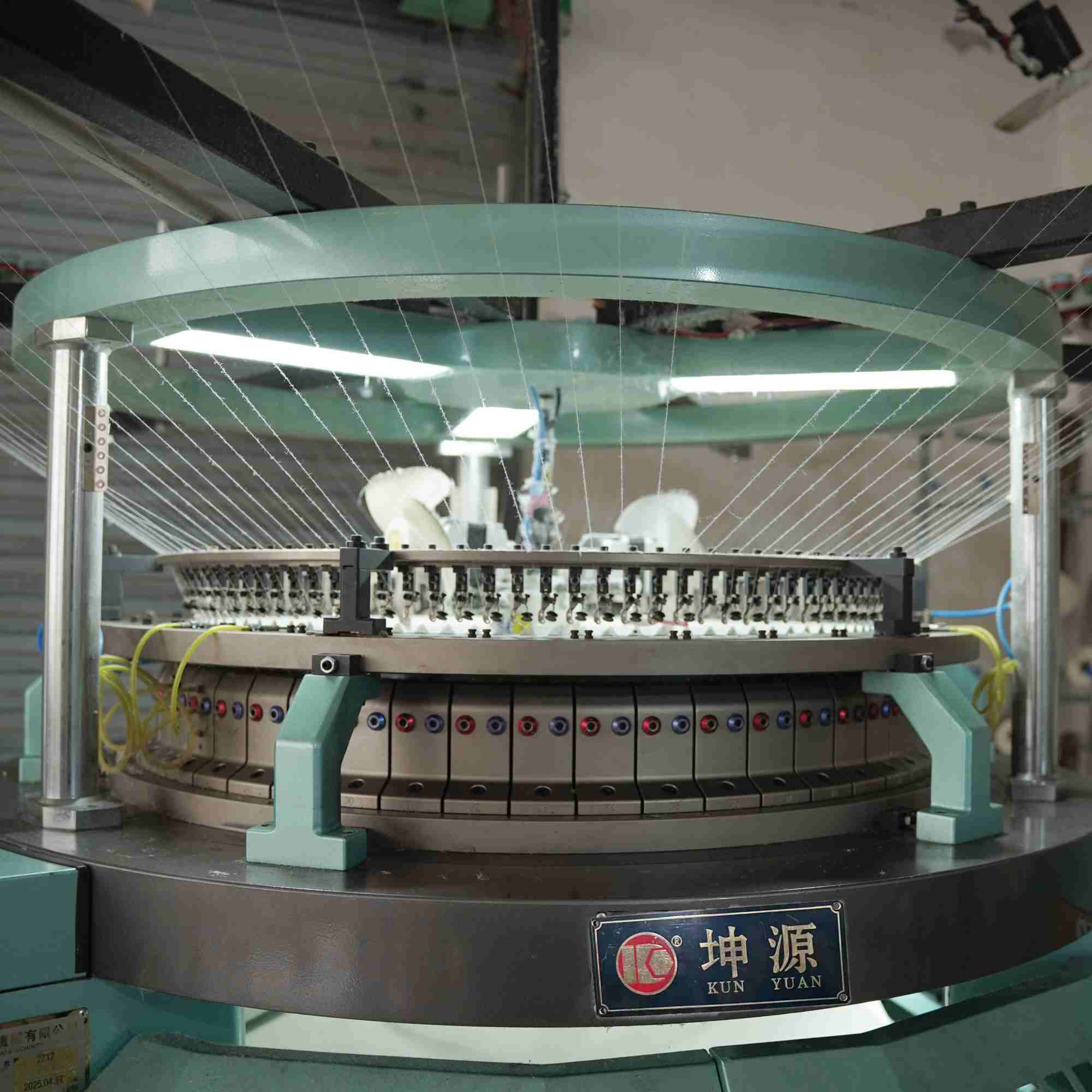
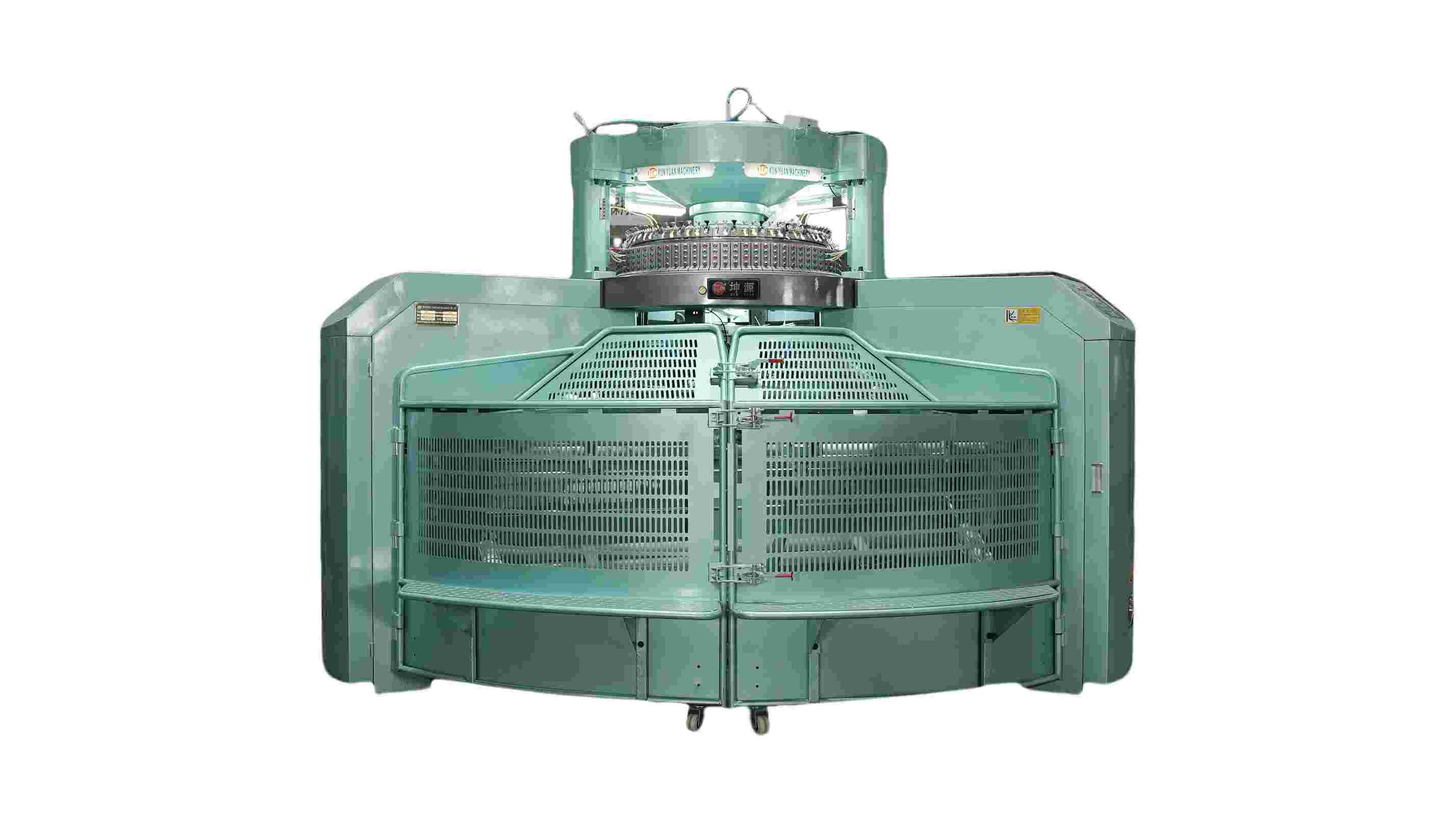
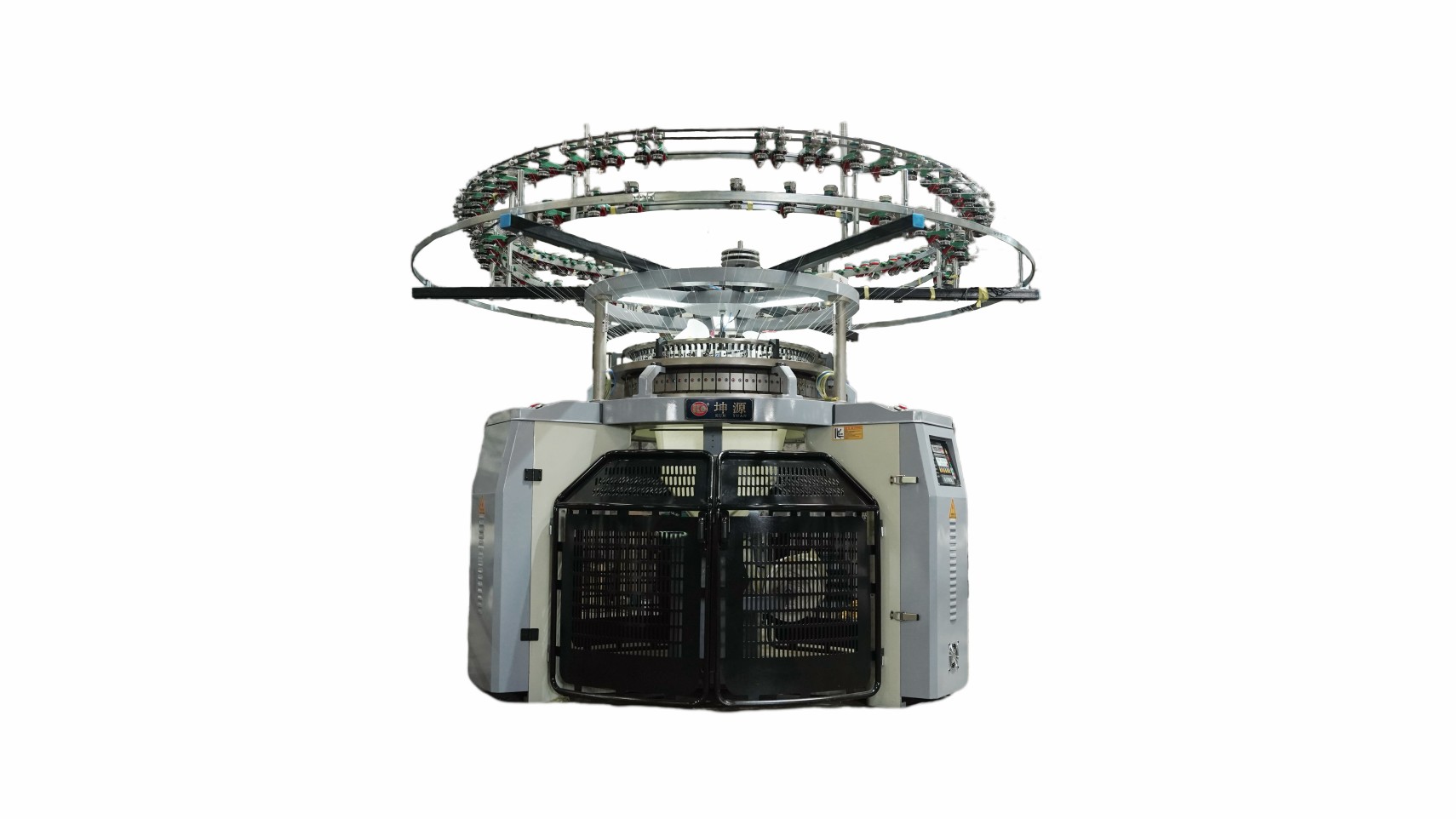
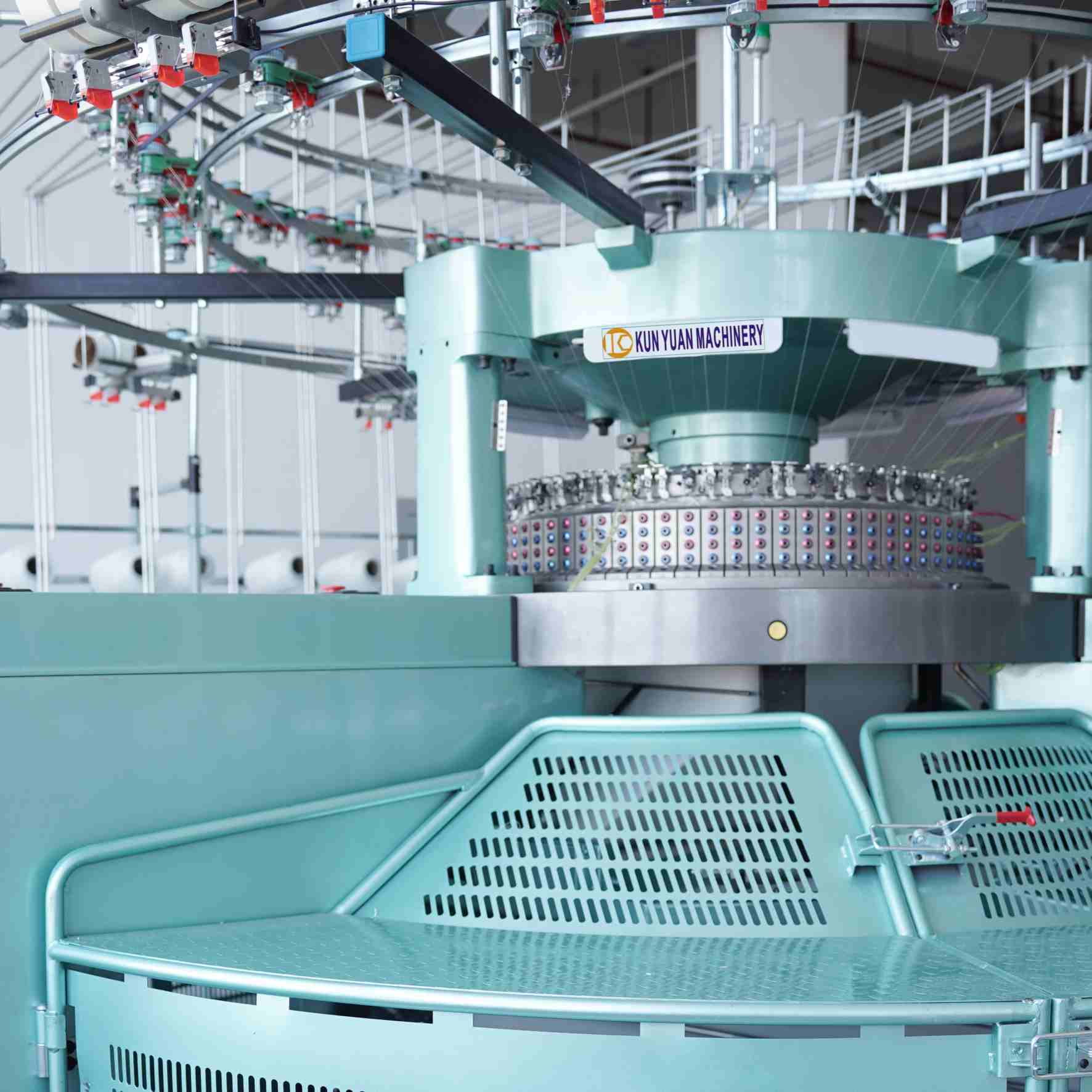
Draw the machine by material flow, not by cabinet shape. Start with packages and yarn-control devices, continue to feeders and the knitting zone, then follow the new fabric through take-down and collection. Add drives, lubrication, stop motions and controls beside the physical stage they support. The drawing should use the delivered model's terminology; a generic diagram is an orientation tool, not a service drawing or permission to reach inside guarded areas.
Mayer and Cie separates circular-machine families by their knitting purpose, and Groz-Beckert documents knitting elements as a coordinated system rather than an isolated needle. Those official references support the functional zones. They do not supply universal settings, because cylinder-only and cylinder-and-dial machines, gauges, cam arrangements, yarns and fabric structures require different setups. Confirm details against the exact manual and a marked run.
Packages, guides and delivery devices prepare yarn for a stable arrival
Assign each yarn a function in the fabric: face, ground, effect, plating or elastomer where applicable. Record its material, count, lot and package build, then trace the real route through guides and storage or positive-delivery equipment. The delivery system is not simply transportation. It influences how consistently yarn reaches successive feeds, especially during acceleration, package depletion, knots and restarts. Exact setup values must come from the machine and device documentation.
For an observation trial, mark the roll when a package is changed or a yarn event occurs. Compare that time with detector information and the later fabric location. A stop signal may show that motion was missing; it does not prove whether the cause began at the package, a guide, a delivery device or the knitting point. The zone drawing gives operators a disciplined order for checking the path.
Read the machine from package supply toward the new fabric.
Needles, cams, sinkers and dial elements coordinate one course after another
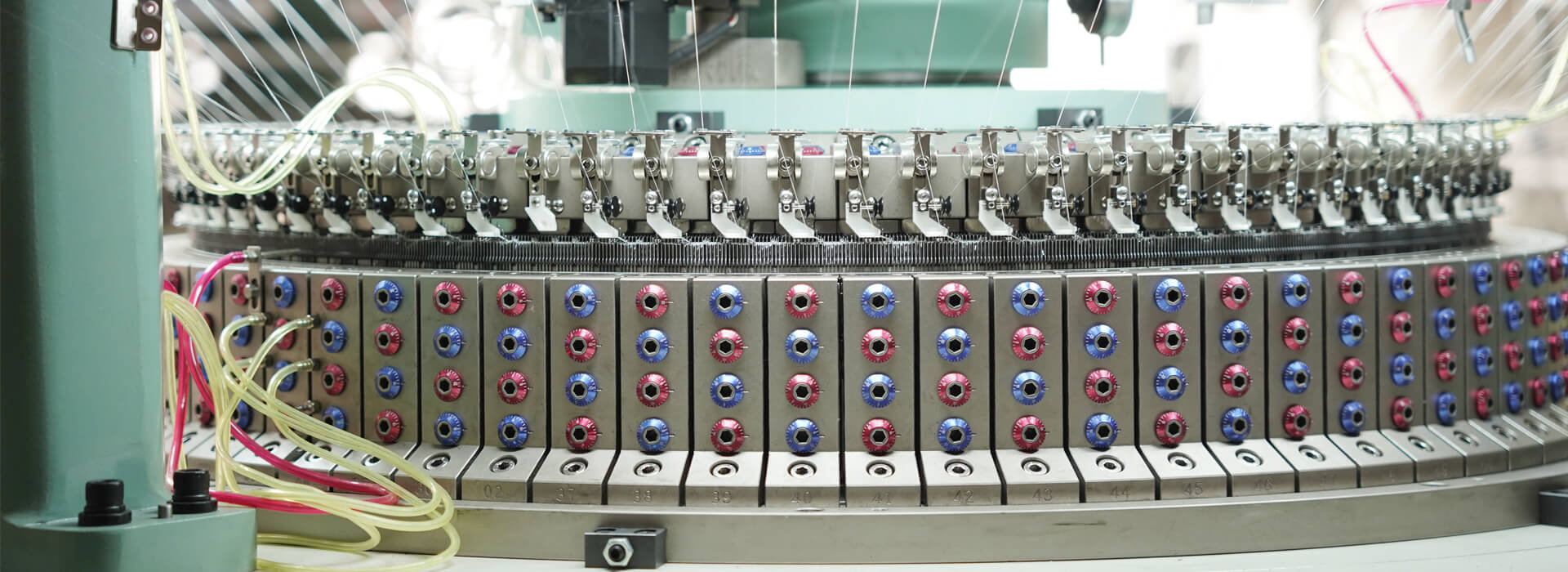
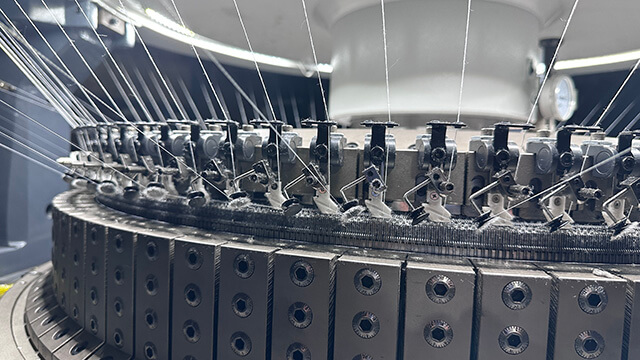
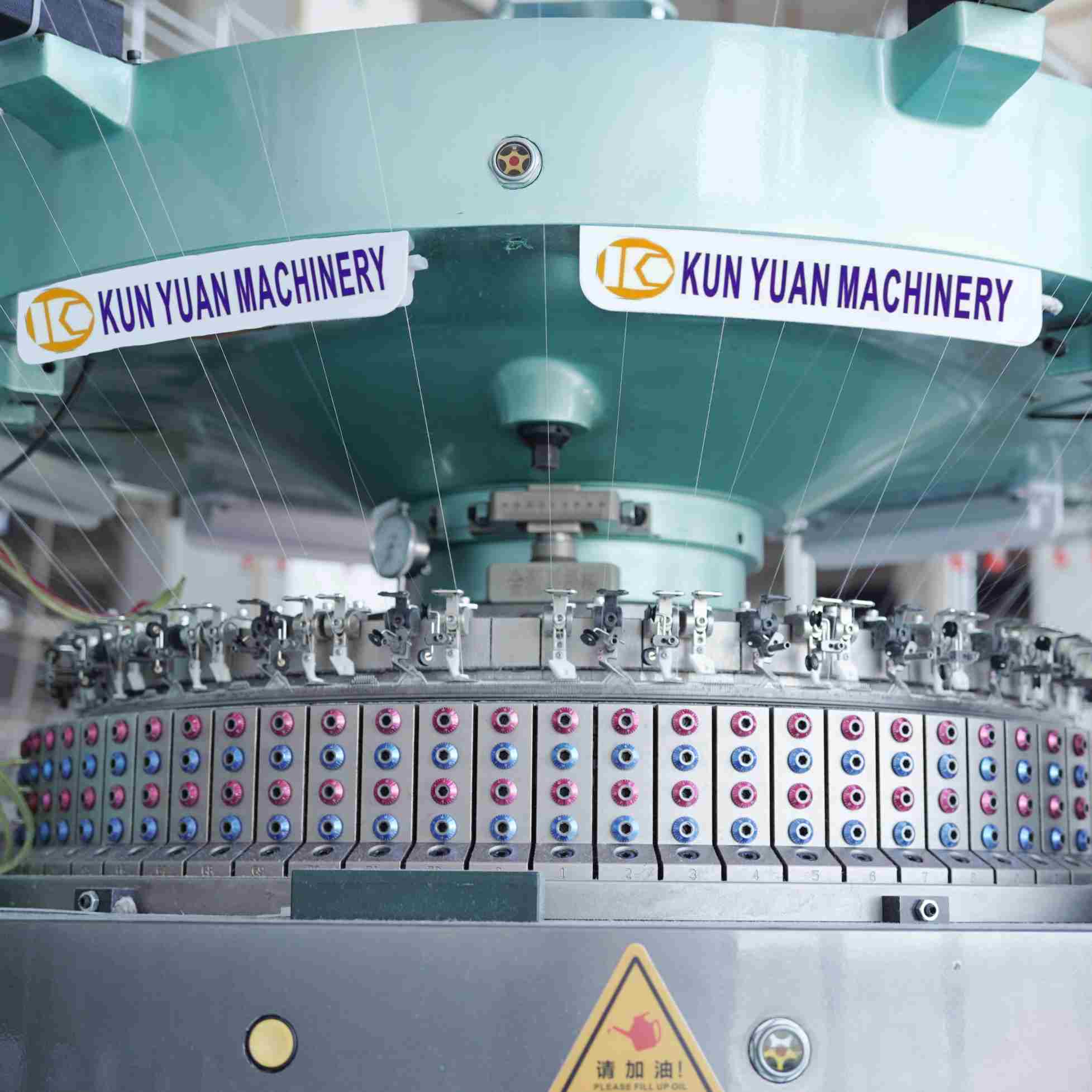
At the knitting zone, cam or selection actions guide the knitting elements through the motions required by the structure. A needle receives yarn and forms a new loop in relation to the previous loop; sinkers or corresponding elements support loop formation and fabric control according to the machine design. A double-knit arrangement adds coordinated dial elements. The exact motion and timing belong to the model documentation, not to a universal internet diagram.
Sketch one representative loop path and identify the technical face. Then inspect the full tube for holes, press-offs, vertical lines, barring or displaced structures. If a mark repeats at a fixed circumferential or course interval, preserve the geometry before replacing parts. A diagram becomes diagnostically useful when the fabric location can be associated with a feed, bed, track or recurring mechanical reference.
Use model-specific element names when explaining loop formation.
Take-down and collection create room for following loops and preserve the fabric form
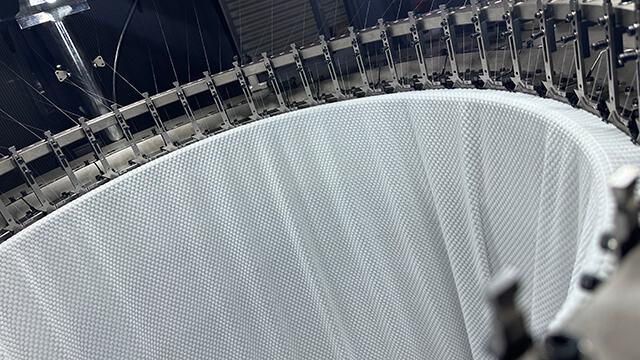
New fabric must move away from the knitting zone in a controlled manner while more courses form. Record the installed take-down system and how fabric is spread, slit where applicable, guided and wound. Inspect more than the roll center. Circumferential bands, creases, edge stress, roll pressure and restart marks may appear only after enough length accumulates. Do not publish one take-down value as a recipe across structures.
When withdrawal is changed under the approved procedure, mark the exact transition and retain both conditions. Compare width, weight basis, stitch appearance and surface before deciding whether the response is beneficial. A fabric fault that appears downstream may still originate in yarn delivery or loop formation, while an uneven roll can make a sound knitted structure look unstable. The marked path prevents those stages from being collapsed into one guess.
Mark withdrawal changes so roll evidence remains tied to the process.
Link the diagram to controls, finishing and a repeatable sample
Add the main drive, lubrication, stop motions, pattern control and monitoring functions to the drawing beside the zone they affect. State what each device senses or commands and what evidence remains physical. A screen message is not a loop drawing, and a clean greige swatch does not prove finished width or dimensional behavior. The lab record should connect controller events to machine position and fabric marks without treating an alarm as a root-cause verdict.
Take one labelled piece through the agreed relaxation or finishing route. Compare both faces, usable width, weight and the buyer's dimensional or appearance checks. Finally, have another trained operator retrieve the approved setup and reproduce the sample after a planned stop. That repeat closes the explanation: the diagram is no longer a catalogue illustration but a verified map of the delivered process.
Circular knitting machine diagram key
Zone
Main elements to identify
Observation
Do not infer
Yarn supply
Packages, guides, delivery and detectors
Stable arrival at assigned feed
A detector message proves cause
Knitting
Beds, cams, needles and supporting elements
Intended loops and repeat geometry
One motion fits every model
Withdrawal
Take-down, spreading and winding
Width, density and roll condition
One setting suits every fabric
Process proof
Controls, marks and finished sample
Repeat from yarn to inspection
A clean greige view closes acceptance
Circular knitting process questions
Is every circular knitting machine built with both a cylinder and a dial?
No. Machine families use different bed arrangements; identify the exact delivered architecture before reading the loop path.
What does a feeder do in the diagram?
It presents the assigned yarn to the knitting zone as part of a wider route that may include storage, delivery and detection devices.
Why is take-down part of loop formation control?
The growing fabric must be withdrawn consistently so subsequent courses form under the approved process condition.
Can a generic diagram be used for maintenance?
No. Use the model's controlled manual, guarding rules and qualified procedures for operation, adjustment or service.
What proves that the process explanation is correct?
A marked buyer-yarn run should connect yarn events, machine references, greige fabric and finished inspection, then be repeated by the receiving operator.
05
Conclusion
A circular knitting machine is easiest to understand as a connected loop laboratory. Yarn supply prepares each input, the installed knitting elements form successive courses, take-down removes the new fabric, and controls preserve event evidence. A model-specific diagram and marked sample explain the process without turning a general principle into an unsafe adjustment guide.
Use this four-zone diagram while reviewing the industrial circular knitting machine range and ask the supplier to annotate the exact delivered yarn path, knitting system, take-down route and acceptance sample.





 Tel: +86-13859034518
 Email: info@kunyuanmachine.com
 MP/WhatsApp: +86-13859034518
 Manufacturer Address:Bacuo Village, Yonghe Town, Jinjiang City, Fujian Province