Terry applications share a loop concept, but their ground, pile, handling and finishing limits remain separate
A towel face, apparel back and specialty loop fabric may all be called terry while demanding different yarns, loop retention, weight, surface and downstream processing. The application brief must identify which result is being commissioned.
Prepare one specification for each product family. Record technical face, ground and pile yarns, loop side or sides, intended loop state, greige and finished weight and width, absorbency or comfort method where relevant, surface-defect limit, dimensional test and finishing route. Towel, French terry and loop pile are not interchangeable evidence; each requires a sample and acceptance method tied to its end use.
Kunyuan's official pile-machine pages separate equipment and pile-related routes, while Groz-Beckert documents knitting elements as application-specific systems. These sources support treating loop formation as coordinated architecture. They do not provide a universal loop-height, yarn-tension or take-down recipe. The exact offered build, model documentation and controlled buyer-yarn run define the workable window.
Stage one: distinguish towel, apparel and specialty loop requirements
For a towel route, define usable width, mass, loop cover, side requirements, absorbency test, edge plan and operations that turn fabric into an article. For apparel, state whether loops remain inside, are brushed or are otherwise developed, and specify drape, stretch, comfort and cutting behavior. For specialty fabric, name the functional surface and its test rather than borrowing a consumer-product description.
Select boundary constructions: lowest and highest weight, most delicate pile yarn, demanding color combination and any product with a different loop side. Keep these briefs on separate lines. A machine can suit one terry route without proving every fabric that shares the label.
Begin with one named terry product and end-use method.
Stage two: stabilize the ground before presenting the pile yarn
Assign ground and pile materials, counts, lots and package positions independently. Trace their routes through installed delivery devices. The ground supports the loop architecture and withdrawal forces; the pile yarn must arrive consistently enough to form the surface without missing, elongated or pulled loops. Similar-looking packages need positive identification during threading and replenishment.
Mark package changes, yarn breaks, restarts and approved setting transitions on the roll. Inspect the reverse and ground as carefully as the visible loop face. A full surface can hide weak anchoring, ground lines or displaced yarn. Preserve course, wale and circumference relationships before changing feed, knitting or take-down variables.
Trace ground and pile yarns as different process systems.
Stage three: map loop consistency across the roll and normal events
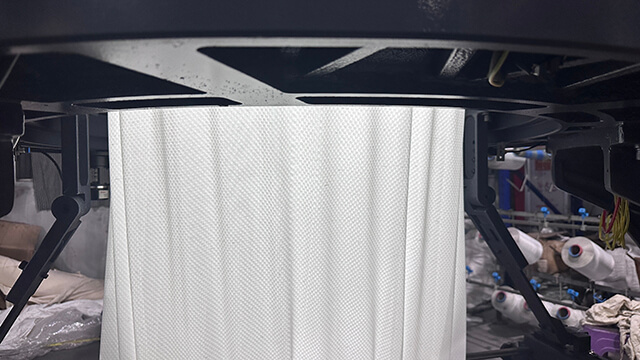
Examine loop presence, relative height, density, streaks, bars, holes and pile security across the full width or circumference. Compare warm-up, stable running, a planned stop and restart. A center swatch cannot reveal edge behavior, periodic bands or winding pressure. Keep machine direction and event marks on retained samples.
Use the exact manual for operating and service limits. Do not publish a generic loop-height or tension setting. When a controlled change is authorized, state the expected response and mark the transition. Recheck ground stability, weight and take-down together because an apparent pile improvement may create dimensional or structural loss elsewhere.
Keep greige loop evidence connected to the finished surface.
Stage four: carry marked loops through the route that creates the saleable surface
Process labelled samples through the intended relaxation, dyeing, washing, brushing, raising, shearing or other named operation. Preserve an untreated control. Measure width, length, weight and dimensional response, then apply the product-specific surface, absorbency, comfort or durability method. Good greige loops are not proof of final hand or usable yield.
Reconcile greige quantity, finishing loss, rejected zones and accepted output. For towels, include edges, cutting and sewing where applicable. For apparel, include spreading and cutting behavior. Ask production to repeat the difficult construction from the saved yarn map and setup. Release only when greige architecture and finished performance remain traceable.
Terry application release matrix
Route stage
Record
Inspect
Release evidence
Product brief
End use and loop architecture
Boundary construction
Separate method
Yarn systems
Ground and pile identity
Delivery events
Stable paths
Greige fabric
Full roll map and settings
Loops, ground and dimensions
Marked sample
Finished result
Process and losses
Surface and product tests
Accepted repeat
Terry circular-knitting application questions
Are all terry fabrics made to one loop specification?
No. Towels, apparel and specialty fabrics differ in ground, loop side, yarn, finishing and tests.
Why keep ground and pile records separate?
They perform different duties and may respond differently to delivery, settings and finishing.
Can softness prove good loop formation?
No. Finishing changes the surface; retain greige evidence of what knitting produced.
What should a scale-up roll include?
Include warm-up, stable production, yarn events, stop-restart and enough length to expose periodic faults.
How is accepted terry output calculated?
Reconcile gross greige fabric, held sections, finishing loss and quantity passing the finished method.
05
Conclusion
Terry is a family of application routes rather than one universal setting. Product intent defines ground and pile architecture; the marked greige roll proves loop formation; the downstream process proves the commercial surface. Keeping stages separate lets each product scale without extending one sample beyond its evidence.
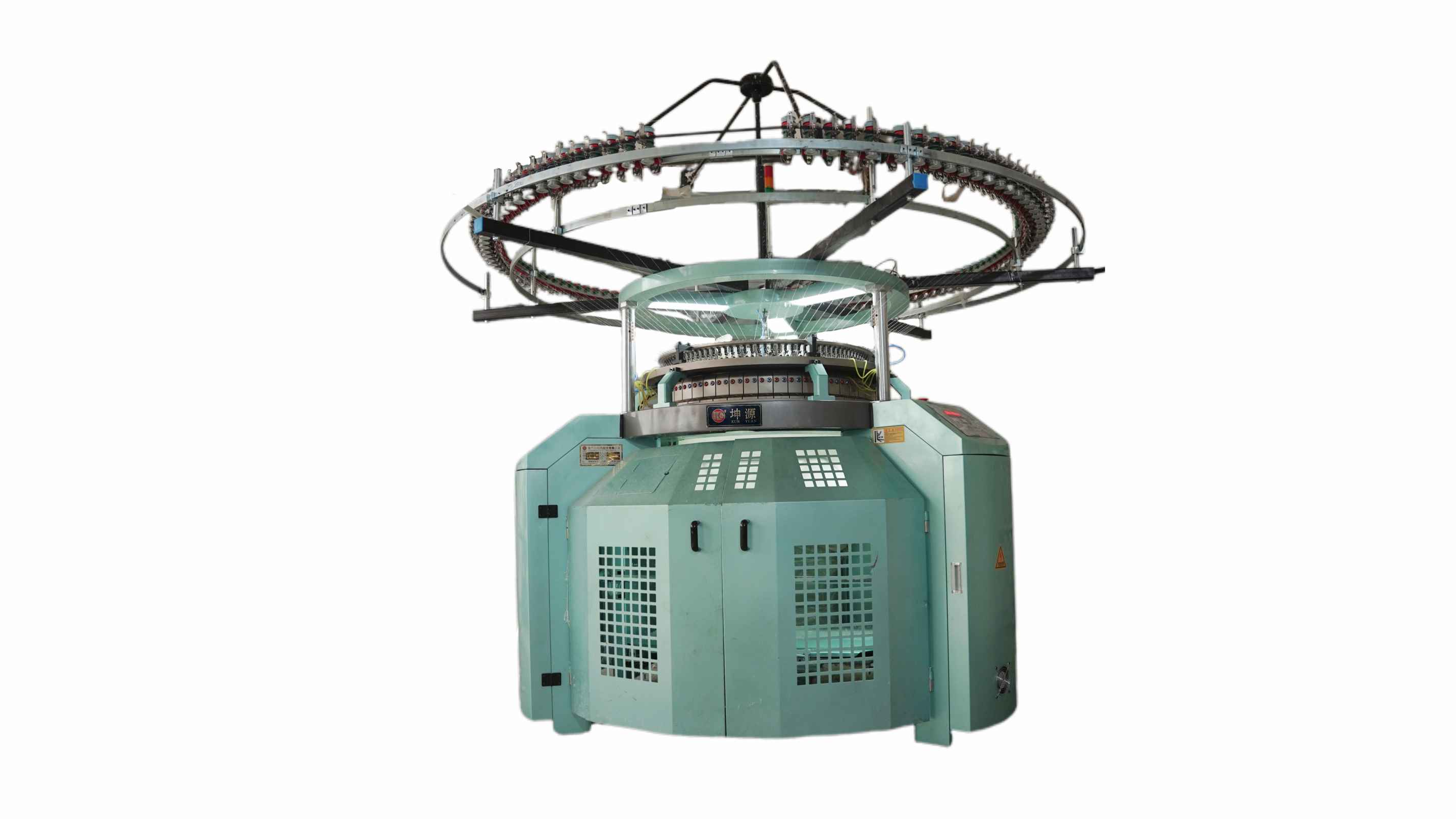
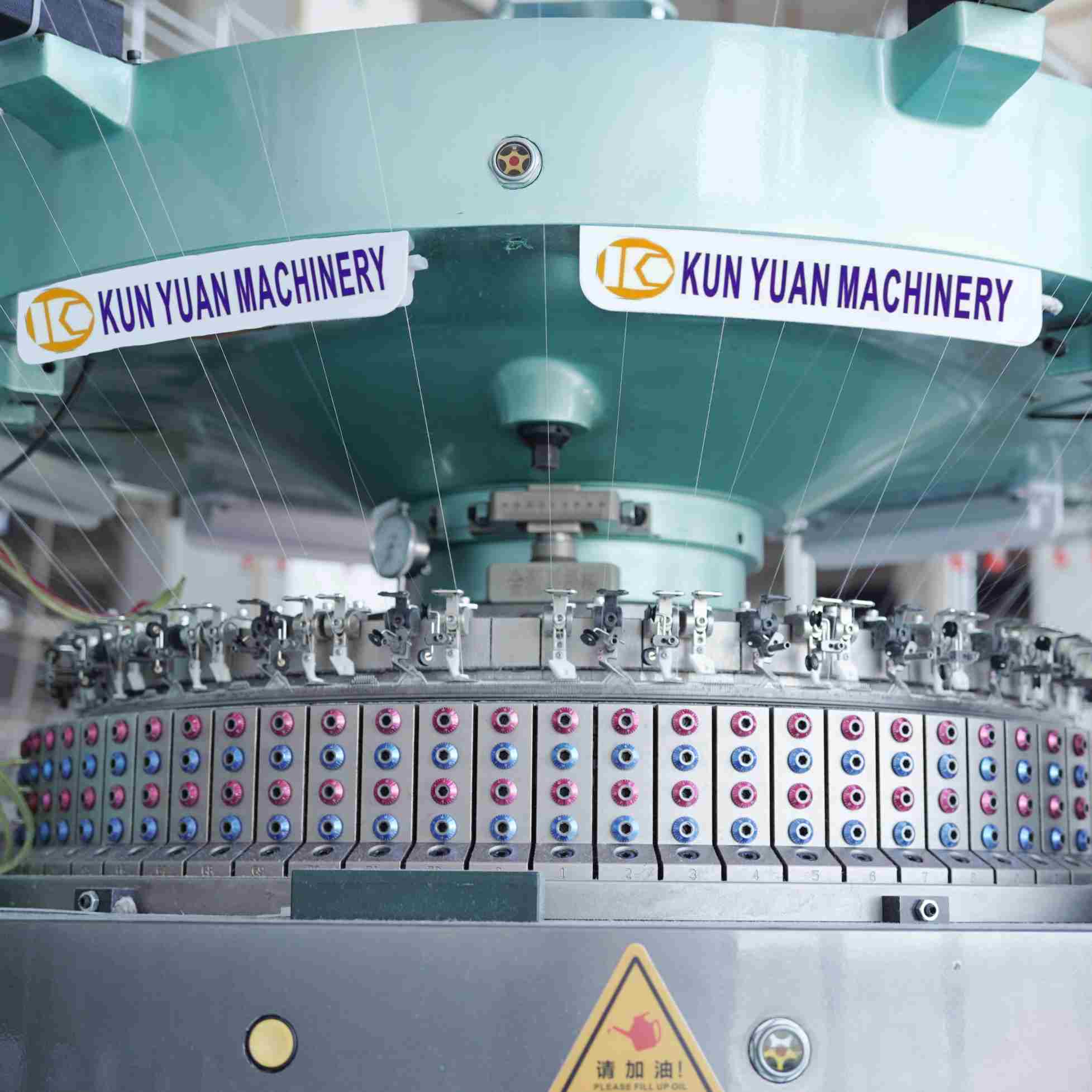
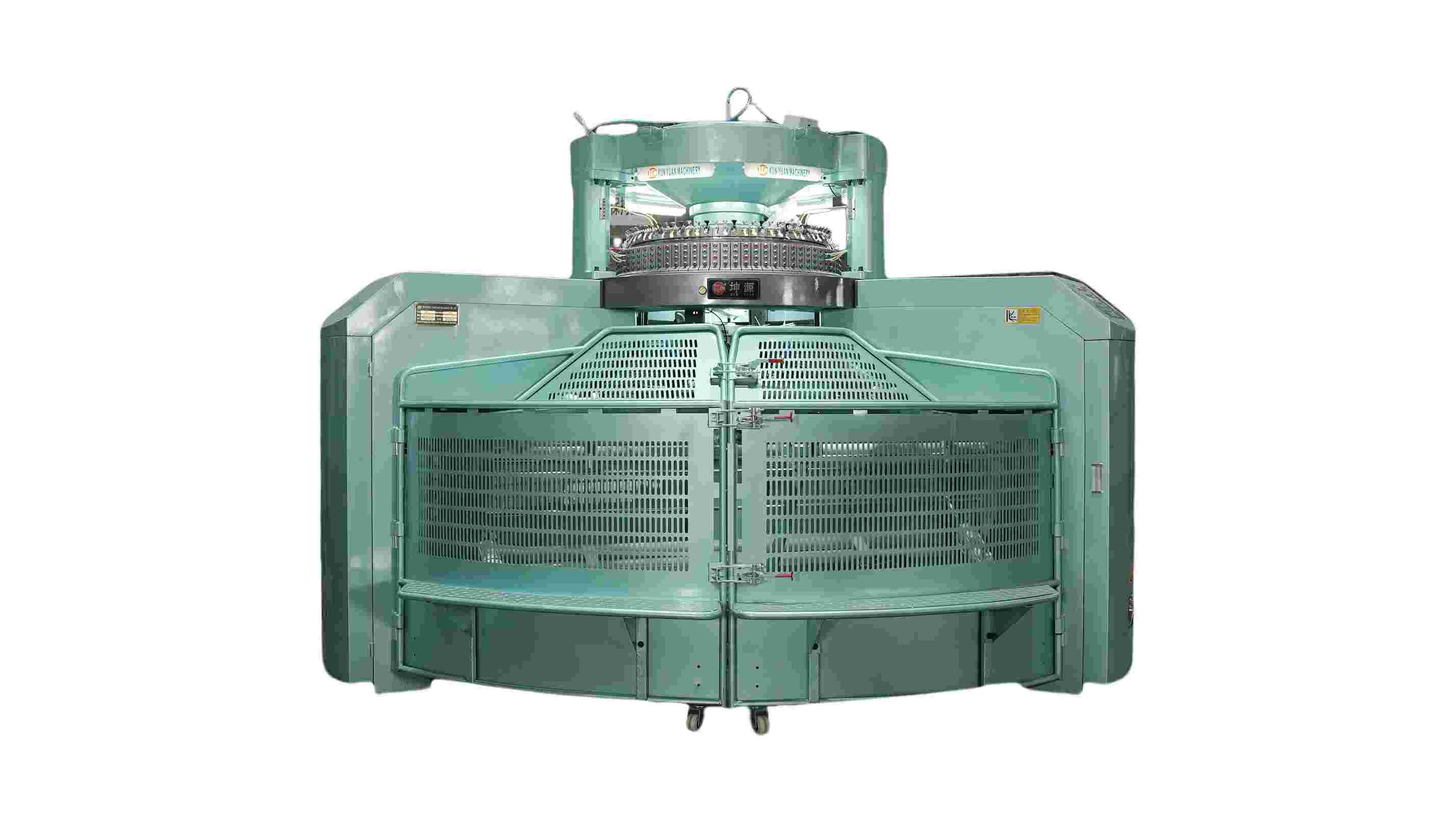
Use this route matrix when reviewing the terry and pile circular knitting machine range and require a separate buyer-yarn greige and finished record for every terry application in the offer.




 Tel: +86-13859034518
 Email: info@kunyuanmachine.com
 MP/WhatsApp: +86-13859034518
 Manufacturer Address:Bacuo Village, Yonghe Town, Jinjiang City, Fujian Province