Diameter, gauge and output matter only when they describe one deliverable build and accepted fabric
A large circular machine is not selected by maximizing three catalogue columns. Fabric architecture sets the family; linked parameters define the build; a timed buyer-yarn trial establishes saleable output.
Create a fabric record for every important article. Name structure, yarn material and count, elastomer or effect yarn, greige and finished width and weight, surface standard, dimensional test, finishing route and production share. Then identify the required bed arrangement, tracks or selection, yarn delivery, take-down and collection. This prevents diameter and gauge from becoming universal quality rankings.
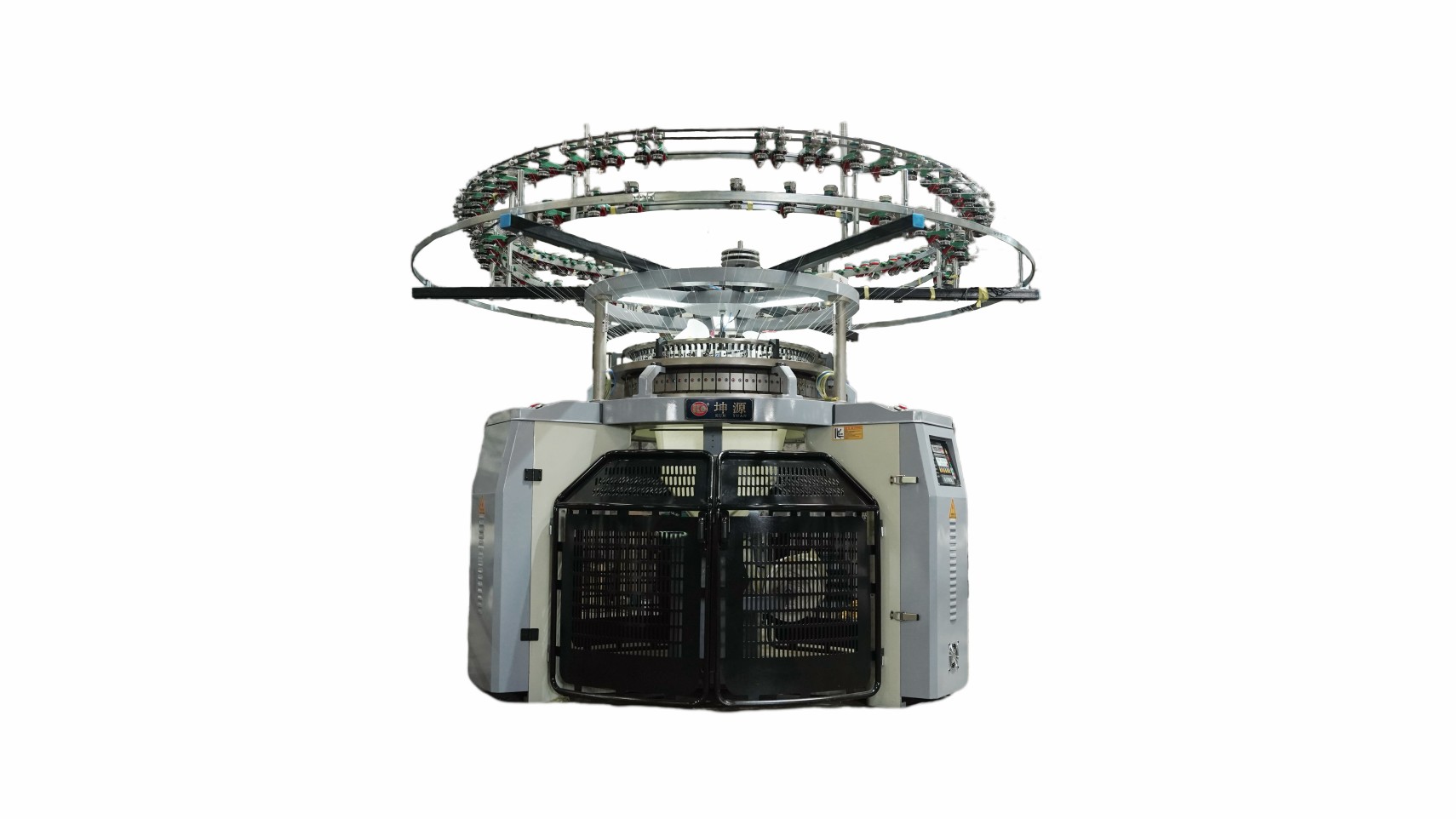
Mayer & Cie's selector and Groz-Beckert's large-diameter documentation show model families and knitting systems using specific combinations. Published ranges are screening evidence, not permission to join the widest diameter, finest gauge, greatest feeds and highest speed into a fictional machine. Ask for one available combination and attach it to a buyer-yarn trial with consistent units and finished disposition.
01
Parameter one: connect nominal diameter to fabric form and downstream width
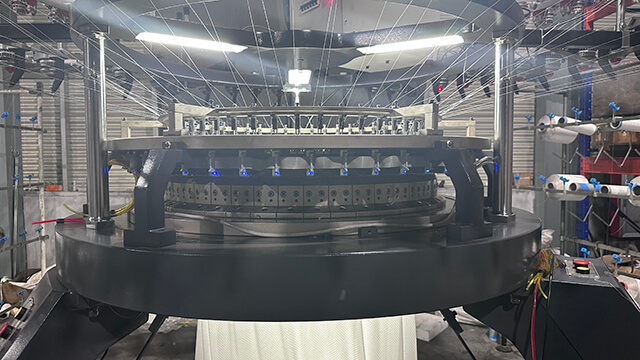
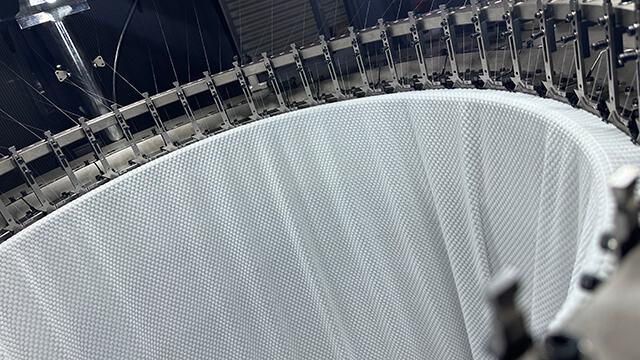
Record the maker's diameter notation and exact model. For tubular output, map the nominal cylinder basis to expected greige circumference and the process establishing usable finished width. For open-width handling, identify where opening occurs, how edges are controlled and how the roll enters the next process. Do not publish a simple diameter-to-width conversion without structure and finishing evidence.
Trial the actual fabric and measure at stated conditions. Keep roll position, relaxation time and finish visible. A larger diameter may suit one width plan but introduce different handling, floor, changeover or product-mix implications. Show which widths pass and which remain outside scope instead of describing larger as automatically productive.
02
Parameter two: qualify gauge with the exact needle system, yarn and structure
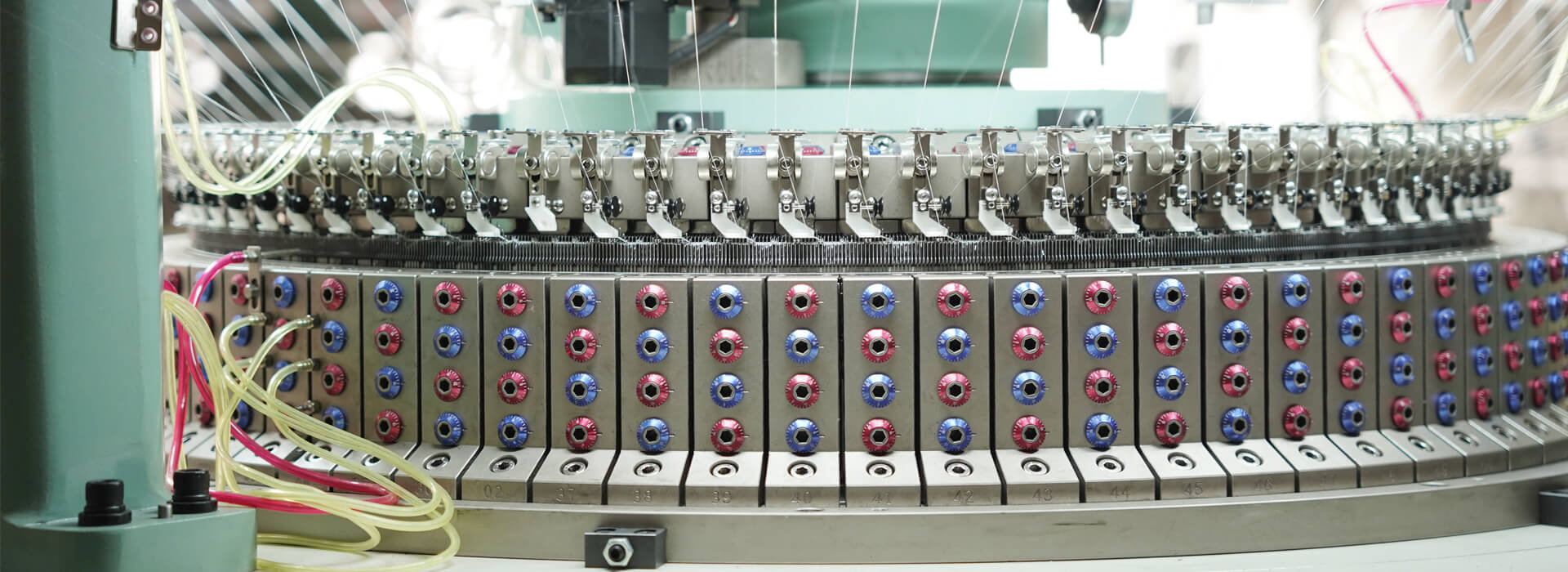
Copy gauge using the manufacturer's convention and attach it to model, diameter, bed arrangement and installed knitting elements. Record yarn count, material, feeder path and loop architecture. The same gauge label cannot prove identical yarn compatibility or fabric character across unrelated families.
Knit a controlled sample and inspect both faces, loop clarity, holes, lines, surface and dimensional response. Keep approved needle and companion-element identity in the file. Conversions should name changed parts, work, setup and a new trial. Gauge passes when buyer yarn remains stable through finishing, not when a catalogue row contains the requested number.
03
Parameter three: keep feed count and rotational speed inside the demonstrated condition
Record active feeds under maker notation, identify yarn roles and note feeds unavailable for a structure or option. Rotational speed should include model, diameter, gauge, fabric, yarn, warm state and quality condition. A display value during an easy construction does not establish a commercial rate for every article.
Log stable intervals, stops, detector events, interventions and marked positions. Observe whether yarn delivery, lubrication, knitting, take-down and winding remain coordinated. Avoid averaging away unstable periods. Preserve why the operating point passed, what caused a hold and which assumptions need retesting after product change.
Notebook page: reconcile runtime, gross fabric, held zones and accepted finished output
Choose a time boundary and units before running. Record setup and warm-up separately, then stable runtime, total quantity, stops, held sections and accepted greige fabric. Mark samples from known positions. Carry representative material through finishing and record usable width, weight, surface and dimensional disposition.
Calculate capacity from accepted finished output for the tested product, not theoretical rotations. Repeat a demanding style after a stop or changeover and record time and waste needed to return to approval. Use sensitivity ranges for yarn, style mix and shift conditions instead of one universal annual figure.
Link nominal diameter to real fabric form and measured width.
Large circular machine parameter map
Parameter
Must stay linked to
Trial evidence
Invalid shortcut
Diameter
Fabric form and finish
Measured usable width
Diameter alone predicts width
Gauge
Beds, elements, yarn and structure
Finished buyer-yarn sample
Finer always means better
Feeds and speed
Model and condition
Stable marked interval
Peak equals capacity
Output
Runtime, yield and finish
Accepted finished quantity
Gross is all saleable
Keep gauge attached to the installed system and buyer yarn.Calculate output only after holds and finishing losses are visible.
Large circular knitting machine parameter questions
Does a larger diameter always produce more fabric?
No. It is a configuration descriptor attached to the needle system, yarn and fabric.
How should feed count be recorded?
Use maker notation for the exact build and state which feeds are active for the structure.
What output belongs in an RFQ?
Use accepted finished quantity over stated time, with setup, stops, holds and losses visible.
Why repeat after changeover?
It reveals recovery time, waste and intervention that a first specialist-run sample may hide.
Conclusion
Choosing a large circular machine requires a linked parameter notebook. Diameter must lead to measured width, gauge to compatible yarn and knitting system, and feeds or speed to a stable inspected run. A ledger ending with accepted finished output and repeated changeover reflects the planned mill route rather than catalogue endpoints.
Use this parameter notebook while comparing the large-diameter circular knitting machine range and require every diameter, gauge and output claim to remain attached to one offered build and trial.





 Tel: +86-13859034518
 Email: info@kunyuanmachine.com
 MP/WhatsApp: +86-13859034518
 Manufacturer Address:Bacuo Village, Yonghe Town, Jinjiang City, Fujian Province