Choose from the finished fabric behavior, then confirm the required knitting arrangement
Rib and interlock are both double-knit routes, yet their needle arrangement, face character, extensibility and commercial uses differ. A useful comparison starts with a finished sample specification rather than a machine label.
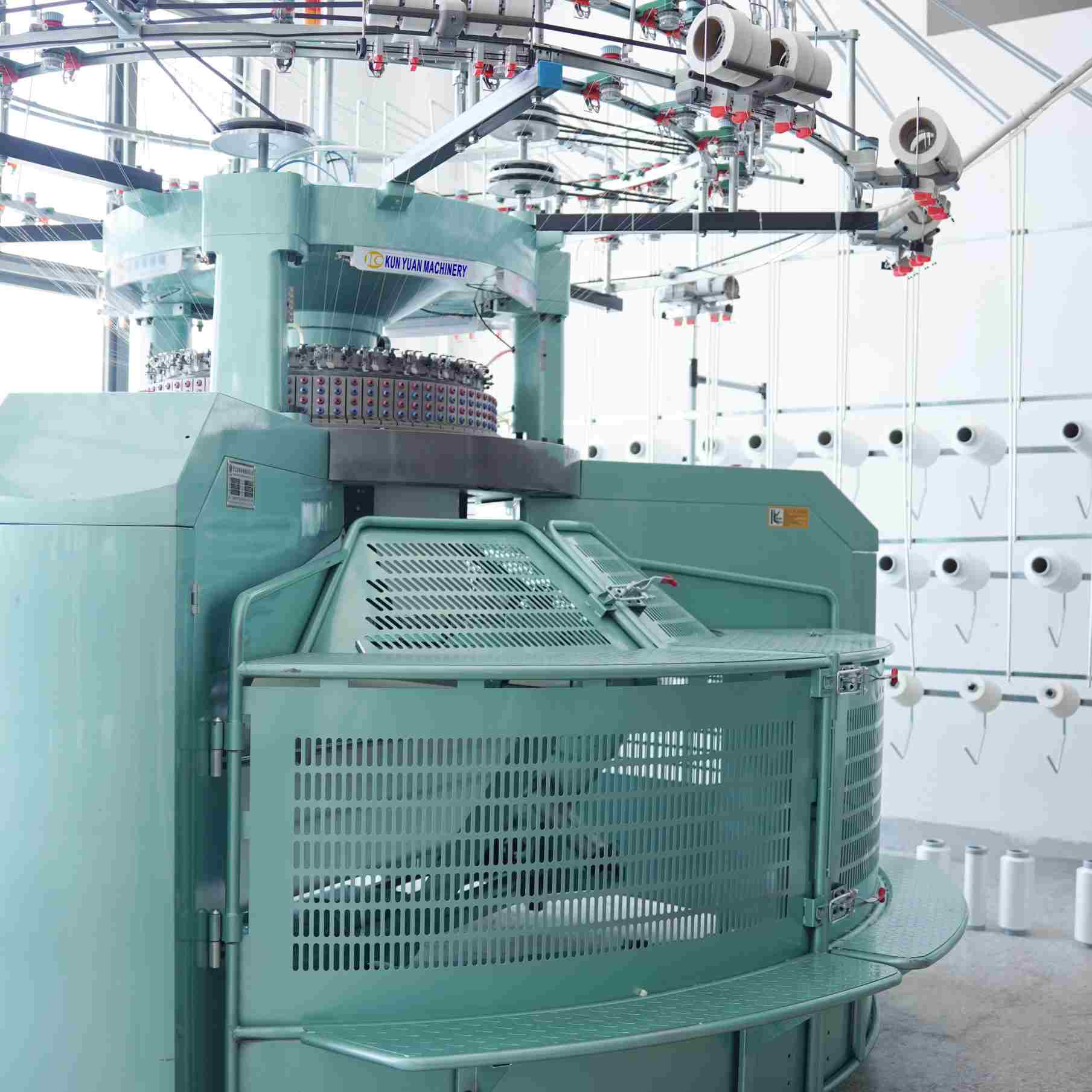
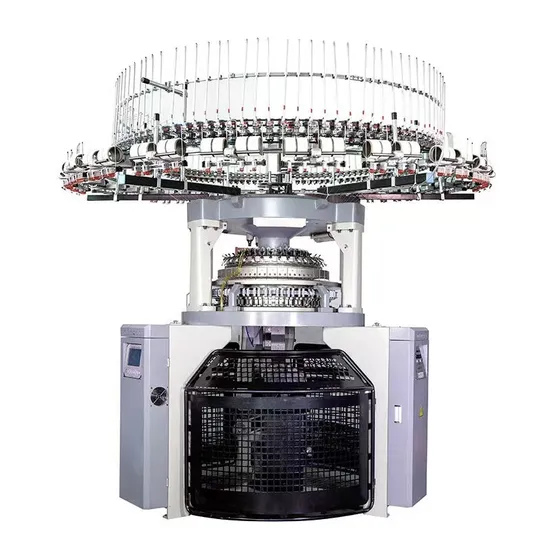
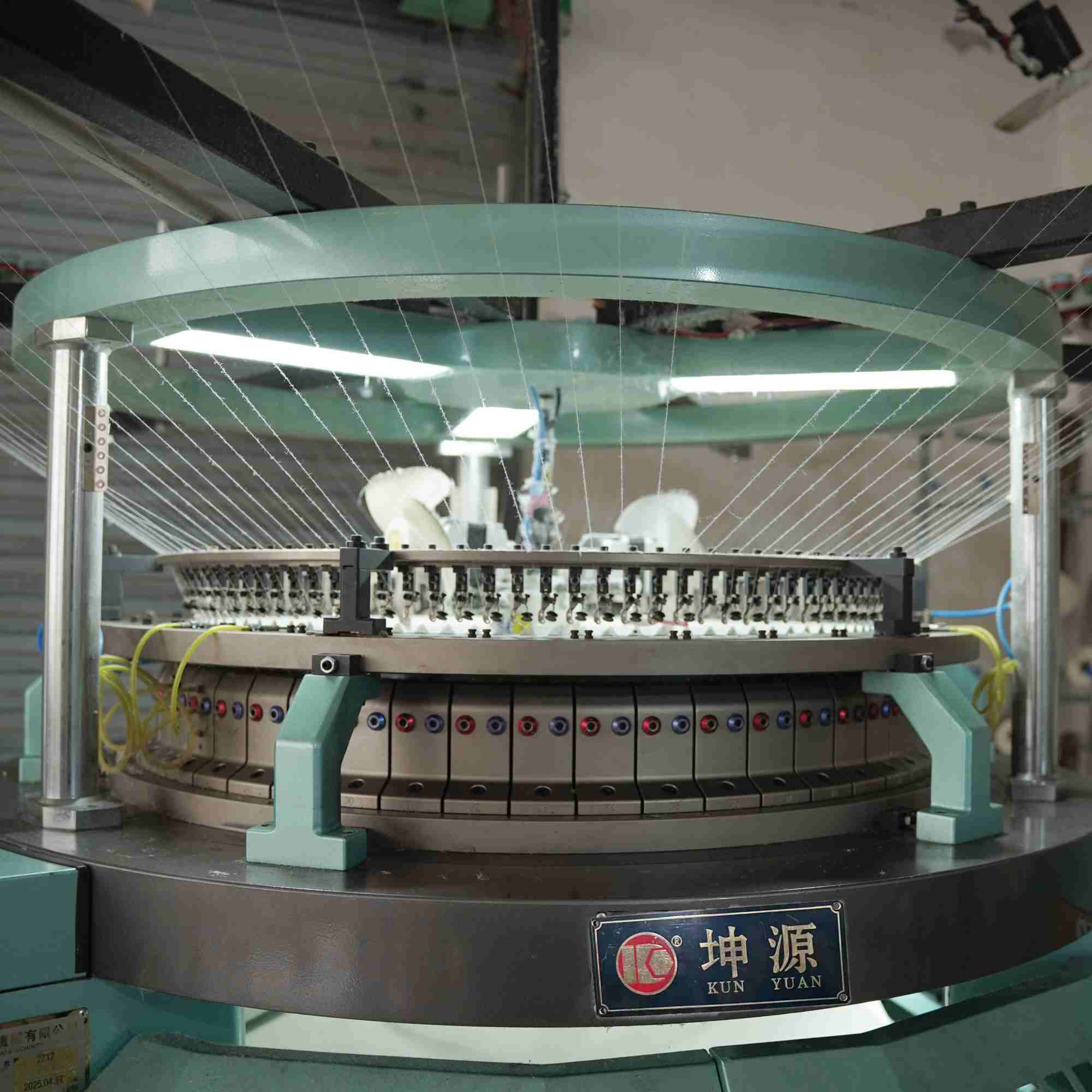
Draw the intended loop arrangement and name the yarn role before asking for diameter, gauge or output. Define face and reverse appearance, finished weight and width, thickness, extension direction, recovery method, edge behavior and end use. Then ask the supplier to map that fabric to the offered cylinder-and-dial system, tracks, cams, needles, yarn delivery and take-down. Published combination machines show possible families, not automatic proof that every quoted build changes between all structures.
Use matched yarn lots and one finishing route for the comparison. Record the installed parts and time required to move between the approved rib and interlock setups. A clean short sample is incomplete if the mill cannot identify change parts, repeat the timing reference, control elastomer or recover the accepted settings after maintenance.
Rib route - prioritize directional extension and a visible wale relationship
Specify rib ratio, technical faces, yarns and any elastomer role. Observe the cylinder-and-dial relationship only through the documented setup and qualified operating boundary. Measure relaxed width, controlled extension and recovery after the named conditioning or finish. A nominal 1x1 or 2x2 label does not replace a physical sample with tolerance.
Inspect transitions, press-off evidence, vertical lines and face balance across the complete circumference. Record the exact set-out and yarn route used for the accepted band. When the end product is a cuff, waistband or fitted panel, evaluate comfort and recovery on the relevant finished construction rather than judging stretch by hand.
Tie the rib set-out to measured recovery.
Interlock route - prioritize two-face cover, stability and thickness
Define the required surface uniformity, reverse appearance, thickness, weight, width and dimensional behavior. Confirm that the offered double-knit arrangement and active tracks support the actual interlock structure; do not infer this from the presence of a dial alone. Use the exact buyer yarn and inspect both faces under fixed light.
Interlock can provide a balanced, covered fabric, but stability depends on yarn, stitch basis, withdrawal and finishing as well as architecture. Mark stop and restart points and compare their appearance after the intended process. Retain a sample large enough to assess full-width variation and garment cutting behavior.
Inspect interlock on both faces after finishing.
Treat conversion work as a controlled production event, not a sales adjective
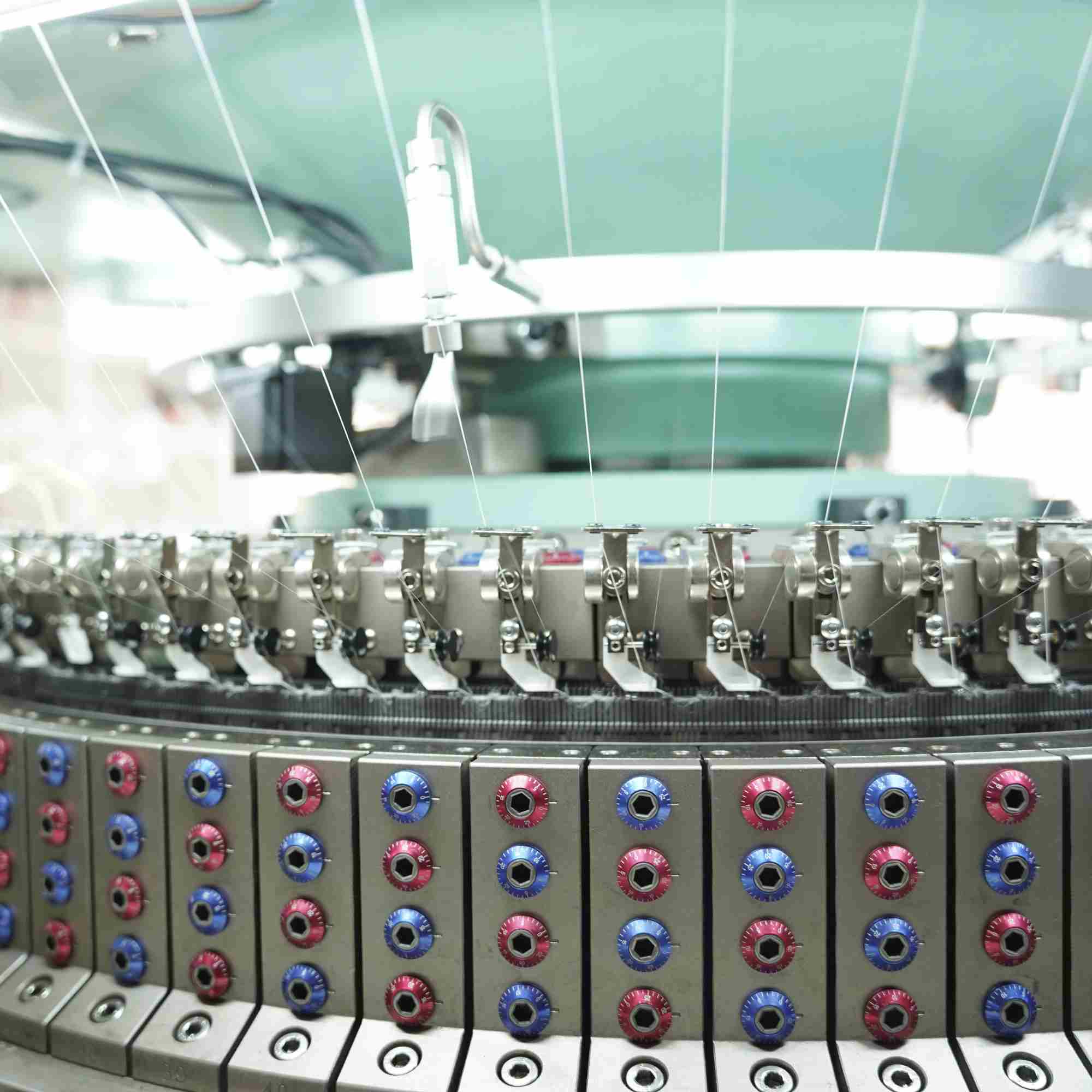
List cams, needles or other elements, yarn paths, take-down references, control files, tools and qualified labor involved in the approved change. Identify which items are standard, optional or supplied separately. Record cleaning, verification and first-piece inspection before estimating downtime.
After changeover, knit a marked startup interval with the target yarn rather than relying on an empty-machine check. Compare it with the retained master sample and settings. If several subsystems are adjusted together, the mill loses the ability to explain a defect or restore the last accepted state. A conversion claim is useful only when the receiving team can execute and verify it.
Rank the two routes by the actual style mix and accepted kilograms
Build a product-mix table showing fabric type, order size, yarn family, finishing route, change frequency, quality criteria and forecast accepted quantity. Deduct trial rolls, cleaning, conversion, maintenance, inspection and rejected sections from scheduled time. Do not transfer the observed rate from an easy rib construction to a dense interlock program.
Run the difficult boundary style for each route and record saleable output, stops and operator work. A dedicated machine may outperform a flexible route when styles are stable; a convertible platform may reduce capital when the documented mix justifies its changeover burden. The answer comes from the mill's portfolio and evidence, not a universal winner.
Include conversion work in the commercial comparison.
Rib and interlock decision matrix
Decision field
Rib evidence
Interlock evidence
Commercial question
Architecture
Specified rib set-out
Specified interlock set-out
Which structure is contracted?
Fabric behavior
Extension and recovery
Cover, thickness and stability
Which finished limits matter?
Machine state
Documented parts and settings
Documented parts and settings
Is conversion included?
Output
Accepted kg by rib style
Accepted kg by interlock style
What does the order mix require?
Rib and interlock comparison questions
Are rib and interlock the same because both use cylinder and dial needles?
No. Their needle arrangements and resulting fabric architectures differ; confirm the exact structure and setup.
Which fabric stretches more?
Measure the specified finished samples. Yarn, structure, elastomer, stitch basis and finishing all affect extension and recovery.
Can one machine always convert between them?
Only when the exact offered model, parts and approved conversion procedure support both routes.
How should output be compared?
Use accepted kilograms per scheduled hour for each target fabric, including changeover and quality losses.
What should be retained after the trial?
Keep both-face samples, yarn identity, setup records, finish method, changeover list and signed results.
Conclusion
Rib and interlock should be compared as two finished-fabric systems. Once architecture, recovery, face quality, conversion work and accepted output are measured separately, the machine choice becomes specific to the product mix. This avoids both a false technical equivalence and a blanket claim that one route is always better.





 Tel: +86-13859034518
 Email: info@kunyuanmachine.com
 MP/WhatsApp: +86-13859034518
 Manufacturer Address:Bacuo Village, Yonghe Town, Jinjiang City, Fujian Province