
Language
Hot Keyword:
Author:KUNYUAN Machine Manufacturer TIME:2026-11-17
Assess a rib mini-jacquard proposal by matching its structural motif to the offered cylinder and dial cam tracks. Kunyuan lists several track options, but those options do not establish unrestricted needle selection. Ask for a mapped repeat and a finished sample before treating artwork as manufacturable.
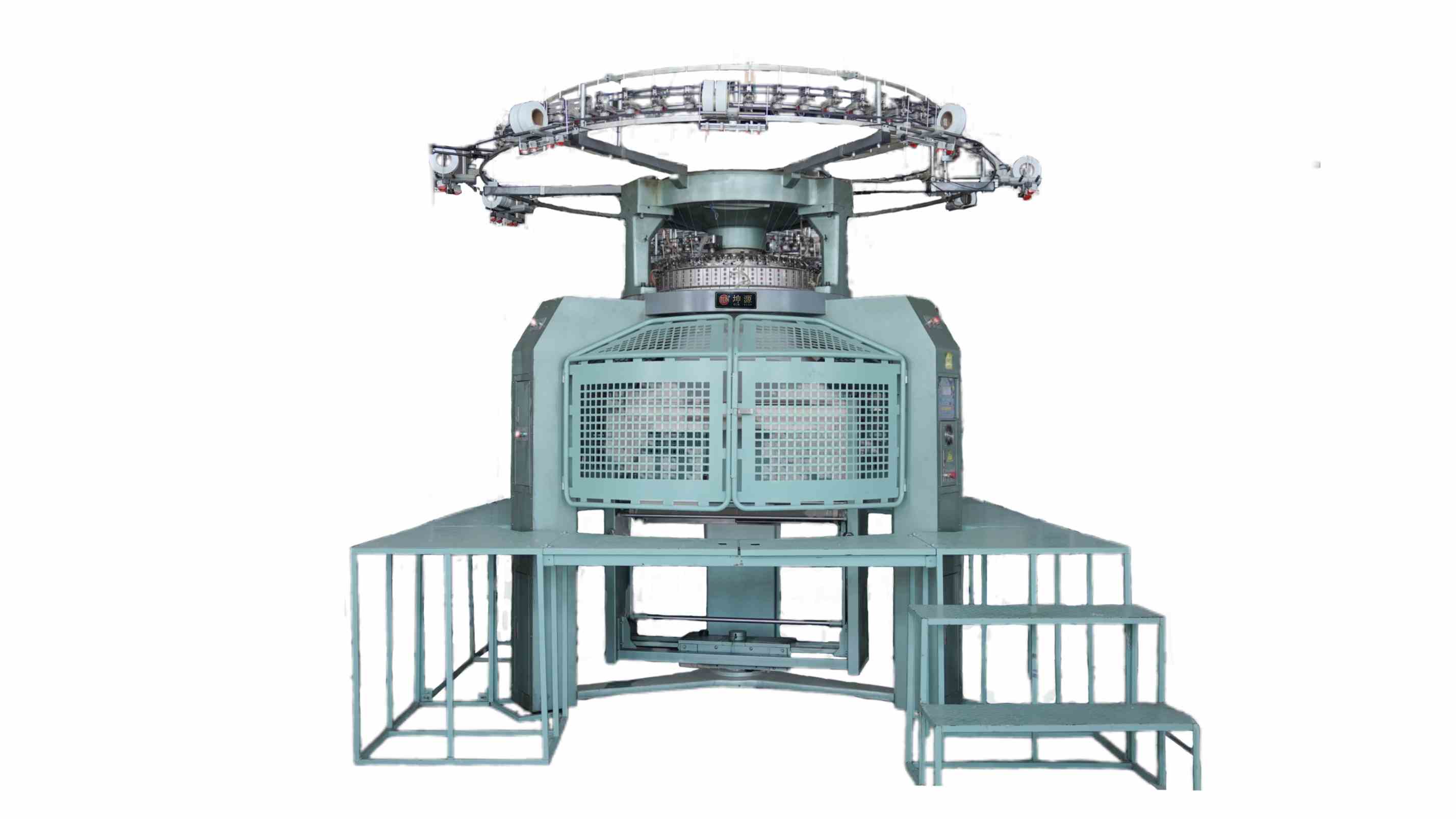
Kunyuan's rib product page, read on October 11, 2026, gives a 30-inch, 8G-24G, 54F table and describes optional dial and cylinder track counts plus mini-jacquard adjustment. These are catalogue statements, not a trial of the buyer's motif. The quoted combination still needs to be identified.
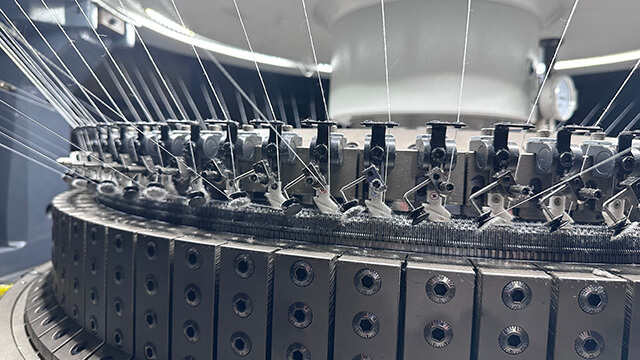
Groz-Beckert describes the two needle beds of double jersey and teaches the connection between fabric analysis and cam tables. CottonWorks explains the distinct knit, tuck and float actions. Use that mechanism to ask whether the proposed motif can be formed by the needle groups available on the offered build.
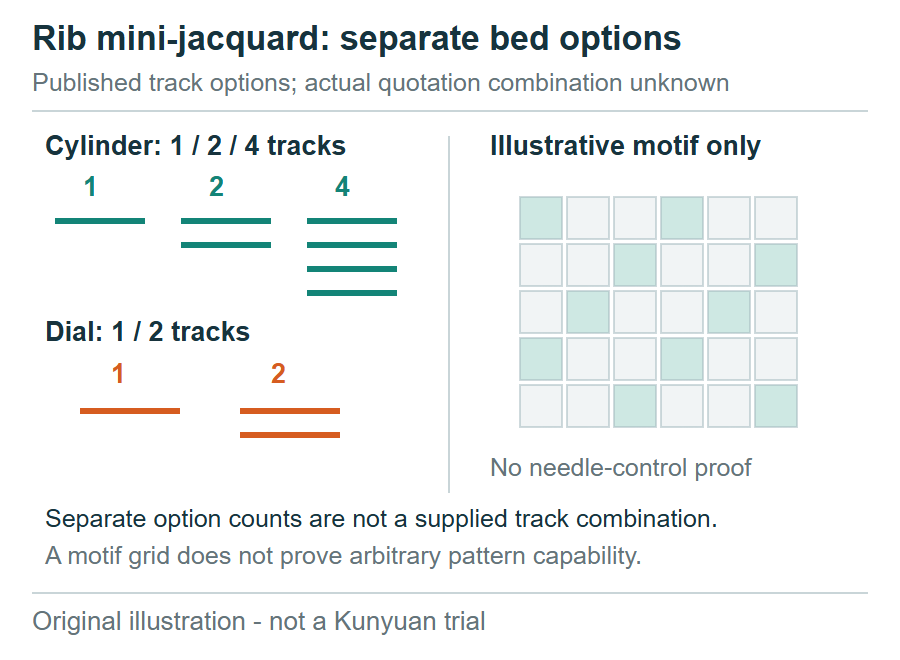
Give the supplier a face/back specimen or a loop notation, not only a shaded picture. Mark the structural repeat in wales and courses, the selling face and the areas expected to differ in texture. Ask whether a dark cell represents a different yarn color, a tuck, a float or simply a shadow. Those are different manufacturing requests.
For a proposed checker texture, for example, distinguish the raised and recessed regions without claiming that any listed machine can produce the design. Have the supplier redraw the intended loop duties using its normal notation. This makes an unsupported color-jacquard assumption visible early, before the buyer approves a sample that happens to resemble the picture but has a different underlying construction.
Place the quoted cylinder tracks and dial tracks in separate columns. For each feed of the proposed repeat, ask the supplier to identify which needle groups perform each loop action. A track count describes part of the mechanical arrangement; it is not a direct count of colors, motif pixels or freely selectable needles.
The catalogue's one-, two- and four-track cylinder choices must not be merged into a single standard configuration. Likewise, a two-track dial option is not evidence that every offered machine includes it. Request the exact combination and any pattern restrictions in the response. Leave timing, assembly and cam changes to the manufacturer's qualified procedure. The buyer's job is to understand what motif is being supplied, not to derive a mechanical setup from the brochure.
Review the transition between neighboring repeats and the smallest requested feature. If several needles share the same mechanical action, ask how that grouping affects the motif's edge or a narrow stripe of texture. A supplier may propose a larger cell, a different repeat or a simpler structural effect. Have the designer compare that proposal with the original design goal.
Include the technical back in the review. A correct-looking face can still differ in reverse texture or extensibility where the garment uses it. Compare relaxed specimens rather than pulling one candidate harder to improve the effect. Where the requested detail cannot be supported, describe the actual alternative clearly. A modest, reproducible texture may serve the design better than a quotation that leaves fine detail unexplained.
Place the finished sample beside the garment pattern and view it at a realistic distance. A tiny structural repeat may read as a general texture, while a larger cell may dominate a small panel. Decide whether the intended value is visual depth, a contrasting band or an all-over surface. This connects the mechanical restriction to a design decision rather than treating more tracks as automatically better.
Ask for another identified length of the same construction to check that the effect survives repeated knitting and the intended finish. Keep the accepted loop map with it. If future designs need independently placed large motifs or more complex selection, raise that as a separate machine enquiry. A mini-jacquard sample establishes its own structural effect; it does not approve an electronic jacquard platform or every future drawing.
| Drawing layer | Buyer input | Supplier explanation | Design decision |
|---|---|---|---|
| Motif | Cell size and loop duties | Actual structural notation | Keep or simplify texture |
| Cylinder | Required face effect | Quoted tracks and needle groups | Accept detail limits |
| Dial | Required reverse effect | Quoted tracks and loop duties | Check reverse use |
| Repeat | Smallest feature and edges | Mapped finished sample | Approve the demonstrated motif |
No. A cam-track count and a color-selection capability describe different things. Ask what yarn and needle actions the offered build actually supports.
No. Request the exact offered cylinder and dial combination and identify any optional parts.
The motif's loop actions affect both sides. The reverse may matter for appearance, handling or the garment's contact surface.
Yes, as a proposed design change. The buyer should approve the changed cell and detail rather than accepting it as an unannounced equivalent.
No. It organizes feasibility questions. Mechanical configuration and adjustment remain with the exact manufacturer's procedure.
The useful mini-jacquard option is the one that can explain its motif in loop actions on both beds. Ask for a feasible repeat, understand the limits of the quoted track combination and judge the finished effect on the garment. That turns a broad option name into a specific texture the buyer can approve.
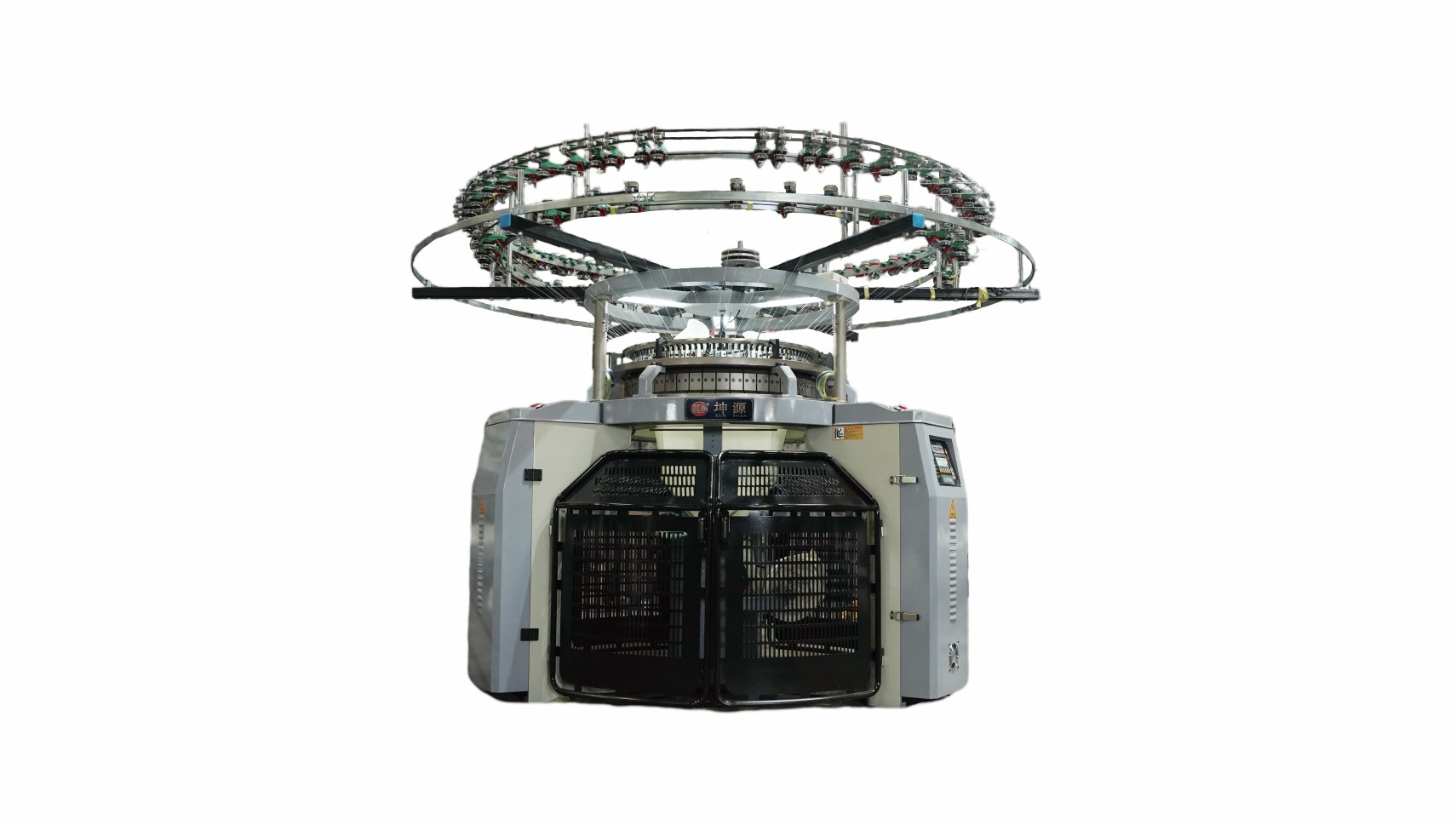
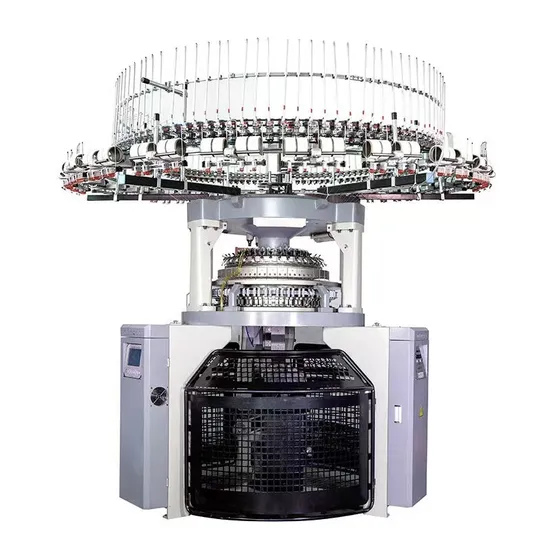
Discuss the motif with the Rib Double Jersey Circular Knitting Machine catalogue and request the proposed cylinder/dial track map.

 Tel: +86-13859034518
 Email: info@kunyuanmachine.com
 MP/WhatsApp: +86-13859034518
 Manufacturer Address:Bacuo Village, Yonghe Town, Jinjiang City, Fujian Province