A single box dimension cannot support a cubic-volume quotation
Price freight from each package's external dimensions and packed gross mass, then apply the chosen provider's stated charging rule. Kunyuan's 34-inch single-jersey listing gives a 2.5 m box entry without three dimensions. It cannot establish cubic volume, chargeable units or a reliable shipment budget on its own.
The Kunyuan model page, read on October 11, 2026, lists 34''26G102F, net weight 1.5tons and wooden-box size 2.5m. These are catalogue entries, not dispatch measurements. In particular, a length is not a volume; its missing width and height must be requested.
Maersk's public LCL terms provide one specific weight-and-measure calculation. The CTU Code discusses accurate packed-cargo information. Use those sources to separate geometric volume, gross mass and commercial charging units. This is a proposed budgeting method, with no actual Kunyuan shipment, current rate or saving asserted.
01
Cost layer one: obtain a complete package measurement
Ask for package count and external length, width and height for every crate or accessory box. Include the packed base and any protrusion used for the provider's measurement. Record units and the final packing revision. A machine's 34-inch cylinder tells you its knitting diameter, not its shipping envelope.
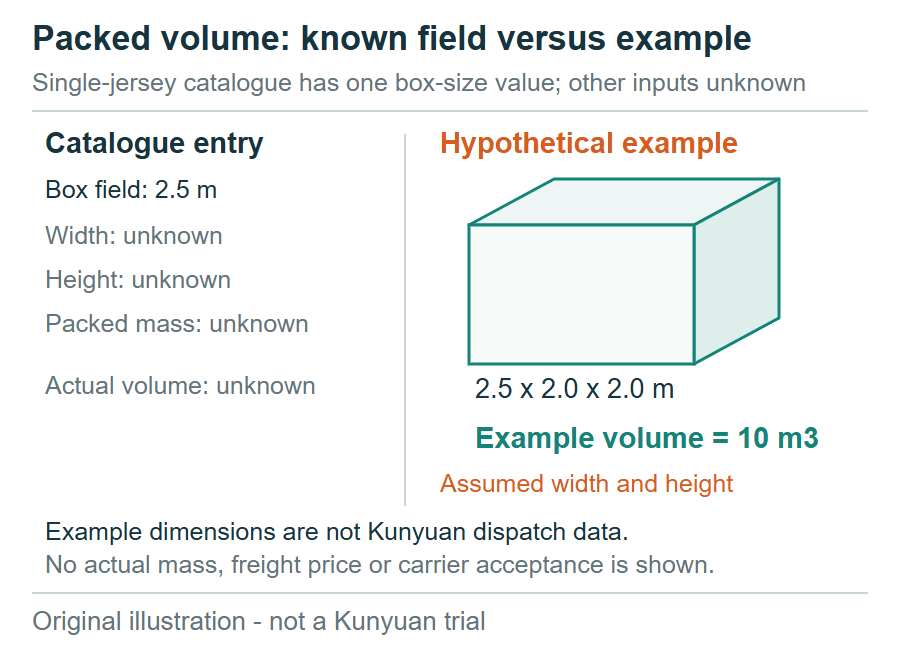
Calculate each package volume as length multiplied by width multiplied by height, using metres, then sum the package volumes. As a hypothetical illustration only, a box measuring 2.5 x 2.0 x 2.0 m occupies 10.0 cubic metres. The two invented dimensions are not replacements for Kunyuan's missing fields. Keep the actual volume unresolved until the supplier provides the final values, and ask the forwarder how rounding or special cargo rules affect its quotation.
02
Cost layer two: compare volume with the actual gross mass
Obtain packed gross mass separately from the catalogue's net machine weight. Packaging, bases and separately supplied items form part of the dispatched cargo. The CTU Code's documentation discussion supports keeping packed-load information accurate, but a package's mass and the verified gross mass of a packed container are different records. Do not relabel one as the other.
Under the specific Maersk LCL rule read for this article, a weight-and-measure calculation compares cubic metres with gross kilograms divided by 1,000 and uses the larger equivalent. In a hypothetical 10.0-cubic-metre, 1,800-kg example, the comparison is 10.0 versus 1.8, so volume governs that rule. This does not prove acceptance of this machinery for LCL, establish its real packed mass or impose the same charging basis on another provider.
03
Cost layer three: separate a unit rate from the payable total
Request the rate unit, minimum charge, rounding method and which quoted services depend on measured cargo. Keep fixed charges apart from charges multiplied by the billing units. A low ocean-freight rate can be an incomplete comparison if another offer includes handling that the first leaves outside its total. Use the same package data and named transport scope for each enquiry.
For a clearly hypothetical rate of 40 currency units per billing unit, 10 units would create a 400-unit line before other charges. This is arithmetic, not a current freight quote. Leave unpriced items visible rather than adding invented allowances. Ask the provider to identify any packing geometry, handling restriction or storage circumstance that changes its offer. Maersk's terms mention storage beyond applicable free time; they do not supply a universal free period or storage price.
04
Cost layer four: show how a packing revision changes the estimate
Keep an earlier proposed package arrangement beside the final one. In a hypothetical comparison with length 2.5 m and width 2.0 m unchanged, increasing height from 2.0 m to 2.2 m increases volume from 10.0 to 11.0 cubic metres. Under a volume-governed rule this adds one billing unit before minima or rounding. It is not a ten-percent prediction for Kunyuan's shipment.
Ask the provider to recheck cargo acceptance and the charges when the final dimensions, package count or mass changes. A smaller crate is not automatically a better purchase if it requires a different permitted handling arrangement or separates additional components. Keep that assessment with the packer and transport specialist. The buyer's useful output is a transparent measurement-based freight estimate whose assumptions can be replaced by confirmed dispatch information.
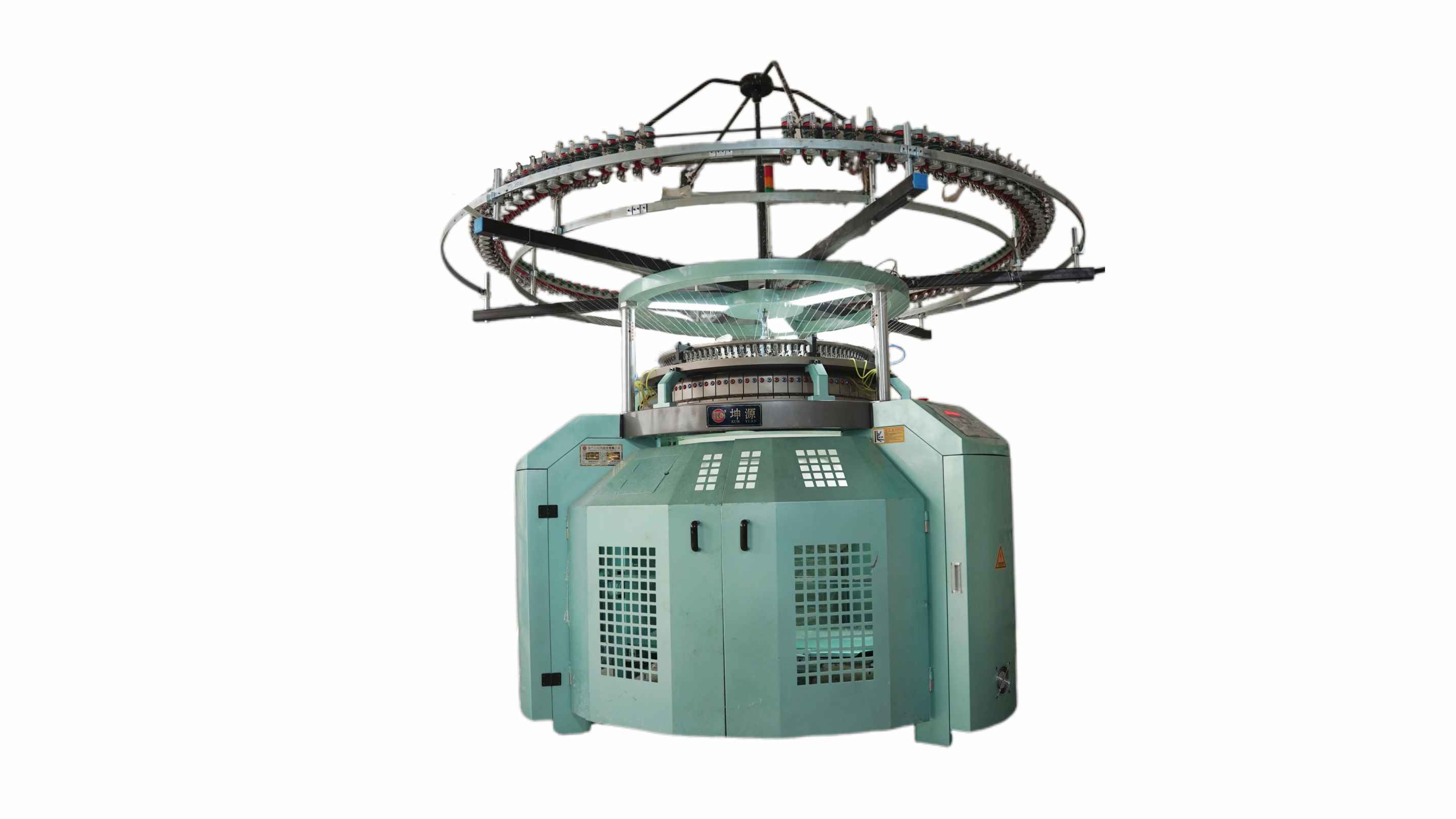
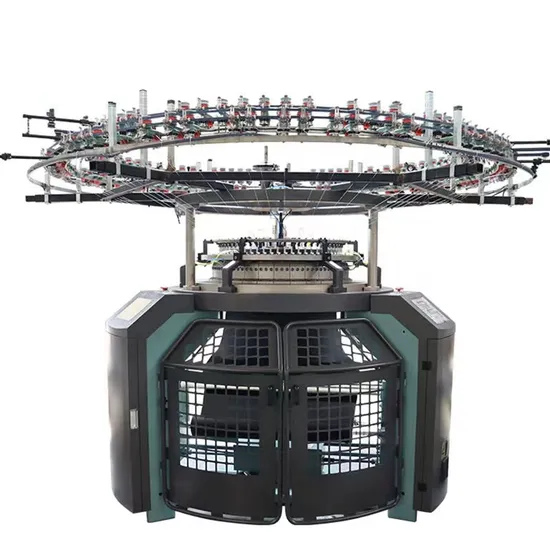
A bare-machine gallery view does not supply external crate dimensions.
Original illustration. Original comparison separates the catalogue's sole 2.5 m box field from a hypothetical 2.5 x 2.0 x 2.0 m package giving 10 m3. Actual width, height, packed mass and cubic volume are unknown. Kunyuan editorial; not a Kunyuan trial.
Obtain identified final package measurements before requesting freight prices.
Freight measurement cost stack
Layer
Required input
Calculation or response
Unresolved example
Volume
All external L/W/H values
Sum of package cubic metres
Only 2.5 m is published
Mass
Packed gross mass
Provider's weight equivalent
Net mass used as gross
Units
Chosen carrier rule
Volume/weight and rounding
Universal rule assumed
Total
Unit and fixed quote lines
Same scope and final packing
Rate alone treated as total
Machine freight measurement questions
Can 2.5 m be entered as 2.5 cubic metres?
No. It is a length entry. Cubic volume requires complete external length, width and height.
Is the listed 1.5 tons the packed mass?
No. It is labeled net weight. Obtain dispatch-specific packed gross mass and confirm the ton unit.
Does every LCL provider use one cubic metre per 1,000 kg?
Do not assume so. The cited Maersk terms describe that rule; obtain the chosen provider's actual charging basis.
Are the worked dimensions real Kunyuan crate data?
No. They are explicitly hypothetical arithmetic examples and must not replace missing supplier measurements.
When should the freight estimate be updated?
When the final packing dimensions, package count, mass, service scope or quotation validity changes.
Conclusion
Freight comparison starts with complete packed geometry and gross mass. Resolve the single-dimension box field, apply the chosen provider's own measurement rule and separate multiplied charges from fixed lines. Then a changed crate or accessory package becomes a visible change in the estimate, rather than a hidden assumption behind a low rate.








 Tel: +86-13859034518
 Email: info@kunyuanmachine.com
 MP/WhatsApp: +86-13859034518
 Manufacturer Address:Bacuo Village, Yonghe Town, Jinjiang City, Fujian Province