
Language
Hot Keyword:
Author:KUNYUAN Machine Manufacturer TIME:2026-08-20
Before buying a used circular knitting machine, identify the exact asset and its current build, separate known repair work from unsupported changes, and agree what evidence will release it after delivery. Compare the asking price only after missing parts, control support, transport and recommissioning responsibilities are visible.
Open an asset record for the offered unit. Request the complete nameplate, model and suffix, serial or build reference, current cylinder and dial where fitted, diameter and gauge convention, feeders, yarn devices, controls, take-down and collection arrangement. Match each item to a photograph of that unit and the corresponding manual, parts list or drawing.
Record modifications and missing items separately from the original specification. A replacement cylinder, later controller or changed feeder package may leave the frame badge correct while altering the supported configuration. Mark each record as confirmed, inconsistent or unavailable; a similar machine photograph cannot close an identity gap.
Ask a qualified inspector to record each defect by subsystem, position, observation method and consequence. Keep evidence of damaged knitting elements, worn mating parts, unstable yarn delivery, control faults, missing guarding and fabric-handling problems. Access, measurements and energized tests must follow the exact machine procedure and the responsible site's safety arrangements.
Separate recovery of the documented configuration from optional expansion. For every repair or proposed conversion, request the exact part reference, compatibility confirmation, responsible supplier and acceptance test. If a critical part or control has no verified support route, keep the dependency open instead of assuming that a generic replacement will fit.
Agree a pre-sale trial only after identity and safe running have been confirmed. Use the intended yarn and a structure within the documented build. Record the setup, yarn lots, running time, stops, package changes and planned restart. Mark roll positions and retain rejected material as well as the selected sample; no universal speed or trial duration is specified here.
Inspect both faces and the full usable width or circumference, then process labelled pieces through the intended relaxation or finish. Compare the specified width, weight, appearance and dimensional response on one stated basis. Repeat the same route after delivery and recommissioning; a pre-sale swatch does not establish that the delivered unit will reproduce it.
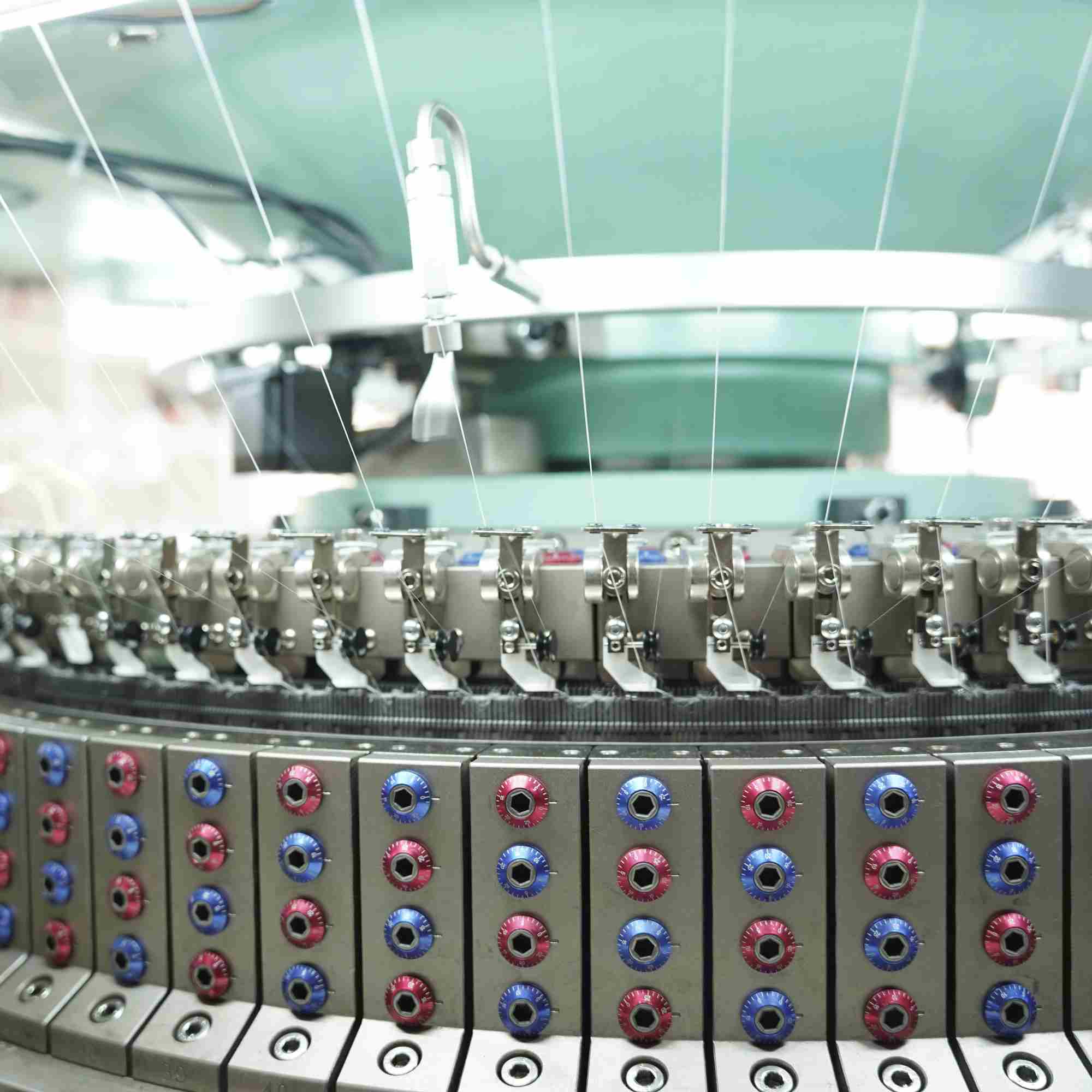
Check the support package against the current asset record. Ask for the applicable manuals, electrical drawings, approved part designations, controller identity and usable setup backups where relevant. Identify who can support that revision and which documents or access arrangements will be handed over. A powered display is not evidence of a recoverable production setup.
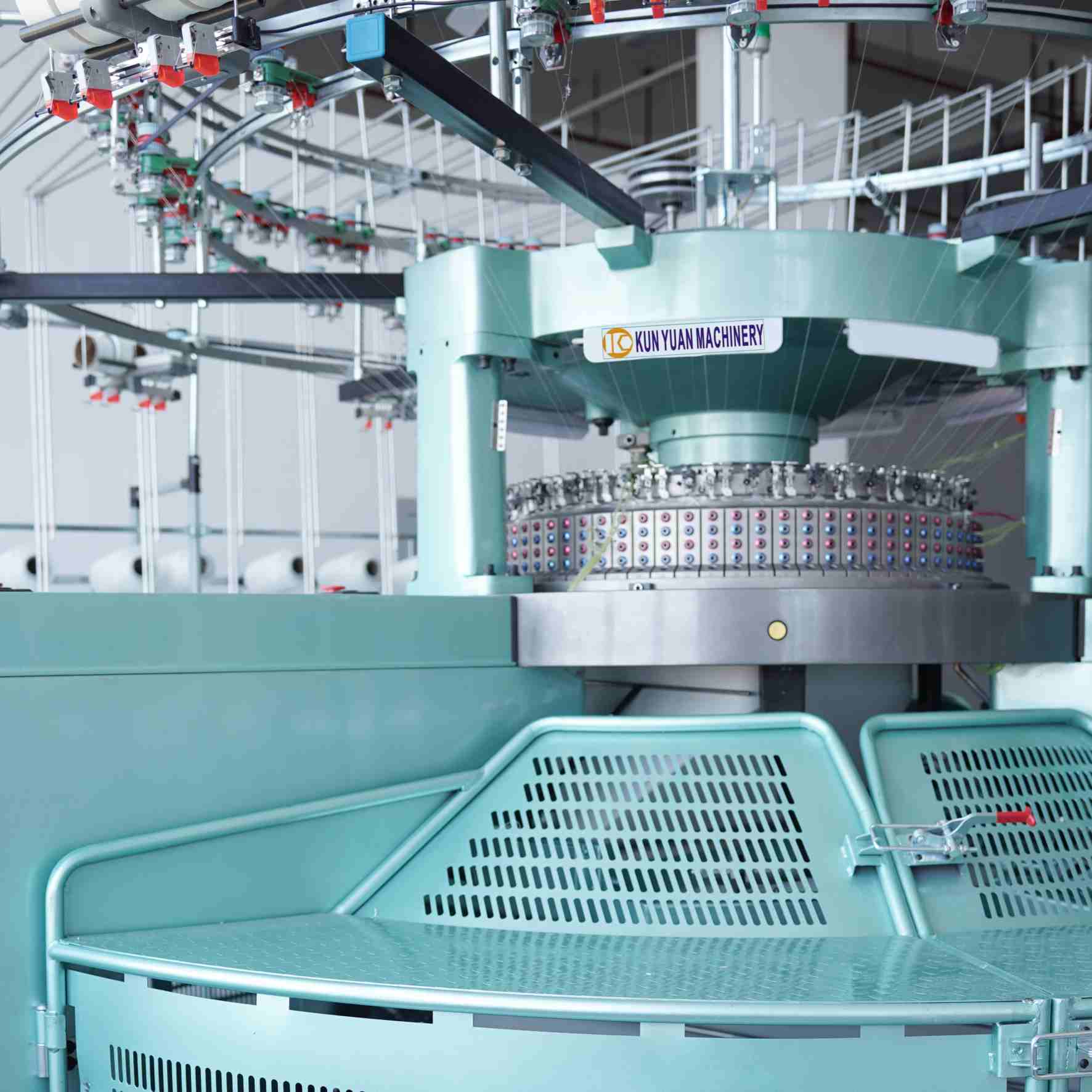
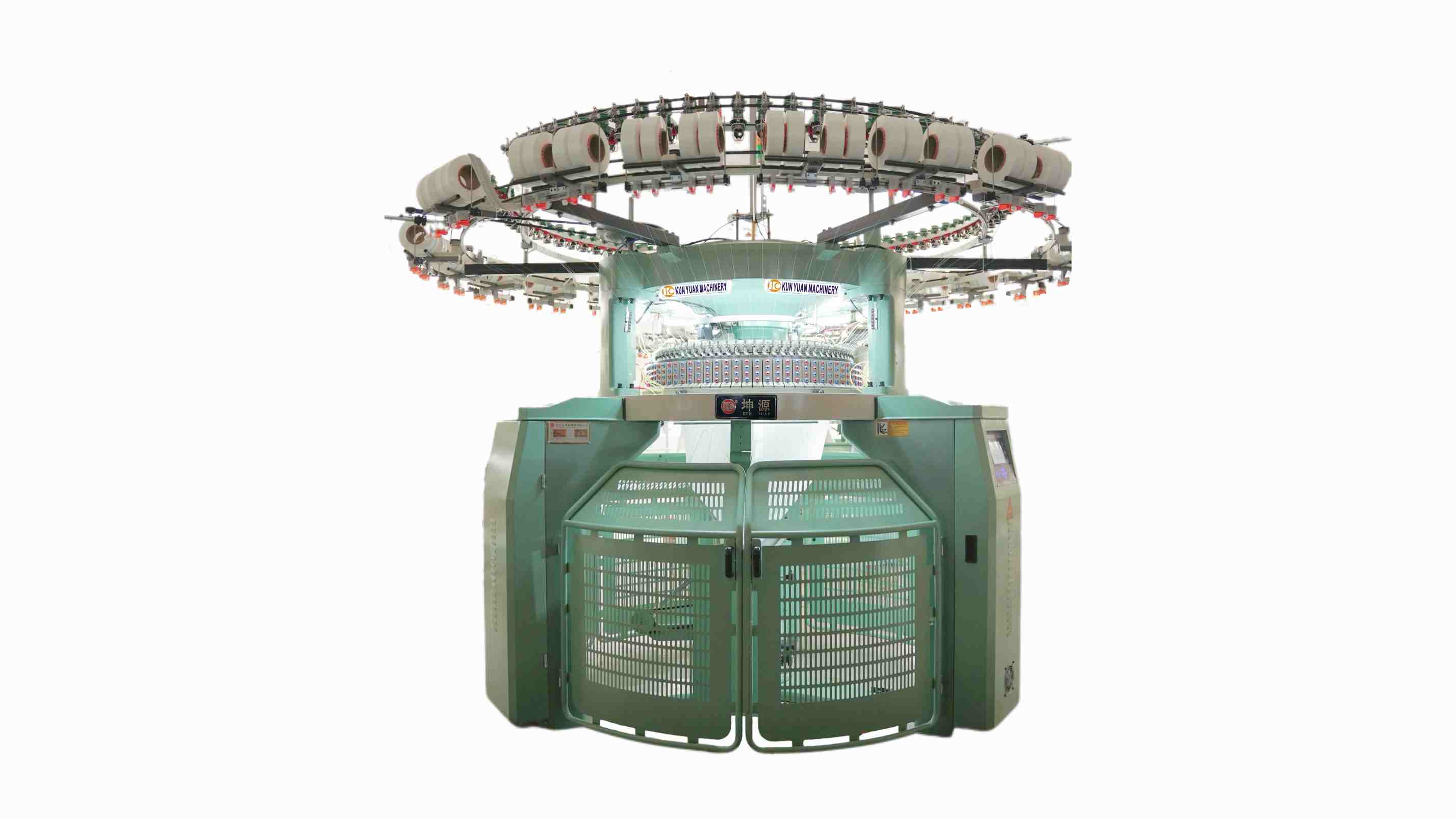
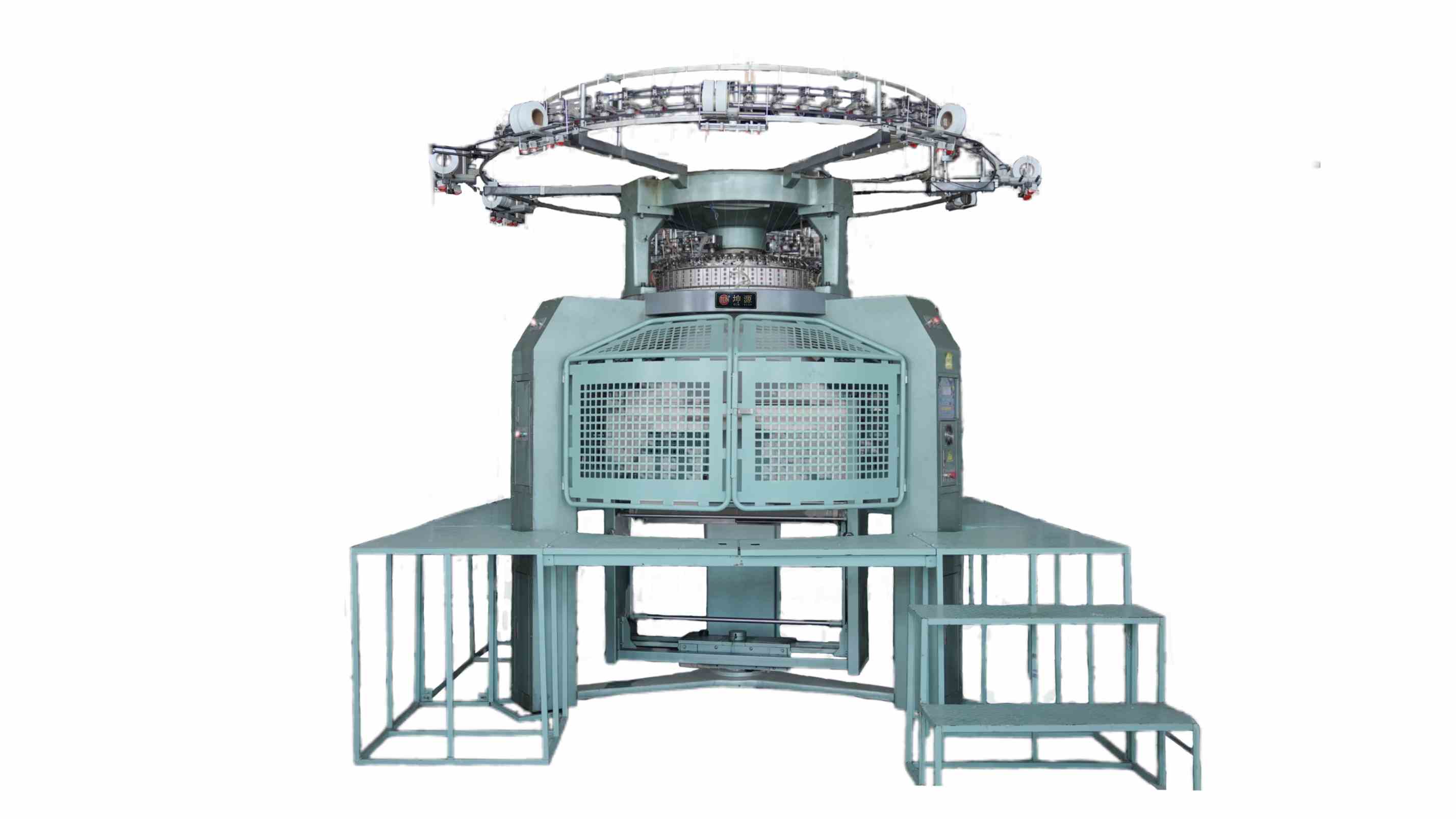
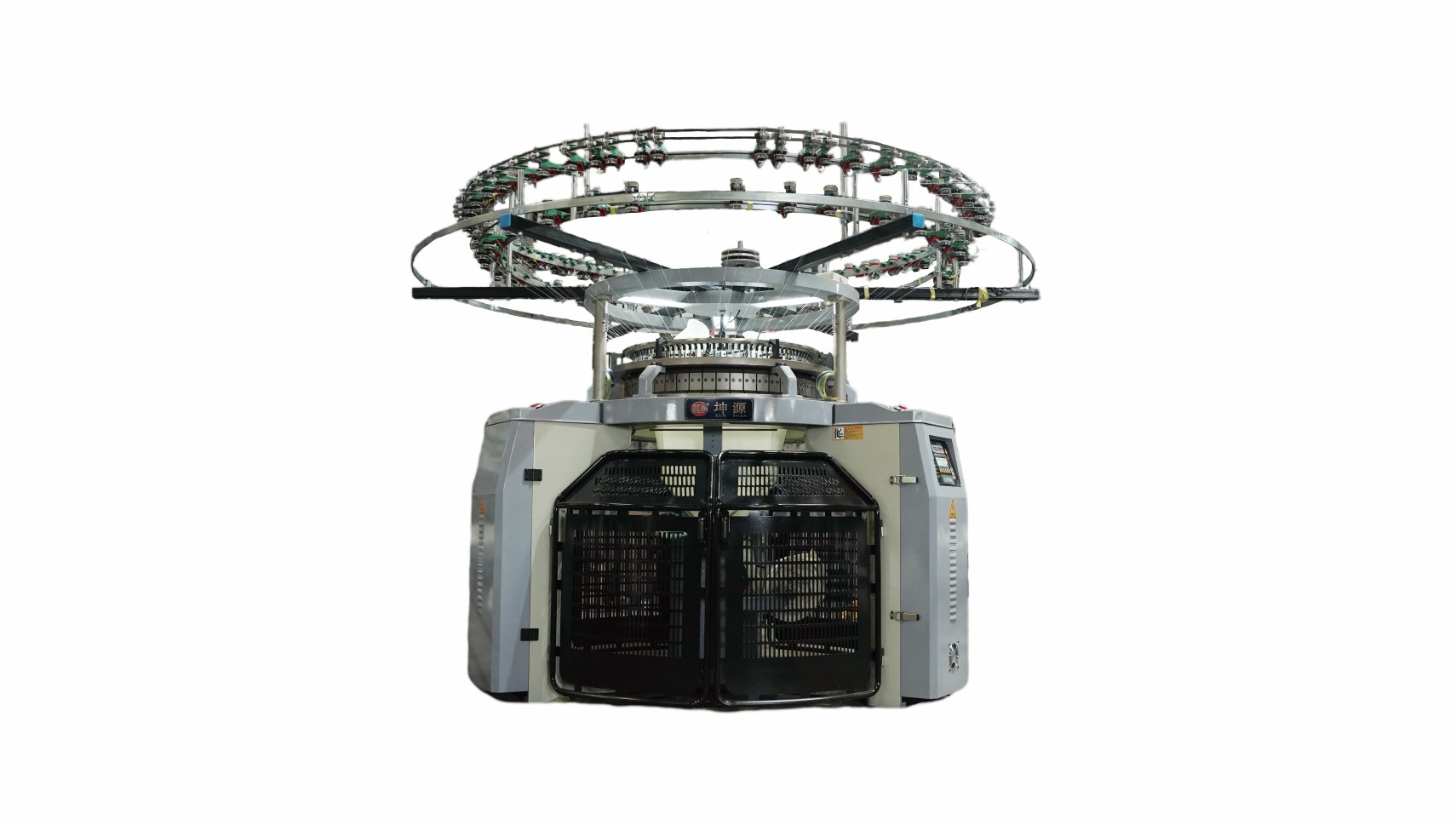
Request written confirmation for any proposed substitute or retrofit. The confirmation should name the asset or exact compatible revision, affected interfaces, included parts and software where applicable, and the post-installation test. A feature published for another machine family does not prove support for this unit. The retained Kunyuan images are general machine references, not photographs of an offered used asset.
Build the cost schedule around what this unit needs before it can produce the agreed fabric. List inspection and missing documentation, evidenced repairs, included change parts, dismantling and packing, transport, site preparation, reassembly, commissioning yarn, training and initial spares. Request a separate quotation or unresolved status for each item; no price or saving is assumed.
Assign an owner to each handoff between seller, carrier, installer and receiving mill. Define which assemblies travel fitted or removed, how positions and connections are recorded, who supplies the model-specific lifting and utility information, and who witnesses the site trial. Keep delivery, repair and fabric-acceptance responsibilities on the same offer revision.
Use explicit release states for the asset: identified and ready for the agreed trial, held for a named finding, awaiting a supported repair, or outside the required fabric scope. Each open item needs evidence, an owner and a next check. Do not turn an untested fabric or undocumented conversion into accepted scope merely by adding it to the quotation.
Keep the signed current-build record, inspection findings, repair list, marked pre-sale sample and site-repeat result together. Record what the test demonstrated and what remains untested. The decision is whether this identified unit can repeat the specified finished fabric, rather than whether a generic machine category sounds suitable.
| Decision gate | What to define | Evidence to retain |
|---|---|---|
| Asset identity | Current model, serial/build reference and installed systems | Nameplate, current-build sheet and matched documents; hold unresolved conflicts. |
| Condition and support | Positioned findings, supported parts and repair responsibilities | Qualified inspection, compatibility confirmation and an owned open-item list. |
| Delivery boundary | Included items, dismantling, transport and recommissioning | Itemised offer and handoff record with each responsibility assigned. |
| Fabric release | One supported structure, yarn and finished inspection basis | Marked pre-sale and site-repeat samples with settings and untested scope recorded. |
Request the asset identity, current installed build, included and missing items, condition findings, support documents and the agreed trial route. Separate seller work, buyer work and unresolved dependencies so the offer can be checked against the delivered unit.
Use the same documented yarn, structure and inspection basis for the pre-sale and site trials. Preserve the setup, event marks, greige reference and finished measurements. Treat any changed hardware, control revision or finishing route as a recorded difference that may require another comparison.
Compare evidenced repair and conversion work, missing parts or documents, transport, installation, trial material, training and initial spares. Keep unpriced dependencies visible; an arbitrary refurbishment allowance cannot establish either compatibility or final cost.
Keep the purchase or trial held when asset identity conflicts with the installed parts, safe testing is not possible, critical support is unconfirmed, or the required finished fabric cannot be reproduced. Request the missing document, qualified inspection or bounded test that would resolve each item; do not fill the gap with a capability claim.
Ask the seller of the identified unit for the asset record, condition findings, included scope and pre-sale/site acceptance plan. The linked Kunyuan range is a machine-family reference; it is not evidence of second-hand stock or a refurbishment service.
Explore the circular knitting machine range
 Tel: +86-13859034518
 Email: info@kunyuanmachine.com
 MP/WhatsApp: +86-13859034518
 Manufacturer Address:Bacuo Village, Yonghe Town, Jinjiang City, Fujian Province