A stripe command is complete only when the intended yarn reaches the correct feed and the fabric records the transition
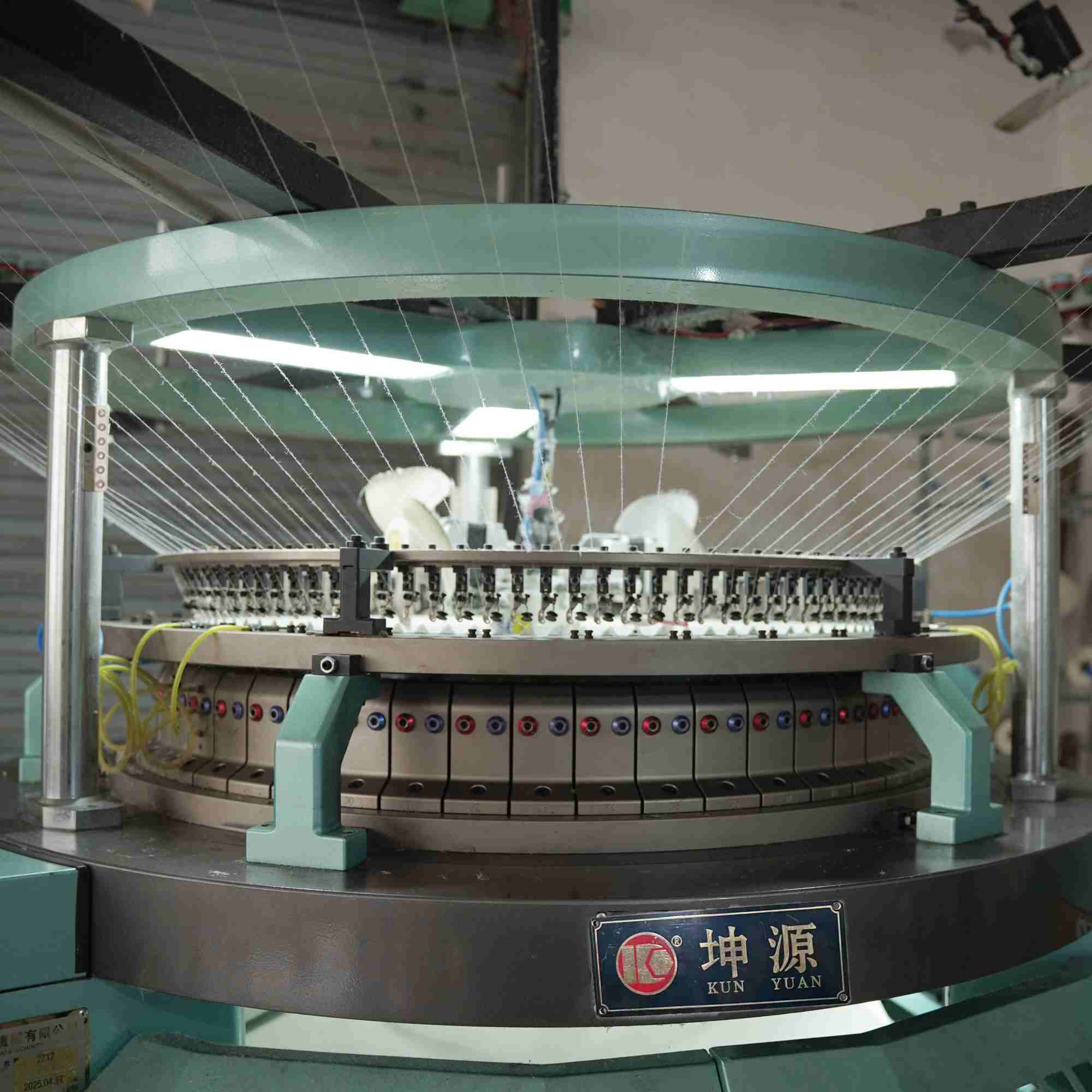
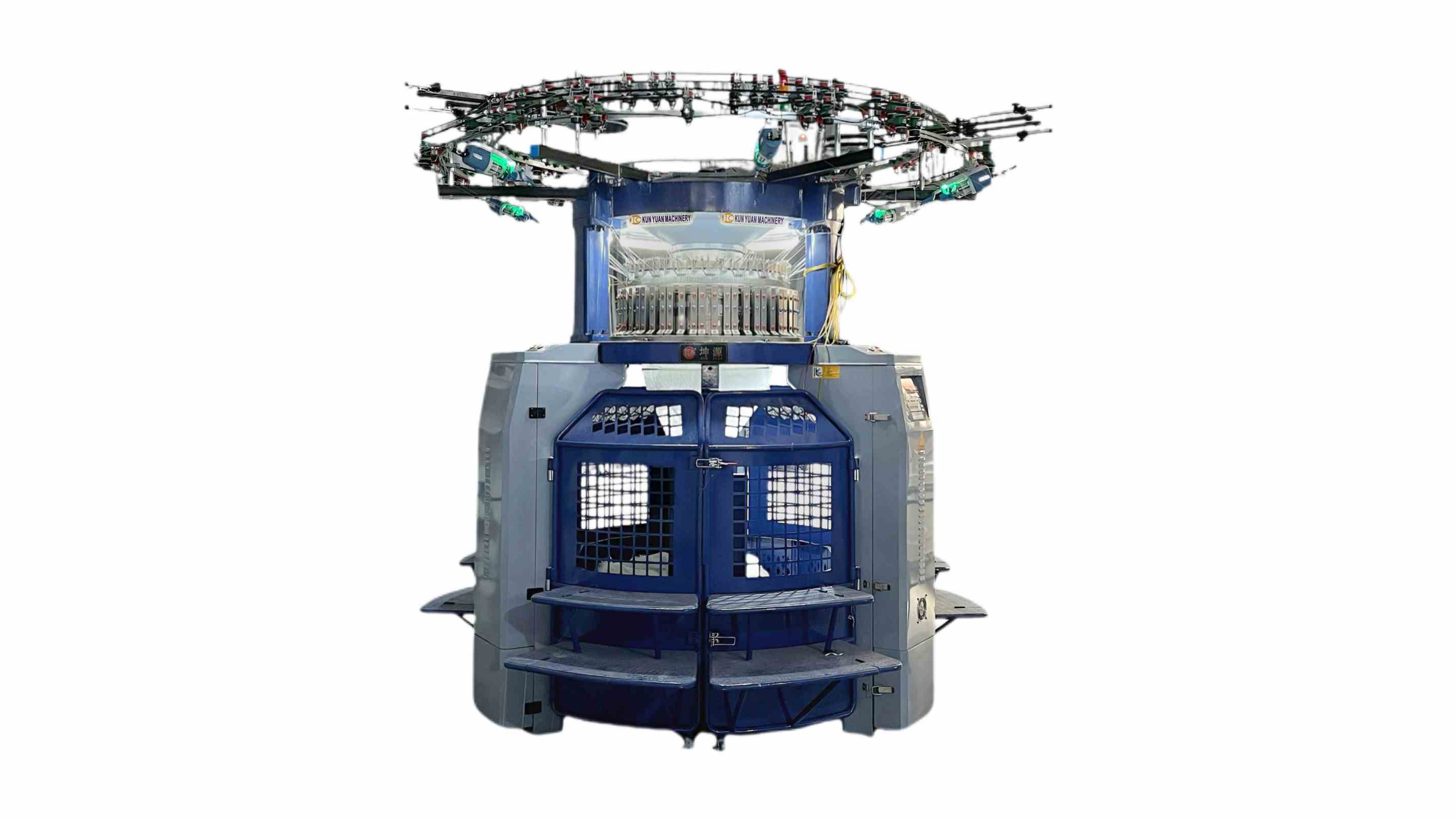
Auto striping coordinates color-yarn presentation with circular weft knitting, but the exact number of available colors, selection logic and usable pattern scope depend on the delivered machine and striper arrangement.
Translate the design into a technical stripe schedule before changing machine settings. The schedule should identify the face sequence, stripe depth by courses, yarn identity, feed assignment, repeat boundary and acceptable transition appearance. It also needs a reverse-side limit for floats, tails or misplaced yarn because a clean face can hide an unstable change behind the fabric. This document becomes the common reference for design, knitting, inspection and costing.
Official manufacturer ranges show that computerized striper equipment is offered in distinct single-knit and double-knit configurations, not as one universal attachment. Fukuhara publishes dedicated multi-color striper families, while Unitex lists computerized stripe machines among separate product series. Those catalogues support the equipment category; they do not prove the exact colors, feeders, structures or speed of a quotation. Freeze the model, installed striper units, knitting system and buyer-yarn trial before accepting any combination.
01
Convert artwork into a course-by-course color command
Separate the customer's visual artwork from the machine-ready instruction. Record which color is presented at each planned change, where the repeat starts, how many courses belong to each band and how the pattern aligns around the tube. Name the controller and program revision used for the sample. A screen preview is useful for checking order, but only knitted fabric can reveal whether the commanded transition lands at the intended course and circumference.
Include edge cases in the diagnostic file: the shortest commercial stripe, the longest interval before a color returns, adjacent dark and light yarns, and a stop close to a change point. Mark the corresponding fabric positions. If the machine-ready file is edited during the run, create a new revision instead of overwriting the approved basis. This keeps a design correction from being confused with a mechanical or yarn-feed correction.
02
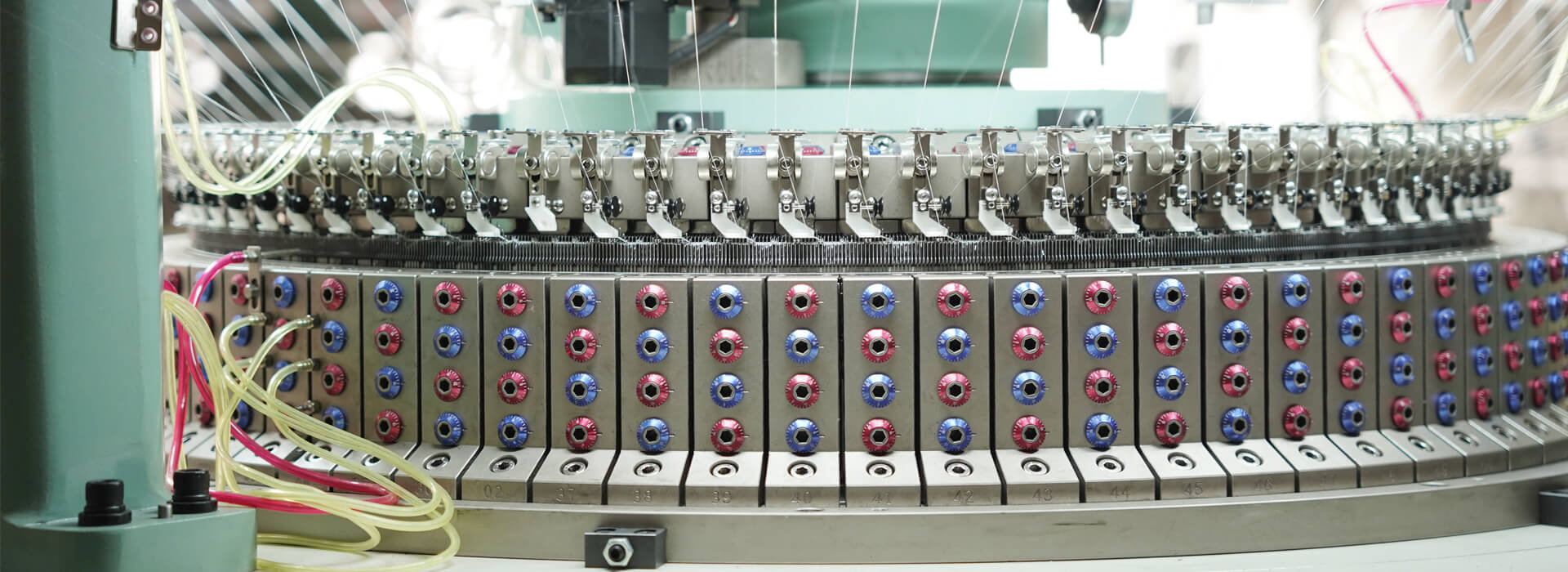
Follow every color from package to the striper presentation point
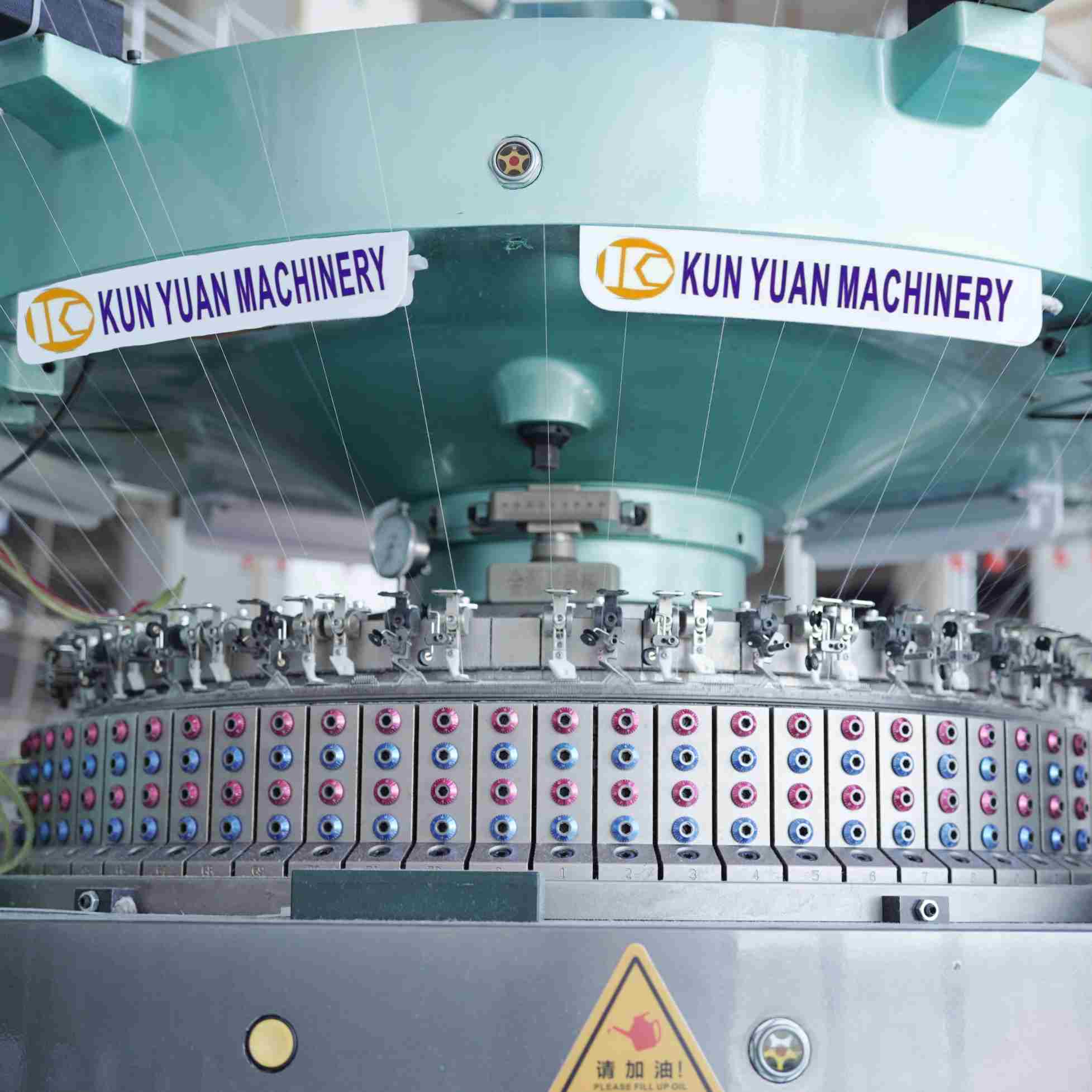
Label every package by color, yarn specification and lot, then trace it through guides, storage or delivery devices and the installed striper unit. Record the route while the machine is stopped under the approved operating procedure. Different yarn materials, counts, twists or package builds can behave differently during acceleration and withdrawal, so one shared setting should not be assumed suitable merely because the shades belong to the same design.
Observe low-package conditions and an ordinary package replacement during the trial. Preserve the course where any yarn event occurs and inspect both sides of the fabric for a delayed color, loose tail, unintended float, tension band or contamination. Sensors and alarms can identify a detected condition, but they do not by themselves establish whether the cause is the package, threading, delivery device, striper action or downstream take-down.
03
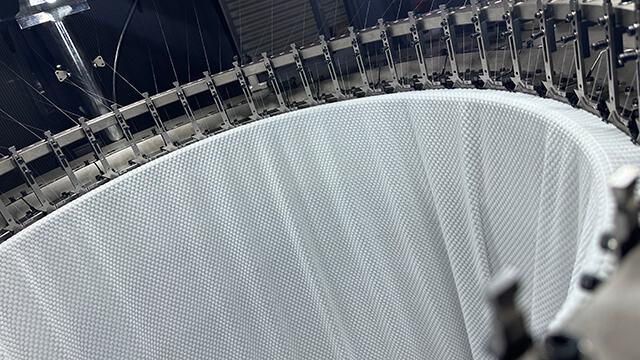
Judge the color change as a fabric event, not a panel event
Inspect the stripe boundary around the full tube rather than cutting only an attractive center swatch. Compare course alignment, color carry, tails, local density and any visible line caused by a change in yarn demand. A command that fires at the expected screen position can still create a fabric fault if yarn presentation, needle action or withdrawal is not coordinated at that moment. Keep machine direction and feed references on the sample.
Run at a stable production candidate instead of using a brief maximum-speed demonstration. Include a planned stop before a color change, a restart through the change and a return to a previously used yarn. Record every intervention. If a correction requires simultaneous edits to program, yarn path and take-down, split the work into controlled steps so the team can identify which change produced the accepted boundary.
Build a changeover notebook that another shift can execute
A useful changeover record covers more than loading a pattern. List yarn removal and loading, package positions, threading checks, striper cleaning, program retrieval, editable parameters, protected parameters, sample marking and first-piece inspection. Store the prior approved file before any change. The responsible operator should know which values may be adjusted and which require a technician or manufacturer procedure.
Measure elapsed changeover time separately from the time spent correcting an incomplete setup. Retain the first rejected piece as well as the released piece when it explains the learning. After a normal stop or cleaning event, ask the receiving shift to retrieve the file, rebuild the color map and produce the boundary repeat without hidden assistance. That repeat, not a one-time supplier demonstration, closes the control loop.
Connect each digital command to the installed yarn-presentation hardware.
Auto-striper control and release notebook
Control layer
Required record
Fabric evidence
Release decision
Pattern command
Stripe schedule and file revision
Course order and repeat alignment
Command matches approved design
Yarn presentation
Color path, lot and device identity
No delayed color or unstable tail
Delivery remains traceable
Transition
Stop, restart and change marks
Face and reverse boundaries pass
Boundary set is accepted
Changeover
Checklist, time and operator record
Repeated first-piece result
Job can be handed over
Identify every color path before evaluating a transition fault.Retain face and reverse evidence through stops, restarts and job changes.
Auto-striper control questions
Does a computerized control prove that every stripe design is possible?
No. The installed striper units, knitting arrangement, feeder plan, yarn behavior and machine program determine the demonstrated scope.
How should the number of colors be specified?
Record the colors required by the target repeat and confirm the exact delivered machine configuration in the signed offer and trial.
Why inspect the reverse side of striped fabric?
Yarn carry, tails and changeover instability can be hidden behind a visually correct face.
Can an alarm identify the root cause of a missed color?
It identifies a detected event. Preserve yarn path, program state and fabric position before isolating the cause.
What proves a successful changeover?
A receiving operator should rebuild the documented setup and reproduce the approved stripe boundaries after a normal production interruption.
Conclusion
Auto-striper technology is best controlled as a linked parameter map: artwork becomes a course command, each color follows a documented yarn path, transitions are judged on both fabric faces, and changeover ends with an operator repeat. That evidence defines the useful capability of the delivered configuration without converting a catalogue family into an unsupported promise.
Use this parameter map while reviewing the industrial circular knitting machine range and require the exact striper configuration, stripe file and marked buyer-yarn sample to remain in one approval record.






 Tel: +86-13859034518
 Email: info@kunyuanmachine.com
 MP/WhatsApp: +86-13859034518
 Manufacturer Address:Bacuo Village, Yonghe Town, Jinjiang City, Fujian Province