The two machine classes solve different production problems
An Addi circular knitting device belongs to a compact craft workflow, while an industrial circular knitting machine is a configured production system for continuous fabric or specialized garment routes. Their useful comparison begins with the intended article and evidence method, not a shared use of the word circular.
The oldest article described accessories, decor, education and small creative projects but extended those examples into unsupported production claims. Keep that valid craft intent and narrow the boundary: an exact Addi model should be judged from its own official instructions, installed needle ring, compatible yarn and sample. The reviewed Addi product page identifies a hand-crank craft route and publishes model-specific limits; this article keeps those limits attached to the named model instead of converting them into a generic brand claim.
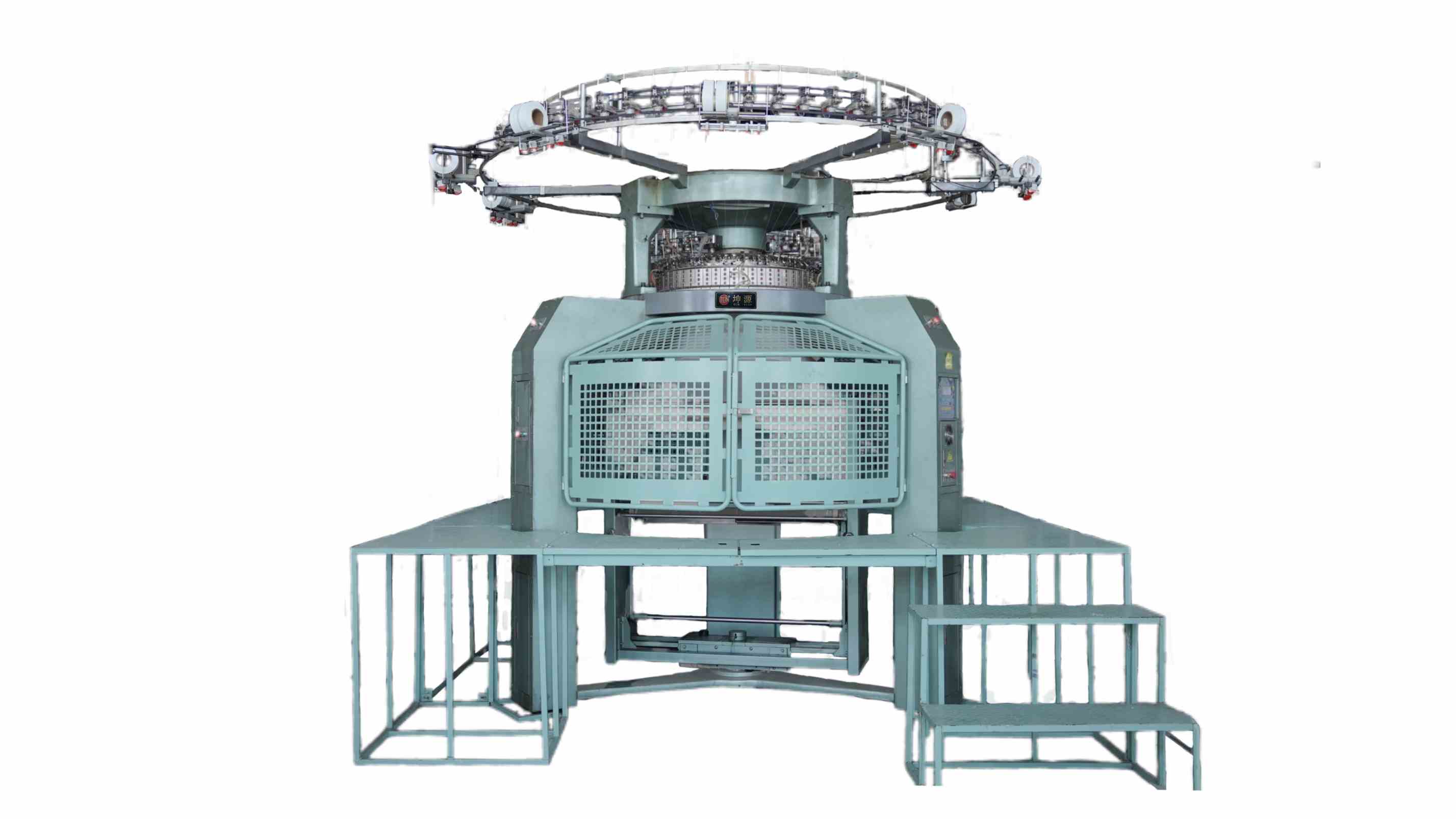
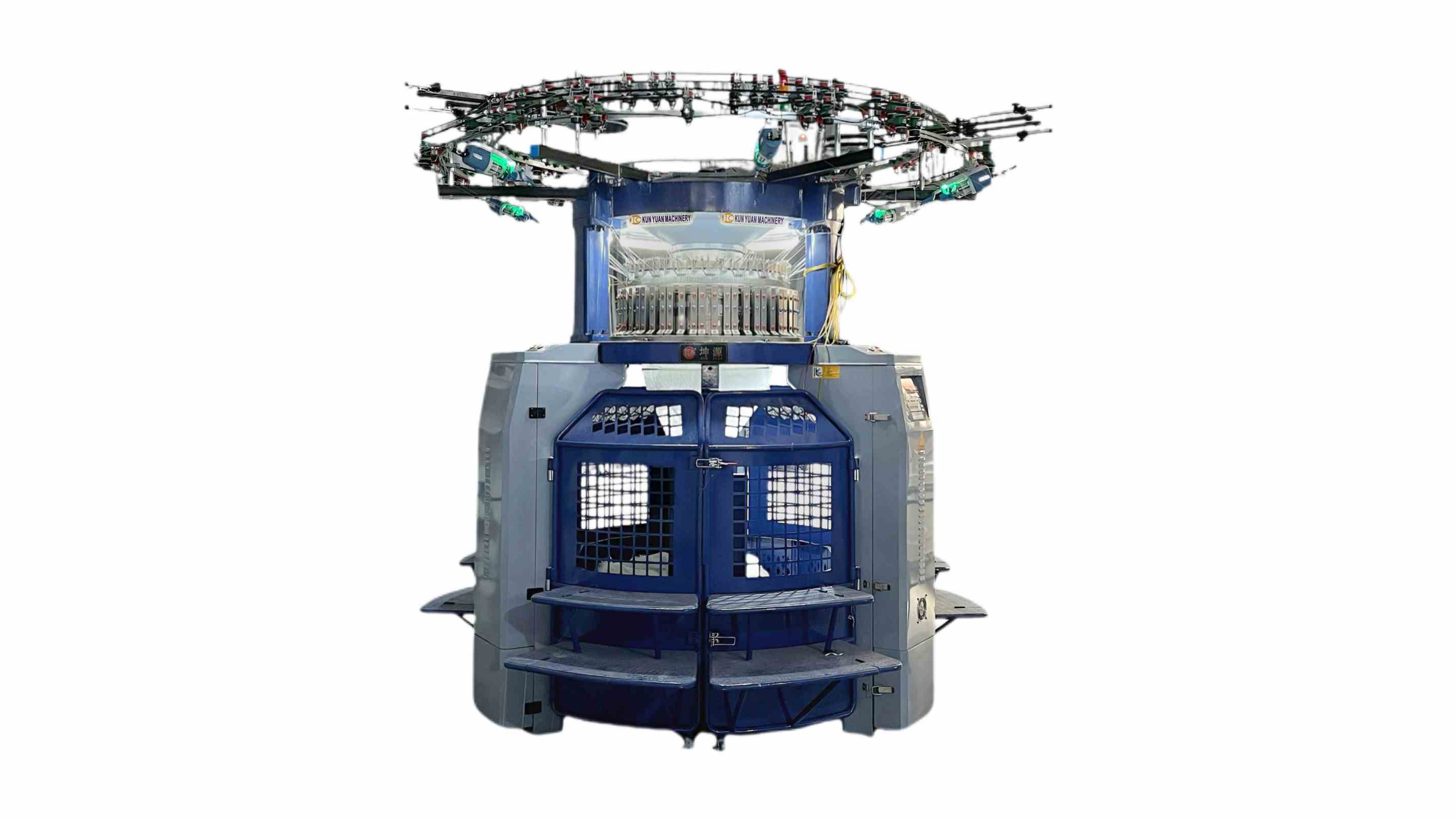
The industrial side is supported by official manufacturer selectors and product portfolios that distinguish machine families, diameter and gauge combinations, beds, feeds and fabric applications. Those published ranges are still conditional. A mill must confirm the exact offered build and buyer-yarn trial, just as a craft user should test the precise Addi model and yarn rather than relying on a brand-wide claim.
Addi route: make compact tubes and panels within one model's manual
A compact crank-driven circular device is suited to hands-on sampling and craft articles whose circumference and stitch formation fit the installed needle ring. Typical project decisions concern yarn that feeds cleanly, stable cranking, edge handling, tube or panel length and how the piece will be gathered, seamed or joined. The operator observes every project directly.
Treat the exact model as the boundary. Read its supplied instructions for setup, yarn suitability, operation and needle replacement, then knit a test piece before committing project yarn. A brand name does not establish one needle count or article size across all models. Measure the completed hat, scarf component, sleeve-like tube or decor piece after any joining and washing needed by the project.
Judge the compact route by the exact model and completed project.
Industrial route: configure a knitting system around saleable fabric
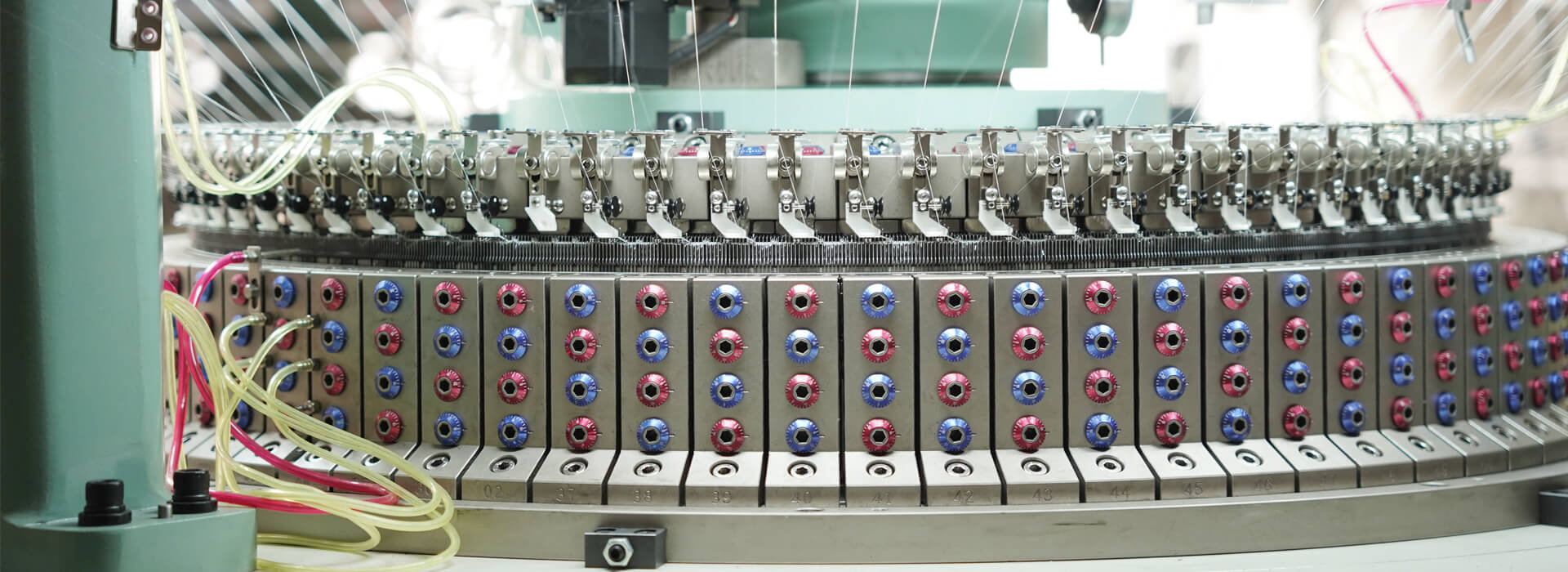
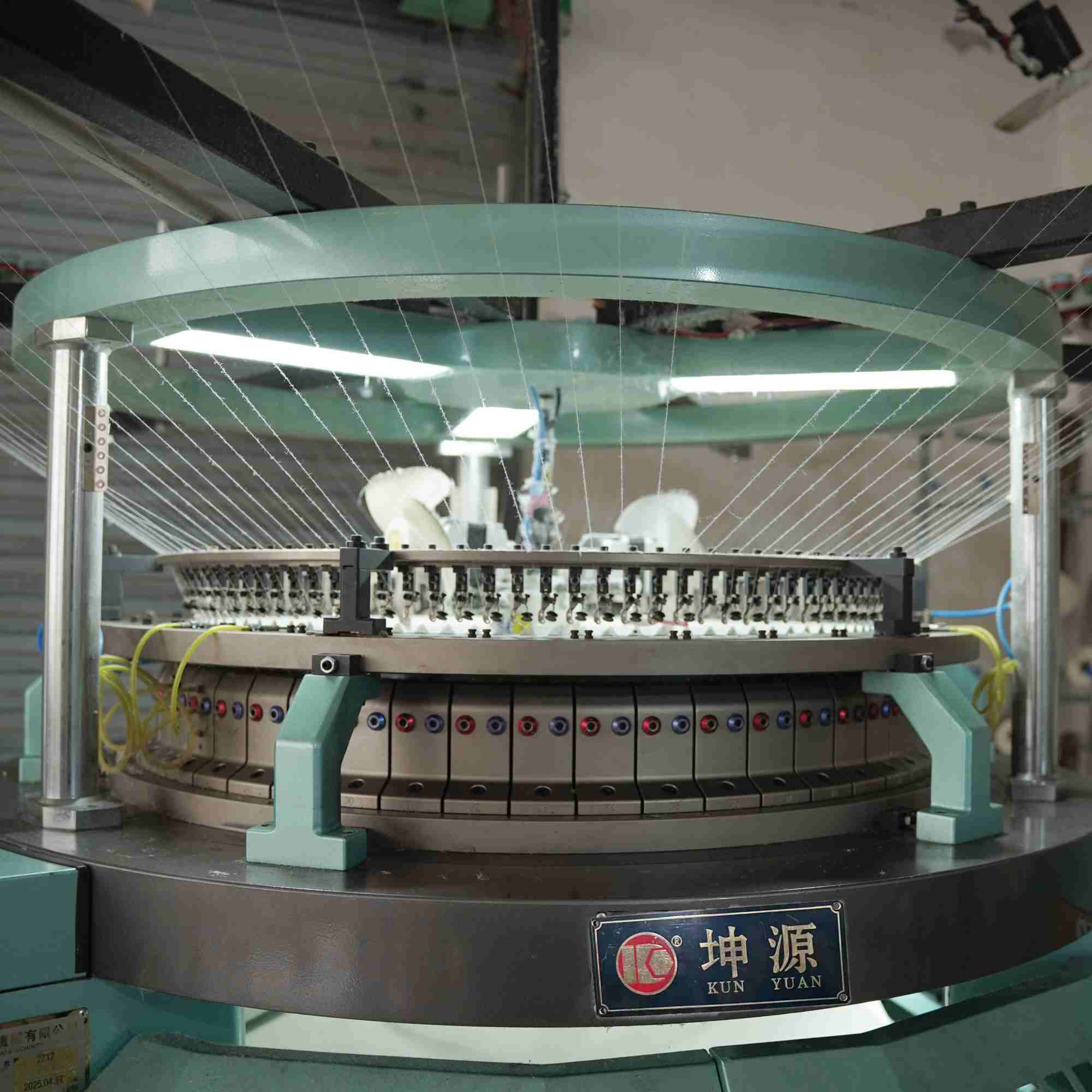
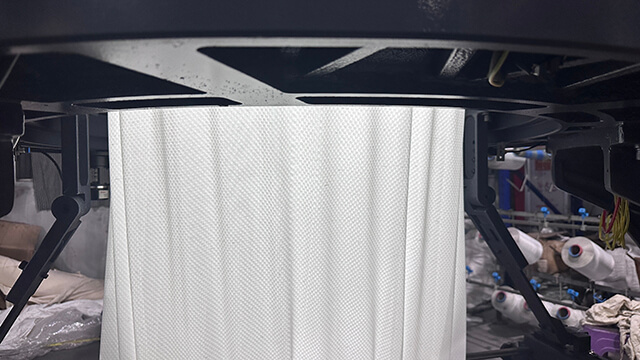
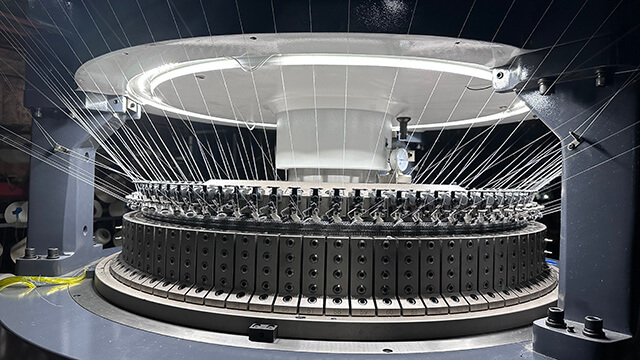
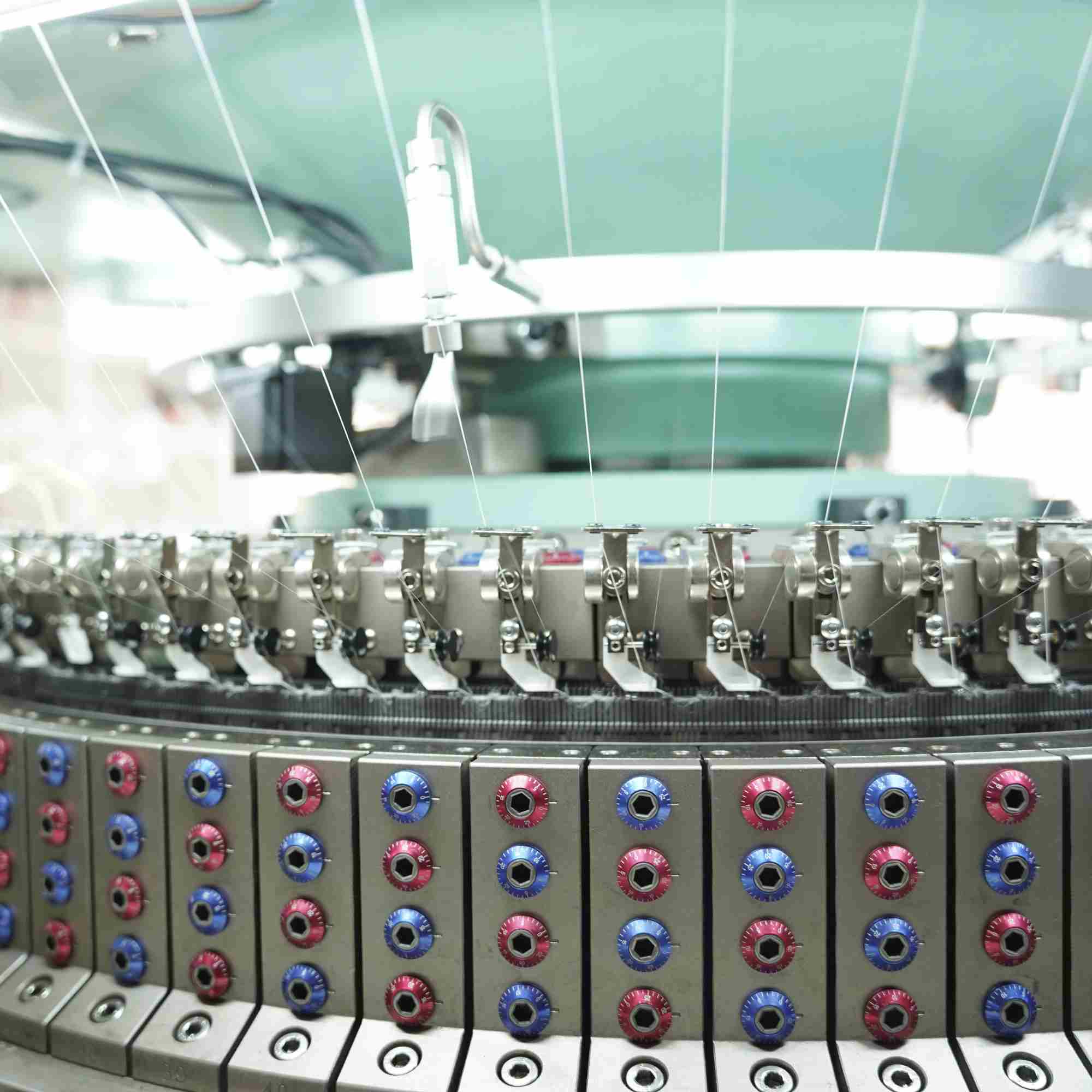
Industrial machines coordinate many knitting positions with engineered yarn delivery, cams or selection, lubrication, stop motions, take-down and fabric handling. The buyer begins with structure, yarn roles, finished width and weight, appearance limits, finishing route and scheduled demand, then selects a single- or double-knit, pile, fleece, jacquard, body-size or other suitable family.
Diameter and gauge are linked to the exact model and installed configuration. Feeder count, needle system and speed cannot be lifted from separate variants and combined into a fictional offer. Acceptance uses a timed buyer-yarn run, stop record and marked fabric carried to the agreed inspection condition. Operators and maintenance staff receive documented setup and recovery responsibilities.
Define the industrial route through one fabric and installed system.
Compare gauge and output only inside each machine class
For the Addi side, use the maker's model documentation and physical sample to establish needle arrangement, compatible yarn and achievable article geometry. For the industrial side, record the manufacturer's gauge convention, diameter, needle count basis, active feeds, structure, running condition and accepted fabric. The labels do not form a common scale by themselves.
Output also needs different units and time boundaries. A craft user may count completed pieces and finishing minutes; a mill records stable runtime, gross fabric, stops, held material and accepted kilograms or metres per scheduled hour. Presenting rotations or tube length without quality disposition would distort both routes. Each option should be measured against the outcome it was designed to deliver.
Choose by repeatability, duty and the work remaining after knitting
Select a compact craft route for learning, prototyping or making suitable small articles when direct operator attention and hand finishing are acceptable. Select industrial equipment when the requirement is repeatable fabric or garment production with documented quality, scheduled output, machine guarding, trained roles, spare parts and a service process. Neither route is an automatic upgrade from the other.
Run a boundary project on the shortlisted option. For Addi, complete and measure the actual craft article, including joining or closure. For industrial equipment, use representative yarn and finish a marked sample under the buyer's method. Compare total work, defects, repeatability and maintenance ownership. The result should say which route fits the stated use case, not which circular machine is universally better.
Compare finished outcomes with their remaining work still visible.
Addi and industrial circular knitting decision table
Decision point
Addi or compact craft route
Industrial route
Evidence to compare
Primary outcome
Small project tube or panel
Continuous fabric or defined garment route
Finished article specification
Gauge and yarn
Exact model manual and test yarn
Model, diameter, gauge and knitting system
Controlled sample on each option
Output
Completed pieces plus hand finishing
Accepted fabric per scheduled time
Named units and quality disposition
Operating system
Direct craft-user operation
Guarded production, trained roles and service
Duty and ownership record
Addi and industrial circular machine questions
Is an Addi machine a small industrial circular knitting machine?
No. It belongs to a compact craft workflow with different controls, duty, output and support expectations.
Can the gauge numbers be compared directly?
Only after confirming each maker's convention, exact model, needle arrangement and yarn range. A shared number does not prove equivalent fabric capability.
Can compact circular knitting make saleable products?
A maker may sell suitable finished craft articles, but must measure the full project route and avoid presenting that work as industrial mill output.
Why does industrial output use accepted fabric?
Gross production can include stopped, held or rejected material. Accepted fabric under a stated inspection method is the defensible commercial result.
Which route is better for prototyping?
Choose from the required prototype. A compact tool can suit rapid craft shapes; industrial sampling is necessary when the target depends on production-machine structure and finishing.
Conclusion
Addi and industrial circular knitting equipment should remain in separate decision columns until a real use case connects them. The craft route is evaluated through its exact model, yarn, finished project and hand work; the industrial route through a configured system, scheduled duty and accepted fabric. That distinction makes both choices more accurate and avoids a misleading universal winner.
Use the industrial evidence column while exploring the industrial circular knitting machine range and compare it with the completed craft article rather than with an isolated gauge or rotation figure.





 Tel: +86-13859034518
 Email: info@kunyuanmachine.com
 MP/WhatsApp: +86-13859034518
 Manufacturer Address:Bacuo Village, Yonghe Town, Jinjiang City, Fujian Province