

Hot Keyword:
Author:KUNYUAN Machine Manufacturer TIME:2026-08-30
High pile fabric changes between knitting and final inspection. Loop formation creates the greige structure; cutting, brushing, shearing, heat and handling reveal the commercial surface. Machine acceptance must preserve evidence across that whole route.
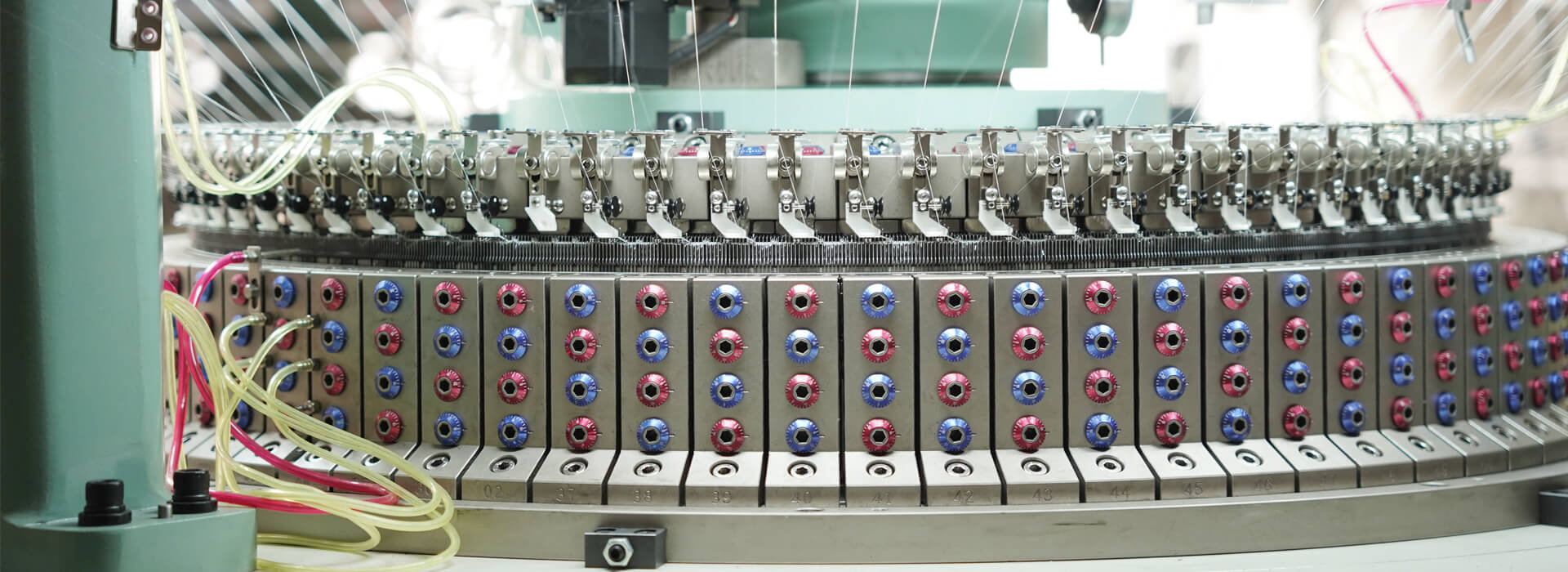
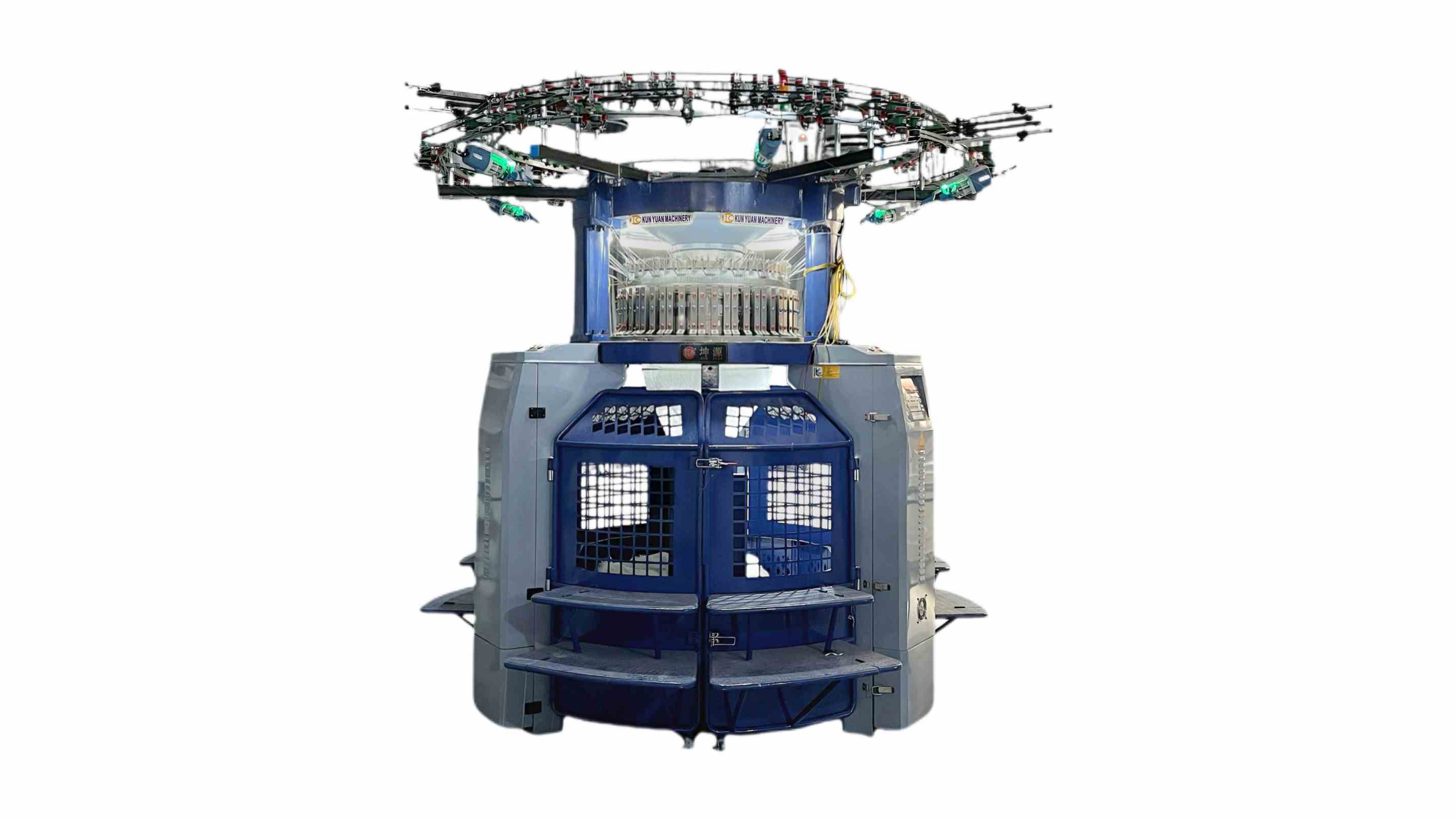
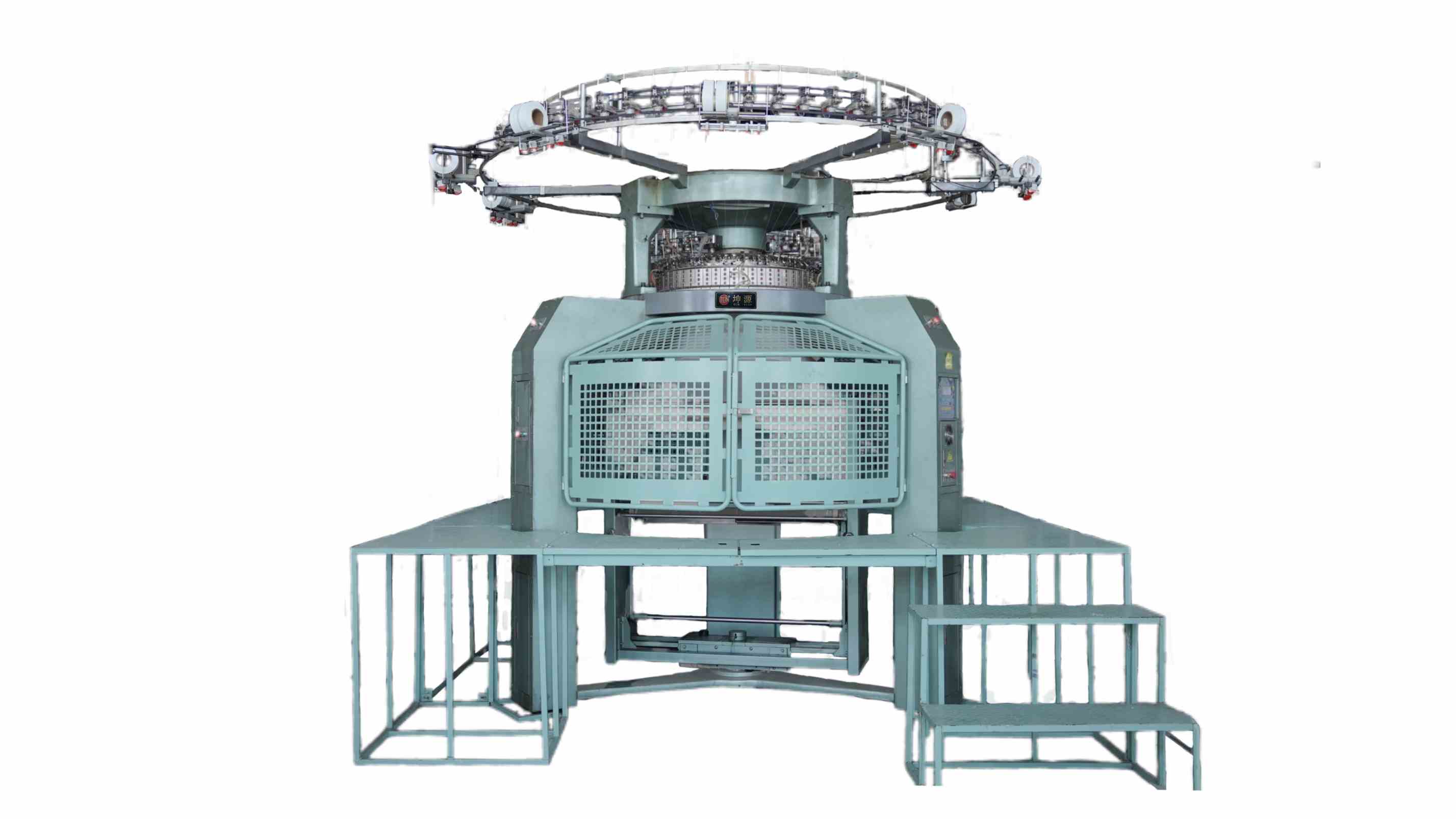
Define the intended pile construction before comparing machines. Record whether pile is required on one or both sides, the base structure, fiber and yarn form, target surface density, hair-length range after finishing, backing stability, shedding and pilling limits, width, weight and end use. High-density, two-sided and multilayer examples shown by Pailung illustrate why high pile is not one fabric category. Mayer and Cie. separately lists plush and polar-fleece machine routes. These official sources support architecture-specific selection, not a universal setup.
The practical risk is diagnostic ambiguity. A sparse stripe may come from yarn delivery, loop formation or later cutting; a dense but uneven surface may hide backing distortion; a good greige loop can be damaged by an unsuitable finishing pass. Build the trial so every change has a roll mark and every sample keeps its machine direction. The supplier and finisher should agree in advance which evidence closes a knitting issue and which evidence opens a downstream-process investigation.
Create a defect map using roll length, circumference position and technical direction. Separate low pile, long pile, bald lines, streaks, clumps, open backing, skew, shedding and shade or luster variation instead of calling every issue uneven pile. Inspect the reverse or ground structure beside the surface. If the backing remains regular while the face changes after shearing, the investigation differs from a fault that already repeats in the greige loop field.
Photograph the defect under controlled lighting and retain an unbrushed reference where possible. Measure pile height or mass with the buyer's agreed method rather than estimating from touch. A repeating circumferential signature can be compared with feeds or knitting positions; a lengthwise event may align with a package, stop or finishing transition. The map does not declare root cause. It narrows the next controlled observation and prevents a visually dramatic surface from driving several unrelated adjustments.
| Observed symptom | First evidence to preserve | Controlled comparison | Release question |
|---|---|---|---|
| Bald or low-pile line | Roll coordinate, backing and yarn-path event | Repeat geometry before and after one correction | Is the cause visible before finishing? |
| Uneven cut surface | Matched greige and finished sections | Same greige condition through a retained finish control | Did finishing create or expose the variation? |
| Shedding or weak anchorage | Yarn identity, backing structure and wash result | Approved yarn and structure against the boundary sample | Does the final application limit pass? |
| Density drift after restart | Stop mark, settings and subsequent stable interval | Restart repeat on the released configuration | Can production recover without undocumented tuning? |
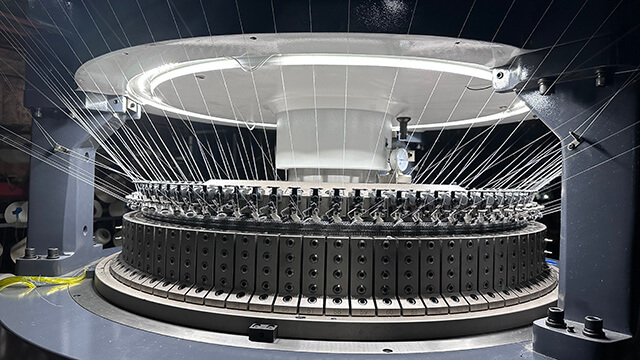
Label every yarn package by role, material, count, lot and position, then follow its actual route through delivery and guides to the knitting zone. Record the offered cylinder, dial or sinker arrangement in the supplier's terminology and identify any special high-pile elements or options. Pailung's published high-pile families and other makers' plush categories demonstrate that architectures differ. One catalogue configuration must not be used to infer settings for another.
During a guarded observation under the approved operating procedure, mark yarn breaks, joins, package changes, stops and manual interventions. Compare the later fabric coordinate with the path record. If a bald line repeats, preserve its location before replacing elements or changing delivery. If pile loops vary without a fixed geometric signature, examine yarn withdrawal and route consistency before attributing the issue to selection. Only qualified roles should inspect or service guarded mechanisms using the exact machine documentation.
Choose a trial construction that represents the densest, longest, shortest or most difficult pile expected in production. Where several products are planned, test the one most likely to expose delivery, loop capture, backing or take-down limits. Define warm-up and stable-running periods, then collect gross length or weight, stopped time, intervention count and held material. A short flawless swatch cannot show whether the condition survives package depletion or a normal restart.
Alter one authorized parameter inside a pre-agreed window and mark the transition. State the predicted effect before inspecting the fabric; this makes the trial diagnostic rather than exploratory tuning. Retain samples before and after the change with machine direction and yarn lots. Repeat the accepted condition after returning from another setup or after routine cleaning. The second run is especially important for high pile because visual fullness can conceal a narrow operating window.
Divide the marked roll into identified sections and process them with the intended finishing sequence. Record the equipment route and relevant lot or recipe references supplied by the finisher; do not prescribe a universal cutting or brushing setting in the machine purchase file. Compare pile height distribution, density, surface uniformity, backing stability, width, weight, shedding, pilling and dimensional behavior under the agreed method. Keep one greige piece beside every finished outcome.
When a defect appears only after finishing, rerun a retained control before reopening the knitting setup. When it is already present in greige fabric, send the coordinate map and event record back to the machine investigation. Close acceptance with the exact machine configuration, buyer yarn, marked trial, finish route and signed limits. The handover should also name routine cleaning, inspection and spare-element responsibilities that protect the released condition without turning trial settings into an unsafe service instruction.
No. Makers group pile, plush, terry and fleece routes differently; define the loop architecture and finished surface instead of substituting labels.
Backing stability helps distinguish loop-formation or anchorage problems from defects introduced while cutting, brushing or handling the face.
Not alone. The buyer should test the difficult commercial boundaries and verify that each accepted condition can be recovered after changeover.
Use matched, marked greige and finished sections so the machine supplier, mill and finisher can assign the next controlled test from shared evidence.
Record machine build, yarn lots, stable run and events, greige map, finish route, measured surface limits, held material and the signed disposition.
The right high pile circular knitting machine is the configuration that makes defects traceable from yarn path to final surface. A coordinate map, controlled boundary trial and matched greige-to-finished samples separate loop formation from finishing effects. That evidence gives the buyer a repeatable release condition and a practical route for investigating later pile variation.
Use this symptom map when reviewing the high pile circular knitting machine range and require the offered loop-forming build to pass a marked buyer-yarn finishing trial.

 Tel: +86-13859034518
 Email: info@kunyuanmachine.com
 MP/WhatsApp: +86-13859034518
 Manufacturer Address:Bacuo Village, Yonghe Town, Jinjiang City, Fujian Province