

Hot Keyword:
Author:KUNYUAN Machine Manufacturer TIME:2026-08-30
Industrial circular knitting machines are configured systems rather than interchangeable catalogue entries. A useful buyer checklist connects each promised fabric to one defined build, one test method and one responsibility record.
Open the RFQ with the fabrics that must be sold, not a request for the fastest or most versatile machine. For every reference fabric, identify its structure, yarn roles, greige condition, finished width and weight, surface requirement, dimensional test and downstream route. Mark the difficult article in the mix, because a comfortable sample says little about the edge of the proposed operating window.
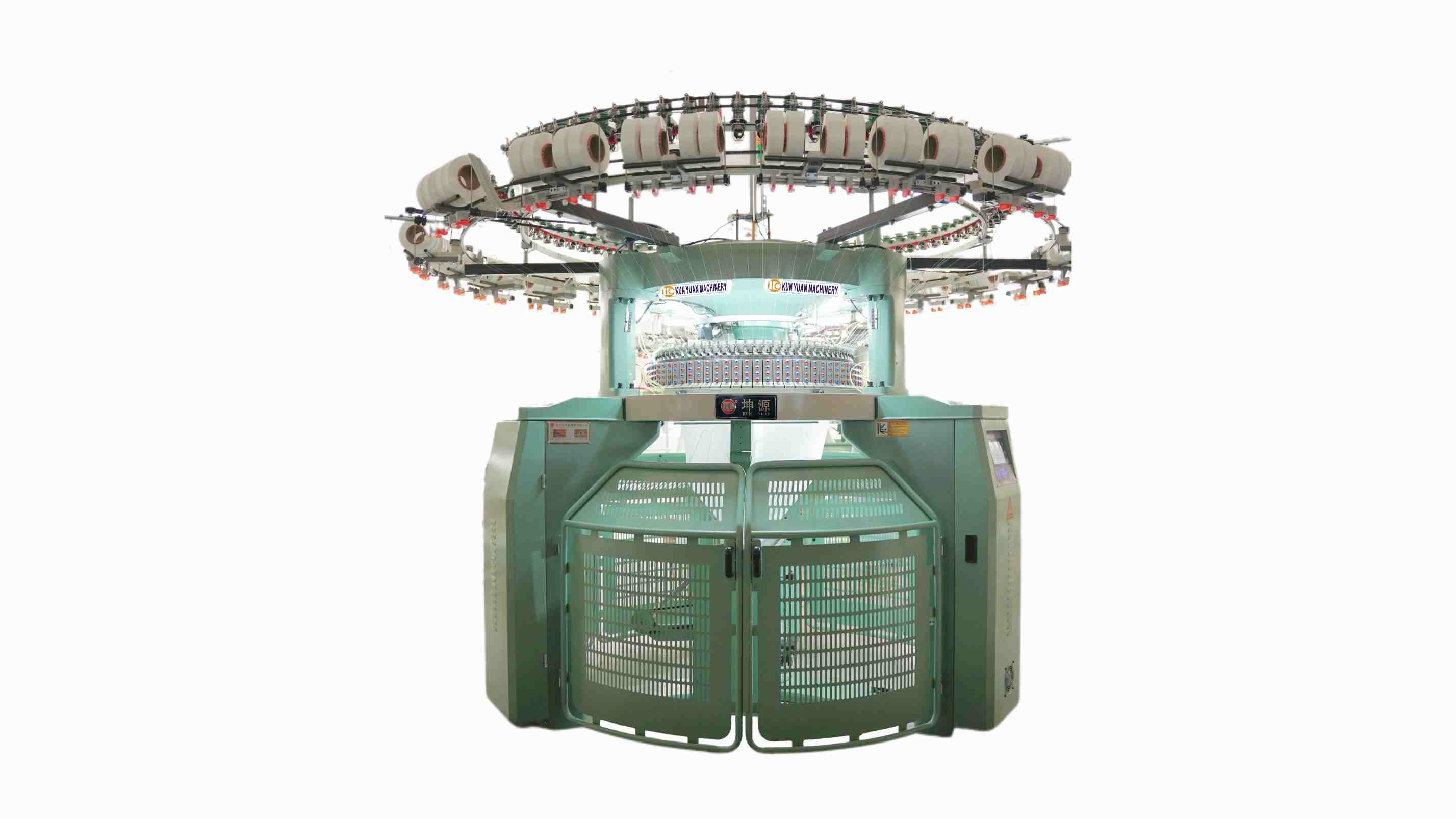
Official manufacturer portfolios separate single-jersey, double-jersey, fleece, jacquard, pile and body-size systems. That separation is useful screening evidence, but it does not establish the delivered scope. The signed offer must name the exact machine, knitting elements, yarn-delivery arrangement, take-down, controls, options and exclusions that will be present at acceptance.
Give each target fabric a reference code and attach a swatch or approved sample. State yarn material and count by role, construction, intended finish, finished width and weight, appearance limits and the buyer's test method. Identify which fabric is the normal production article and which one tests a claimed boundary. The supplier can then answer against real work instead of interpreting a broad label such as jersey or fleece.
Require a line-by-line response showing the proposed machine family, needle-bed arrangement, gauge and diameter combination, feeding systems, take-down form and any conversion parts for that fabric. An item that is optional, supplied by the buyer or still subject to a trial must remain visibly open. Do not let a general brochure statement become an installed feature by implication.
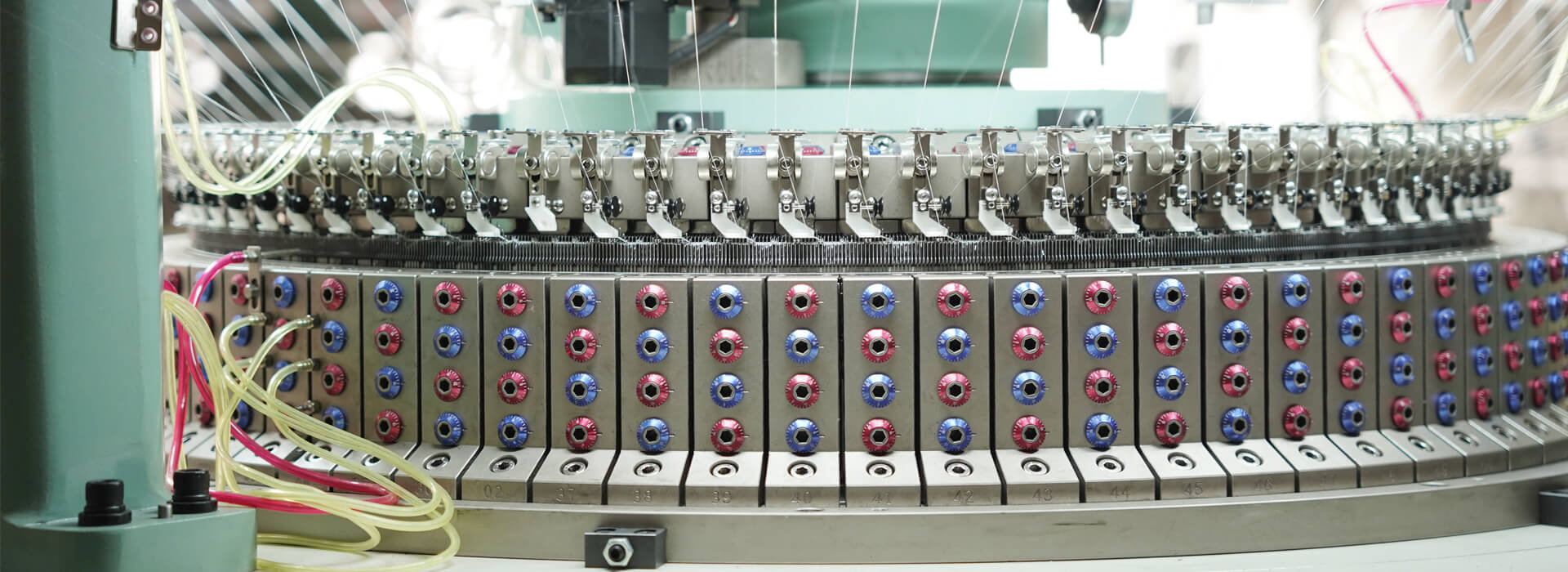
Record the model and revision exactly as quoted, then list cylinder and dial where applicable, cam and track arrangement, yarn storage or positive feed, stop motions, lubrication, take-down and winding, controller, guarding and included change parts. Photographs can help identify the offered configuration, but the purchase schedule should carry part descriptions and responsibility rather than relying on an unlabelled image.
Separate base machine, installed option, loose accessory, recommended spare and excluded item. Include utilities, foundation or floor loading information, compressed air where required, ambient limits, packing, transport, installation and local lifting responsibility. This boundary prevents a low machine price from hiding essential equipment or site work that appears only after arrival.
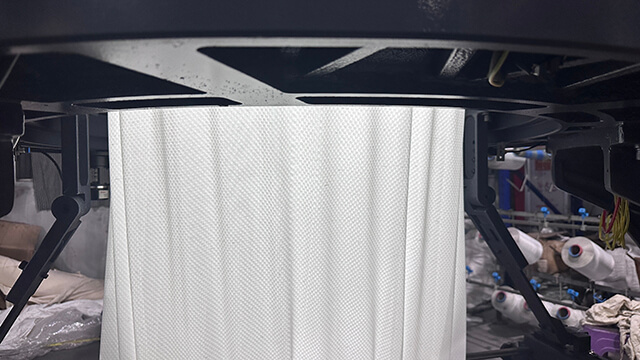
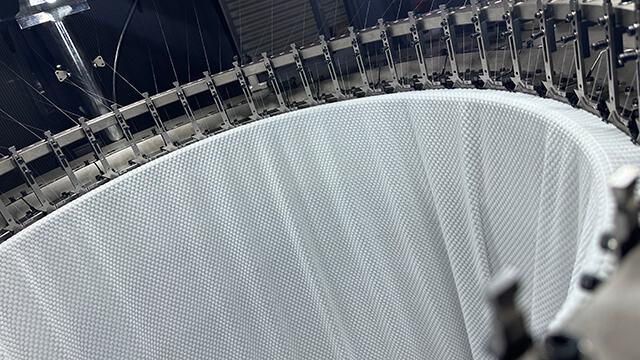
The factory trial should use agreed yarn lots and a written setup for the selected fabrics. Record warm-up, stable running observation, stops, interventions, settings and the location of defects on a marked roll. Measure only with agreed instruments and conditioning. A short clean segment or a display value cannot establish repeatable output, quality or compatibility with the buyer's finishing route.
Carry representative samples through relaxation, dyeing, raising, compacting or heat treatment when those operations affect the saleable result. Site acceptance should confirm installation, utilities, safety checks and a repeat run by the receiving team. Preserve the signed data sheets, sample identifiers and setup revision so a later disagreement can be traced to evidence rather than memory.
List operator, programmer and maintenance training separately, with topics, language, attendance and competence checks. Ask for manuals, electrical and lubrication documents, pattern or parameter backup procedures, consumable references and a starter spare-parts recommendation tied to the delivered build. The mill should know which tasks are routine and which require authorized service.
Create an escalation sheet with contacts, working hours, response channel, information required at first report and rules for remote or site support. Record part identification and expected sourcing route without inventing a delivery guarantee. A service clause is useful when it tells both parties what evidence to exchange and who owns the next action.

| Dossier block | Supplier declaration | Buyer evidence | Release rule |
|---|---|---|---|
| Fabric scope | Mapped build for each article | Labelled swatch and limit sheet | Hardest article identified |
| Delivered build | Installed, optional and excluded items | Signed configuration revision | No implied feature |
| Acceptance | FAT and site procedure | Marked roll and measured report | Receiving team repeats |
| Support | Training, documents and spares | Owner and handover record | Recovery information complete |
No. Compare the complete fabric-to-build schedule, including beds, tracks, feed systems, take-down, controls, options and exclusions.
Use the yarn, structure, weight, finish or pattern that is most difficult within the promised commercial mix.
Commercial dimensions, surface and stability may change after the greige fabric passes through its actual finishing route.
No. It belongs in the order only when the signed configuration identifies it and the acceptance method covers it.
Named contacts, response boundaries, required diagnostic evidence, document scope and part-identification procedures make responsibilities testable.
A disciplined buyer checklist makes the quotation a controlled technical dossier. When fabric scope, delivered build, acceptance evidence and support ownership use the same references, price comparisons become more meaningful and the handover has a defensible release point.
Use this dossier while reviewing the industrial circular knitting machine range and request a configuration-and-trial response for every fabric that enters the business case.

 Tel: +86-13859034518
 Email: info@kunyuanmachine.com
 MP/WhatsApp: +86-13859034518
 Manufacturer Address:Bacuo Village, Yonghe Town, Jinjiang City, Fujian Province