Resolve whether the search is for a home needle-bed tool or an industrial circular production system
Singer is a familiar machine brand, but familiarity does not identify an industrial circular knitting configuration. The buyer must first separate home or legacy knitting-machine intent from continuous mill-scale fabric production.
The current Singer official pages cited here present sewing, embroidery, serger and related home or studio equipment, plus a model-specific manual portal. They do not establish a current Singer industrial circular knitting machine range. Used listings, old manuals and search snippets may refer to legacy Singer-branded knitting equipment, often approached as a flat needle-bed or home knitting tool, but each physical model must be identified from its plate and manual. This article therefore does not invent a Singer circular model or specifications.
Industrial circular procurement is a different lane. Mayer and Cie. and Pailung publish current circular machine families for single- and double-knit fabric routes, with configuration choices that belong to named builds. Compare the lanes by intended output: panels or personal projects from a home needle bed versus tubular roll goods, body-size articles or other industrial circular output. If a buyer truly has a Singer-branded machine, verify it as that exact legacy unit. If the requirement is mill production, issue a fabric brief and request quotations from manufacturers that document current industrial circular capability.
Singer lane: confirm the physical home or legacy needle-bed machine before buying accessories
Ask what the user wants to make, how much space and electrical support are available, and whether a specific Singer model is already owned. Photograph the nameplate and needle bed, then locate the exact official manual or other authoritative model record. Confirm bed width, needle condition, carriage, tension mast, pattern accessories, power supply and included tools from that source. Do not describe gauge, yarn range or automation from a seller's generic title.
The acceptance unit in this lane may be a panel, swatch or small garment component made with the intended yarn. Inspect dimensions, edges, dropped stitches, carriage behavior and the owner's ability to repeat the sample. Parts availability can be the deciding constraint for legacy equipment. A low purchase price does not create support, missing accessories or safe electrical compatibility.
A legacy or home machine starts with its physical model and matching manual.
Industrial lane: begin with continuous fabric, body-size output and a documented mill duty
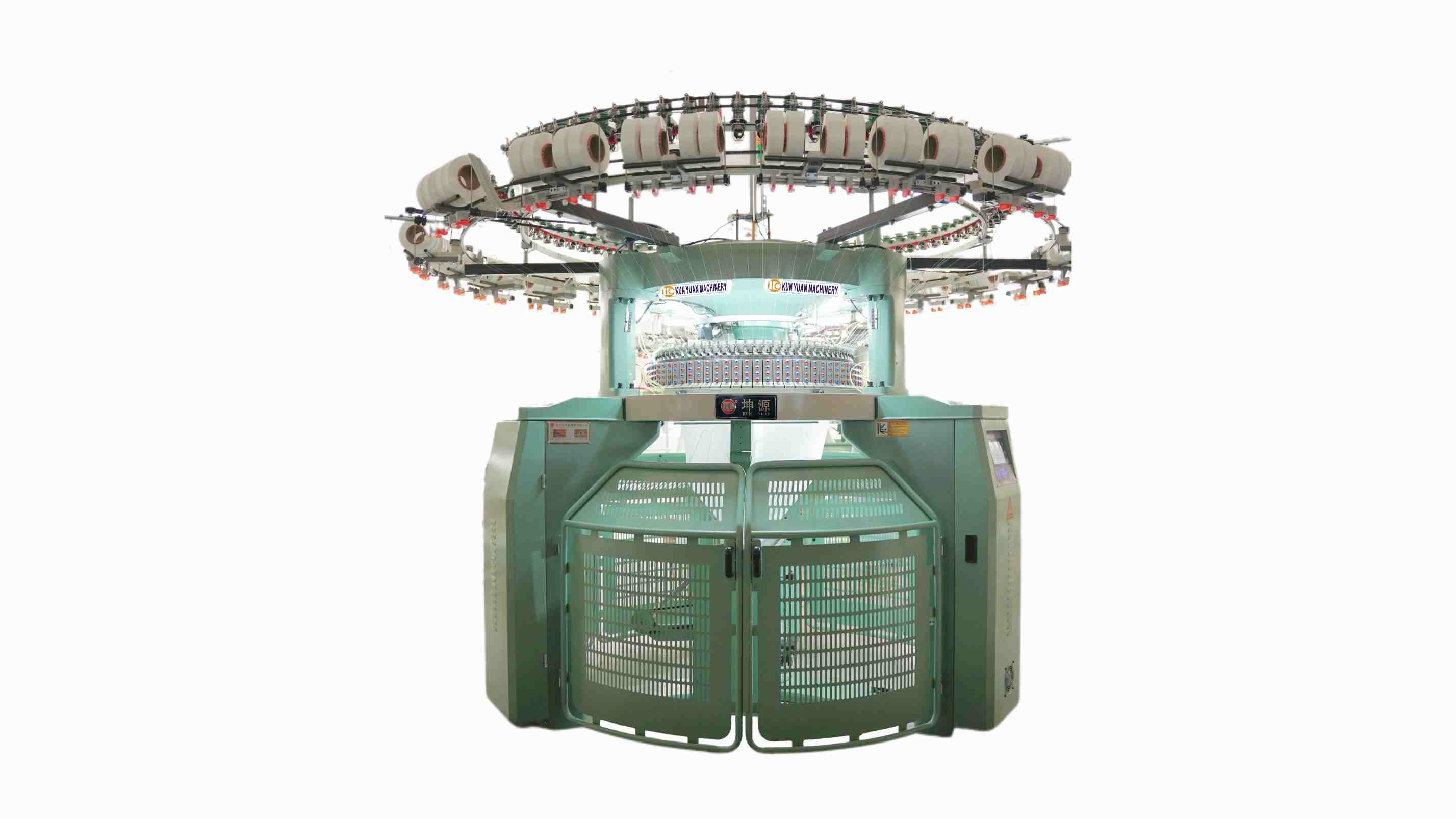
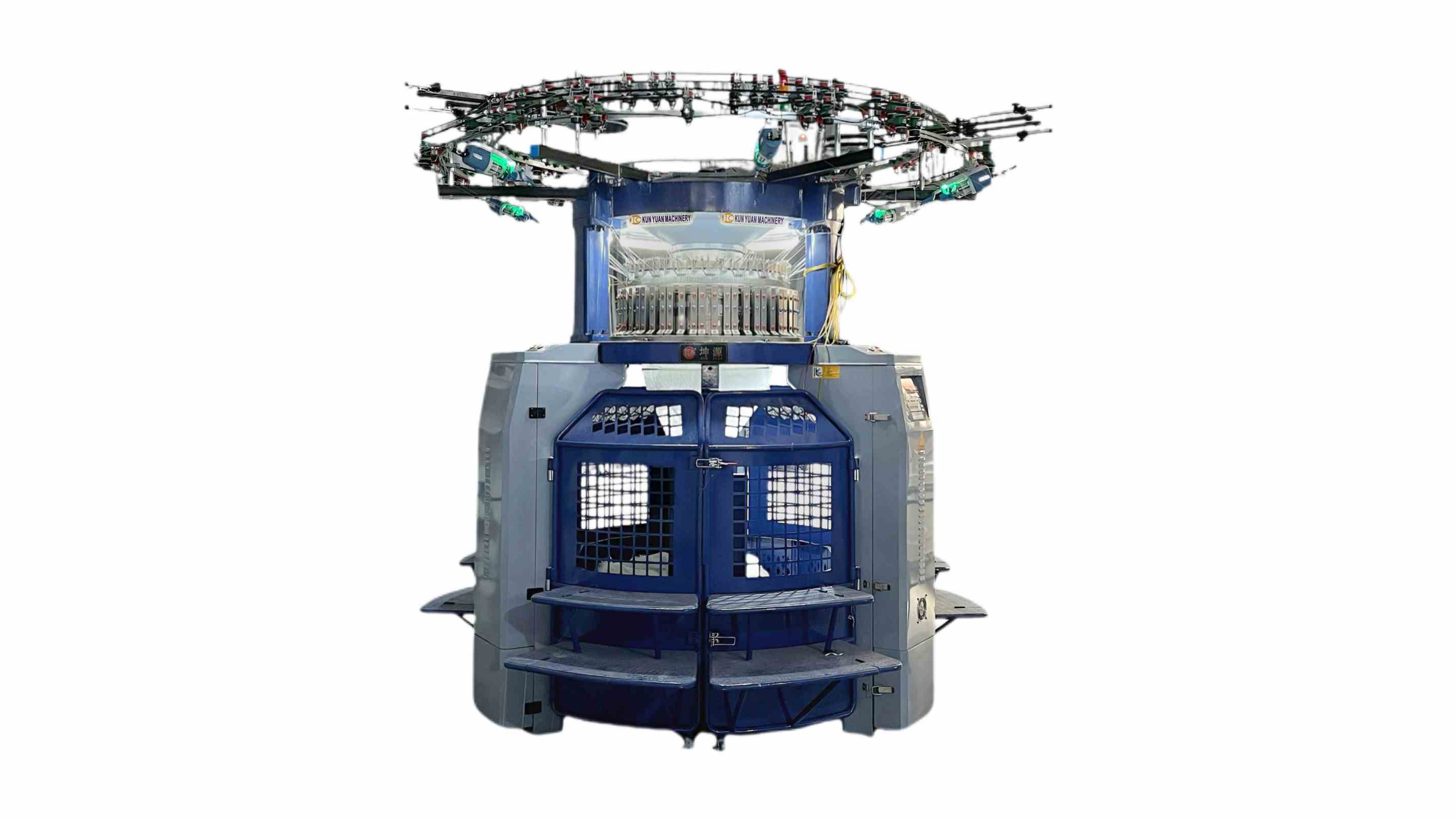
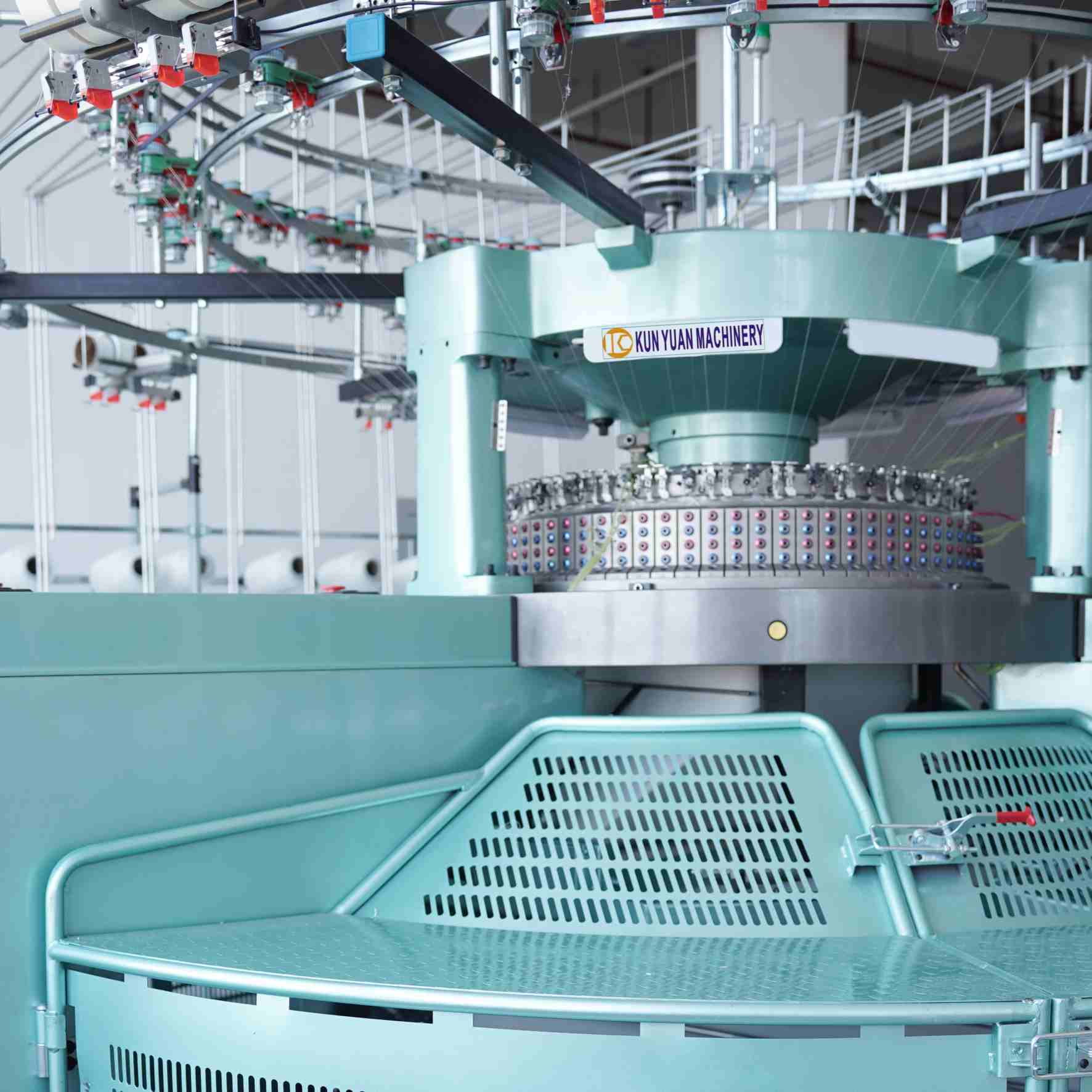
An industrial circular inquiry should state structure, yarn roles, diameter or finished width convention, gauge proposal, weight, surface limits, finishing route, shift pattern and accepted output target. The supplier then identifies a current single- or double-knit family, cylinder and dial arrangement where applicable, feeders, take-down, controls, options and utilities. These machines require site planning, trained operators, maintenance and guarded access.
Evidence is a marked buyer-yarn trial rather than a craft swatch. Run through warm-up, stable production and normal events; inspect full width or complete body-size articles; then carry samples through the relevant finish. Reconcile gross, held and accepted output. Brand recognition from a domestic machine does not transfer to this architecture, capacity or service route.
Industrial circular capability belongs to a current named build, site and acceptance trial.
Comparison lane: expose the differences in product form, evidence and ownership
Place the two routes side by side without declaring one universally better. A home needle-bed machine can suit learning, sampling or low-volume panel work when the model and accessories are complete. An industrial circular system can support sustained fabric or body-size production when its exact build, site, trial and support package are proven. Their machine footprints, material presentation, product form, operating records and maintenance obligations are not interchangeable.
Compare the unit that matters. The home user may count repeatable panels or finished personal projects; the mill should measure accepted fabric or garments per scheduled time after setup and finishing loss. The home decision emphasizes usability, accessory completeness and legacy support. The industrial decision adds utilities, guarding, production staffing, changeovers, spare inventory and service response.
Decision lane: redirect ambiguous searches before price or model ranking
If the need is a Singer manual, accessory or replacement part, keep the investigation model-specific and use the official support portal plus physical evidence. If the aim is learning machine knitting or producing small panels, define that scope honestly and test the intended yarn. If the buyer needs commercial roll goods or circular body-size production, replace the brand keyword with a mill fabric specification and compare current industrial manufacturers.
Record unresolved facts as holds. Do not assign Singer an industrial circular product, output, gauge or feature that the current official source does not document. Likewise, do not assume every industrial circular model can make the desired fabric. The correct next step is a model-specific manual for the physical home machine or a configuration-specific quotation and trial for the industrial route.
Different product forms require different evidence units before any price comparison.
Singer and industrial circular buyer-intent decision table
Decision point
Singer home or legacy lane
Industrial circular lane
Evidence boundary
Machine identity
Exact plate and model manual
Current maker and build revision
Never infer from keyword alone
Product form
Swatch, panel or small project
Tubular roll or body-size production
Approve the intended finished unit
Scale proof
Repeatable user sample
Scheduled-time accepted output
Unlike units are not a ranking
Support
Accessories and legacy parts
Spares, training and site service
Owner and recovery path required
Singer and industrial circular machine intent questions
Does Singer currently offer an industrial circular knitting machine?
The current Singer pages cited here do not document such a range. Do not infer one from used listings or the brand's sewing-machine recognition.
How should an old Singer knitting machine be identified?
Use its physical model plate, needle-bed layout, included accessories and a matching official or authoritative manual before discussing yarn or parts.
Can a home flat-bed knitting sample prove industrial output?
No. It can prove that home machine's panel or project capability, not continuous circular fabric production, mill uptime or finishing yield.
What should an industrial buyer specify instead of a brand keyword?
Specify fabric structure, yarn, finished geometry, quality limits, output basis, site conditions, changeovers and acceptance trial.
When should the comparison stop?
Stop when the model, machine architecture, product form or current support source cannot be verified. Record the gap rather than inventing compatibility.
Conclusion
The Singer versus industrial circular question is resolved by buyer intent, not brand familiarity. Verify a home or legacy needle-bed model for personal, learning or panel work; define a current industrial circular build for sustained fabric production. Keeping these lanes separate prevents unsupported Singer product claims and directs each buyer toward the evidence that can actually close the decision.
Use the intent table before treating the Singer Circular Knitting Machine search term as an industrial specification, and require a verified model or current mill quotation before proceeding.





 Tel: +86-13859034518
 Email: info@kunyuanmachine.com
 MP/WhatsApp: +86-13859034518
 Manufacturer Address:Bacuo Village, Yonghe Town, Jinjiang City, Fujian Province