

Hot Keyword:
Author:KUNYUAN Machine Manufacturer TIME:2026-08-30
Jacquard is a pattern-control category, not one machine architecture. The buyer should convert design, yarn and finish into a challenge repeat, then require one quoted build to reproduce it.
Legacy guidance correctly raised pattern need, gauge, capability, durability, testing and cost, but those topics need a shared project record. Issue a full repeat with technical face and reverse, course and wale directions, color and structural yarn duties, finished width and weight, stretch or surface limits and downstream finish. Mark the smallest isolated detail, longest carry concern, dense transition and repeat join.
Official Mayer and Cie. and Terrot pages show distinct electronic jacquard models, bed arrangements, selection systems and applications. Their published figures belong to named configurations and may change with model, diameter, gauge or option. Do not assemble an ideal machine from several pages. The RFQ, current data sheet and witnessed buyer-yarn trial must identify one deliverable system.
Provide the complete commercial repeat at production scale. Mark origin, dimensions, directions, technical face, reverse-side limit, color or yarn codes, motif joins and critical regions. Separate effects created by loop structure, yarn color, transfer, plating or downstream printing and finishing. A clean rendering does not reveal whether the intended actions are executable on the proposed machine.
Add physical references and a controlled file revision. Define mandatory and negotiable details. State the finished inspection condition, including width, weight, pattern dimensions, registration, surface and application tests. When the supplier proposes a simplified repeat, preserve it as a separate revision with its own acceptance rather than silently replacing the original brief.
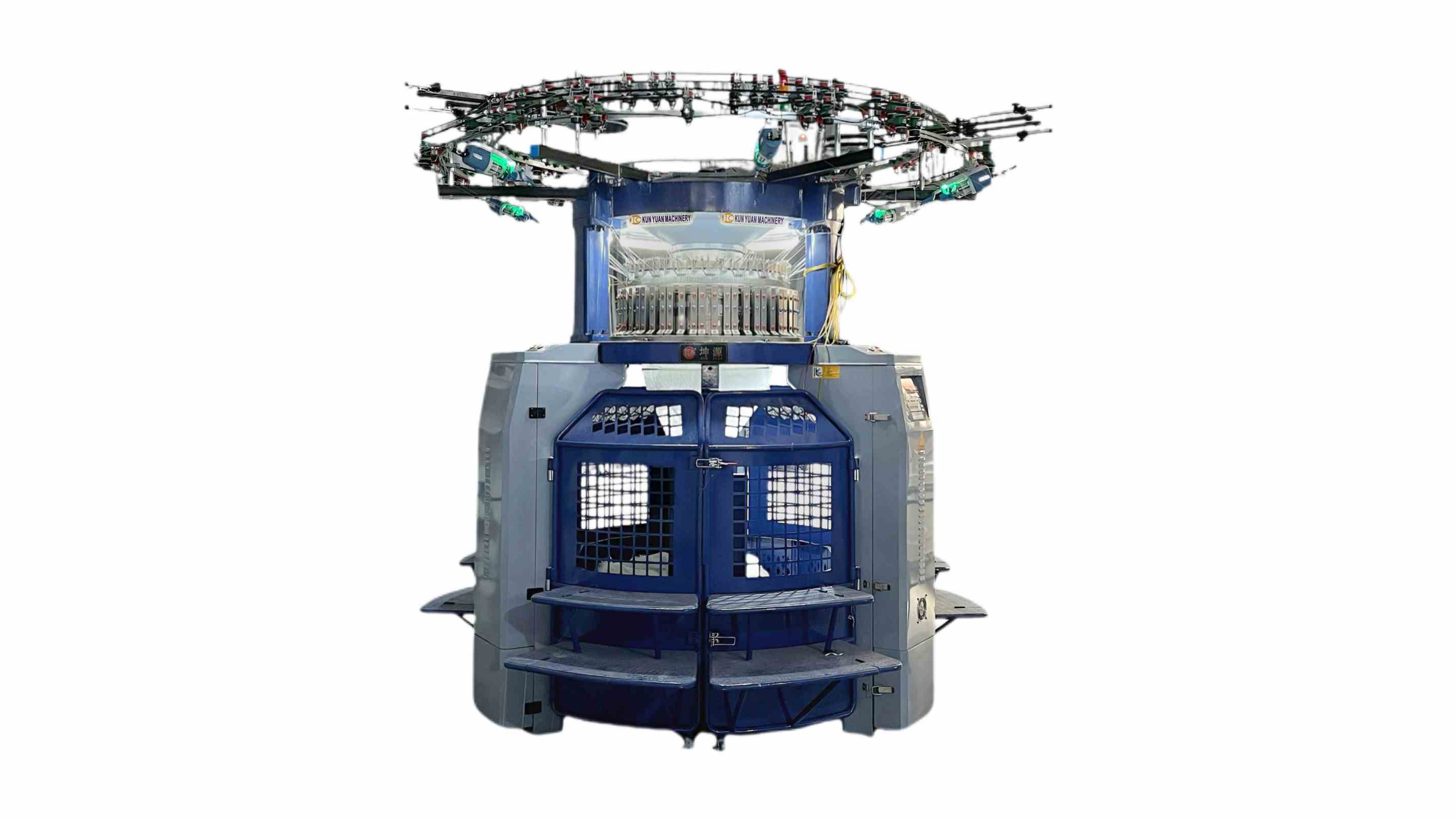
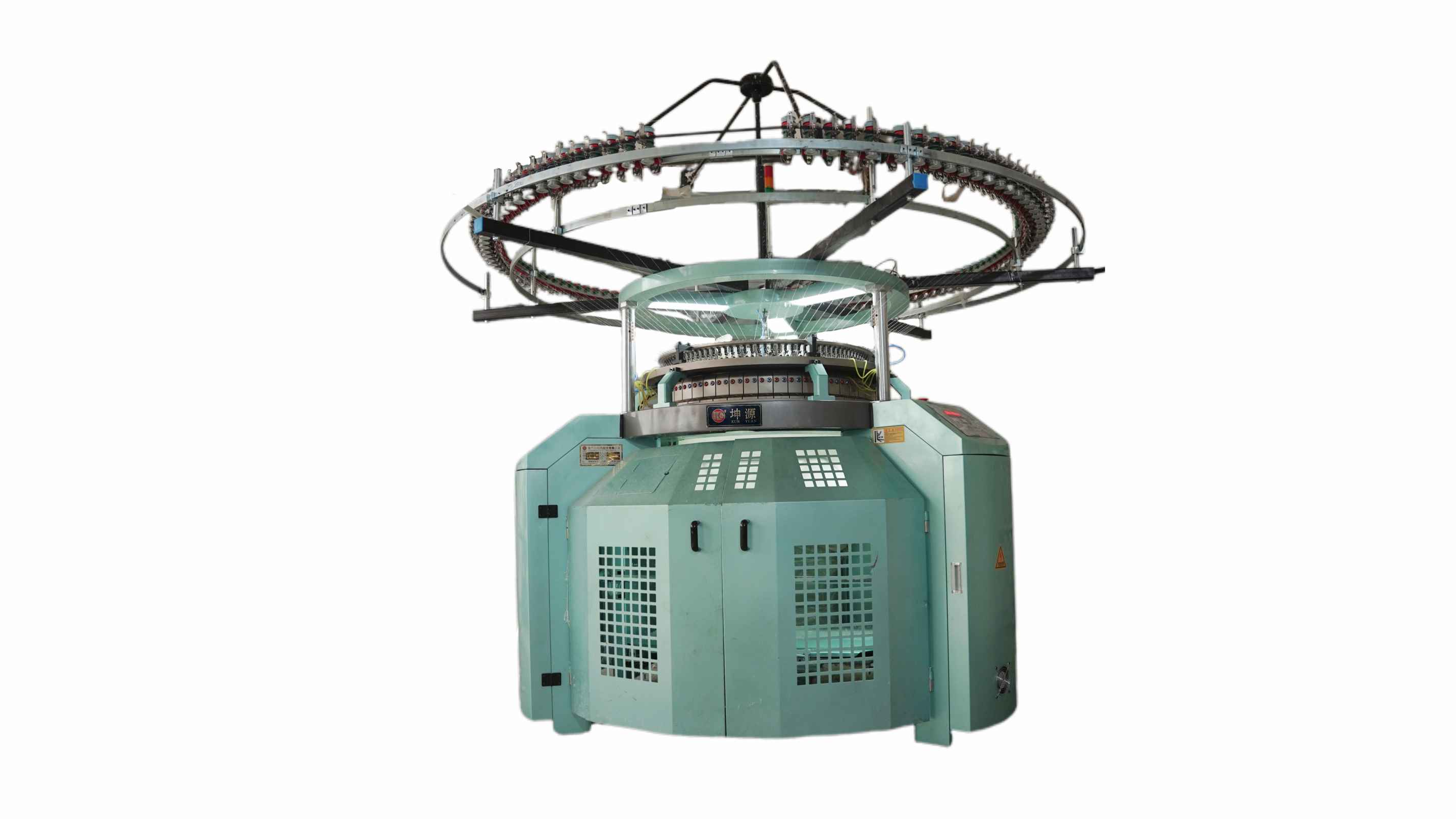
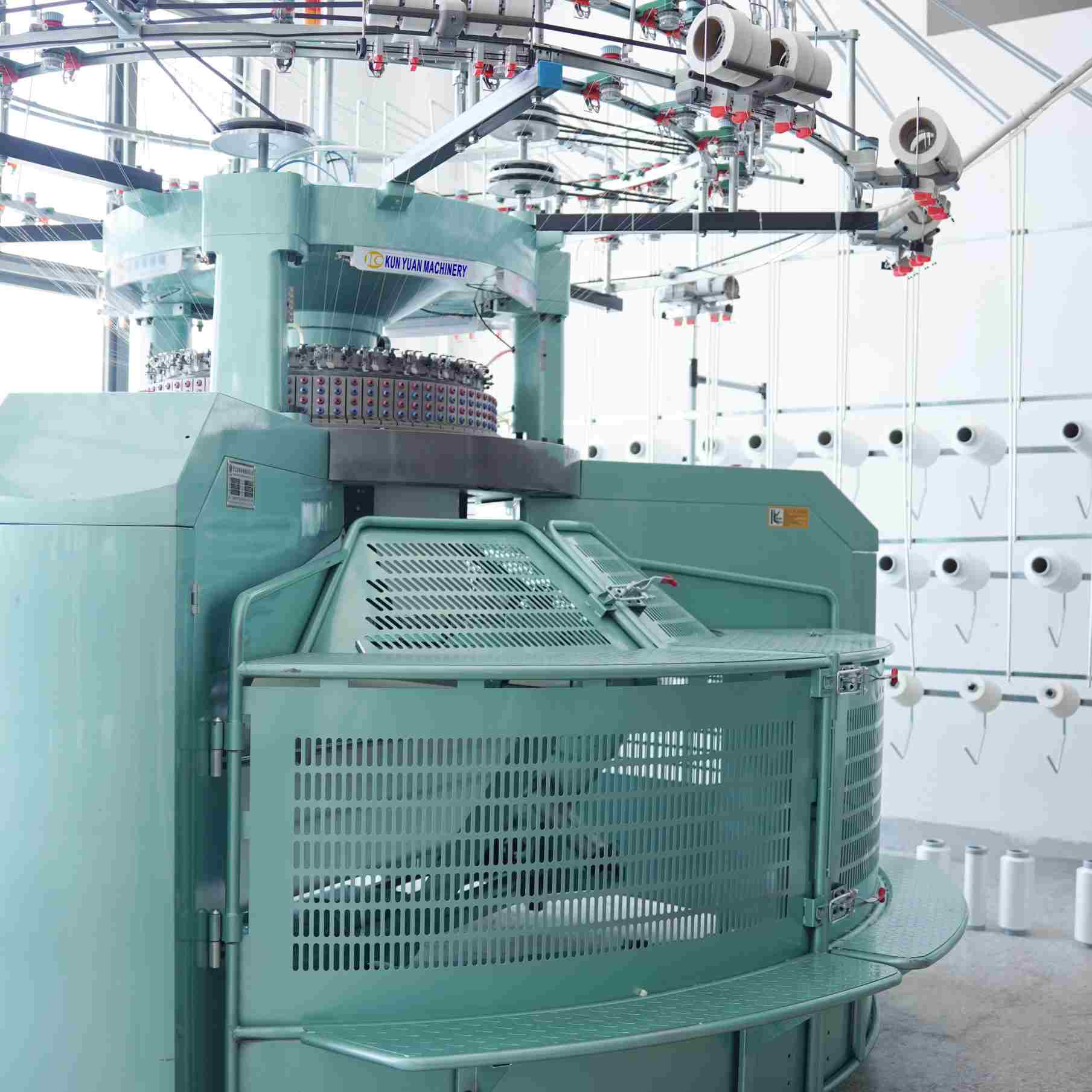
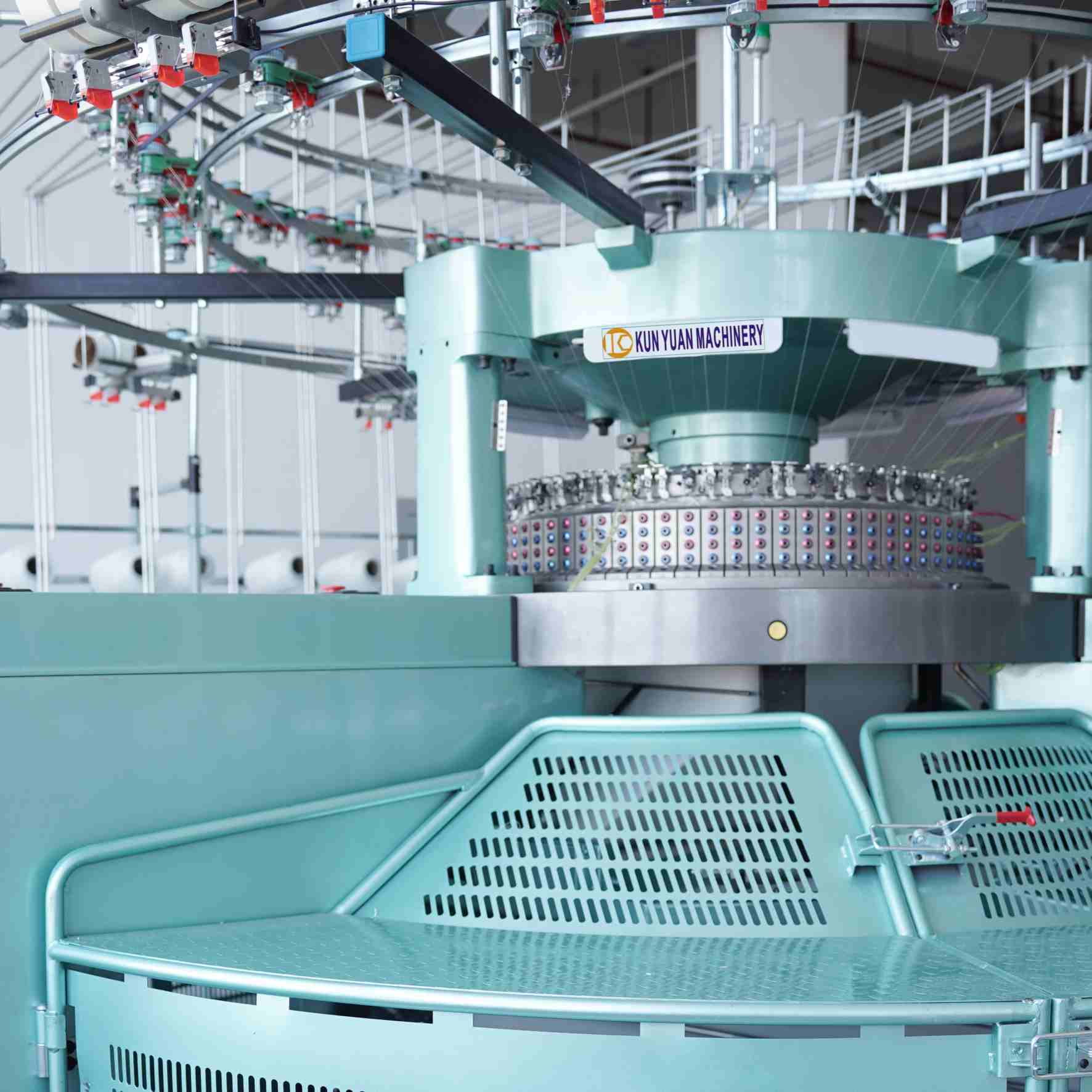
Ask each supplier to explain how the offered architecture forms the challenge repeat. Record single- or double-knit basis, needle selection or jacquard method, relevant transfer scope, yarn presentation, take-down and frame, controller, pattern workflow and included software. Tie diameter, gauge and feeder information to the exact model and revision. Mark standard, optional, buyer-supplied and excluded items.
Require a configuration drawing and option schedule. If the trial machine differs from the shipment unit, list every pattern-relevant difference and the final reconciliation test. Do not award capability points to a generic electronic, three-way or full-jacquard label. The acceptance file should show which installed action corresponds to each critical region of the buyer pattern.
Treat gauge as conditional on machine configuration, element system, yarn and structure. List each functional yarn by material, count or linear density, finish, elasticity, color, lot and approved substitution. Ask the supplier to confirm the offered gauge and relevant diameter combination in the current quotation. A maximum shown for one jacquard family does not establish the same selection, feeds or yarn range on every build.
Knit the smallest motif and most demanding transition with representative yarn. Inspect edge definition, registration, local density, unintended lines, yarn damage, floats and reverse-side behavior. If a different yarn or gauge is proposed, issue a separate trial line and compare finished evidence. Resolution has value only when loop integrity, handle and production stability also pass.
Run enough full repeats to cover warm-up, stable production, package handling, planned stop and restart. Mark events on the roll and record pattern file, machine identity, yarn lots, settings allowed by the test plan, gross fabric and held regions. Inspect the full circumference or width rather than cutting only the best motif. Make one attributable correction at a time.
Finish labelled sections and recheck repeat geometry, shade or yarn separation, surface, dimensions and application criteria. Deliver controlled source and machine files, previews, checksums or dated revisions, yarn maps, backups and training records. Ask the receiving team to reload the approved job after a normal changeover. The purchase gate closes when the finished repeat and file package are reproducible.
| RFQ decision | Buyer input | Supplier evidence | Release boundary |
|---|---|---|---|
| Pattern | Challenge repeat and finished tests | Executable review and limits | One controlled revision |
| Architecture | Required loop and yarn actions | Exact build and option schedule | All actions installed |
| Gauge and yarn | Commercial lots and motif detail | Two-face physical trial | Quoted combination passes |
| Handover | Events, finish and file ownership | Repeated job and backups | Receiving team reloads |
No. Repeat geometry, bed and selection architecture, yarn, gauge and finishing create model-specific limits.
Floats, carried yarn and transitions can affect use, comfort, snagging and finishing even when the face looks correct.
No. Confirm the exact model, diameter, selection, yarn and structure combination in the quotation and trial.
Long enough to include multiple complete repeats, stable production, normal yarn events, a stop and restart, and full inspection.
The receiving team should reload controlled files and reproduce the finished challenge repeat on the delivered configuration.
Choosing a jacquard knitting machine is a controlled pattern project. The challenge repeat defines the requirement, the configuration schedule identifies the machine actions, the gauge-yarn trial proves loop quality, and the finished handover protects repeatability. This dossier exposes untested features before purchase and prevents separate catalogue values from becoming one imaginary build.
Use this pattern RFQ when comparing the jacquard circular knitting machine range and require one quoted build to reproduce the buyer-yarn challenge repeat after finishing and file reload.

 Tel: +86-13859034518
 Email: info@kunyuanmachine.com
 MP/WhatsApp: +86-13859034518
 Manufacturer Address:Bacuo Village, Yonghe Town, Jinjiang City, Fujian Province