

Hot Keyword:
Author:KUNYUAN Machine Manufacturer TIME:2026-08-30
Mayer & Cie's official selector distinguishes machine families, structures and model ranges. It is a strong research starting point, but a selector result is not a delivery specification until the available combination is confirmed.
Prepare two linked sheets. The fabric sheet names construction, yarn, greige and finished weight, finished width, surface, pattern needs, dimensional limits and finishing route. The machine sheet records the exact model and revision, diameter, gauge, feed notation, needle-bed arrangement, tracks, yarn systems, selection, take-down, controls and installed options.
Read the manufacturer's selector row as an envelope, not as permission to combine every endpoint. The widest diameter, finest gauge, greatest feed count or highest listed speed may belong to different configurations or conditions. Request a written combination for the selected model and prove it with the buyer's fabric rather than assembling an attractive machine from unrelated columns.

Classify the target as single jersey, double jersey, interlock, fleece, jacquard, spacer or another structure represented in the official portfolio. Draw yarn roles and both fabric faces. Then identify the Mayer & Cie family intended to produce that structure and record whether the offered machine uses a cylinder only or a cylinder-and-dial arrangement.
Do not shortlist by diameter or brand recognition first. Machines can share headline dimensions while using different beds, cam systems, sinker actions or selection capability. Keep alternative fabrics on separate lines and mark any conversion that needs parts, labour, setup or another acceptance sample.
Copy units and notation exactly from the official source and current quotation. Diameter identifies a cylinder basis; gauge describes needle density; feeds describe yarn introduction points under the manufacturer's notation; rotational speed is an operating value rather than saleable output. None of these alone establishes fabric weight, width or quality.
Ask the supplier to confirm the available combination for the exact model, suffix and date of offer. Record cylinder and dial details where relevant, along with any gauge-specific or diameter-specific restriction. Never merge maximum values across a published range unless Mayer & Cie confirms that one deliverable machine carries them together.
List yarn storage or positive-feed devices, elastomer paths, stop motions, lubrication, pattern or needle selection, take-down, open-width or tubular collection, controller and monitoring functions. Mark standard equipment, installed options, loose kits and excluded catalogue features. A familiar model name may still be delivered with commercially important differences.
For a conversion claim, request the required parts, procedure, expected setup work and a separate fabric trial. Include program files, licenses, backups and change authority when electronic functions are involved. The aim is a physical and digital build record that purchasing, production and service can all identify later.
Run the representative and difficult fabrics on the exact offered configuration. Record yarn lots, threading, setup, warm-up, stable observation, stops, interventions and marked-roll positions. Inspect both faces under an agreed method. A display speed or a short selected sample cannot establish sustainable output or the defect behavior of the proposed product mix.
Take labelled material through the intended finishing route and measure saleable properties. Attach the finished sample to model identity, parameter sheet, installed-option list and trial report. Open discrepancies should remain conditions in the quotation rather than being filled by an assumption based on another machine in the same family.
| Blueprint field | What it establishes | Misreading to avoid | Required proof |
|---|---|---|---|
| Family and model | Loop architecture and machine basis | Selecting by brand alone | Exact model and suffix |
| Diameter and gauge | Available needle-system combination | Mixing range endpoints | Written quoted combination |
| Feeds and systems | Installed yarn and knitting scope | Assuming every option | Configuration schedule |
| Fabric result | Commercial production fit | Using display speed as output | Finished buyer-yarn sample |
Not necessarily. Confirm the exact model, diameter, gauge, feeds, systems and operating condition in the current offer.
No. Yarn, construction, stitch setting, take-down and finishing also shape the finished result.
It can distinguish a build, control package or system scope that matters for options, parts and service.
Only the signed installed scope is part of the build, and fabric-affecting options should be verified on the target article.
Keep the dated source, signed configuration, buyer-yarn trial, finished sample and open-item register together.
The official Mayer & Cie selector is most useful as a disciplined blueprint. Family, model, diameter, gauge, feeds and systems must remain linked to one available configuration, and the final decision should rest on finished fabric from that build.
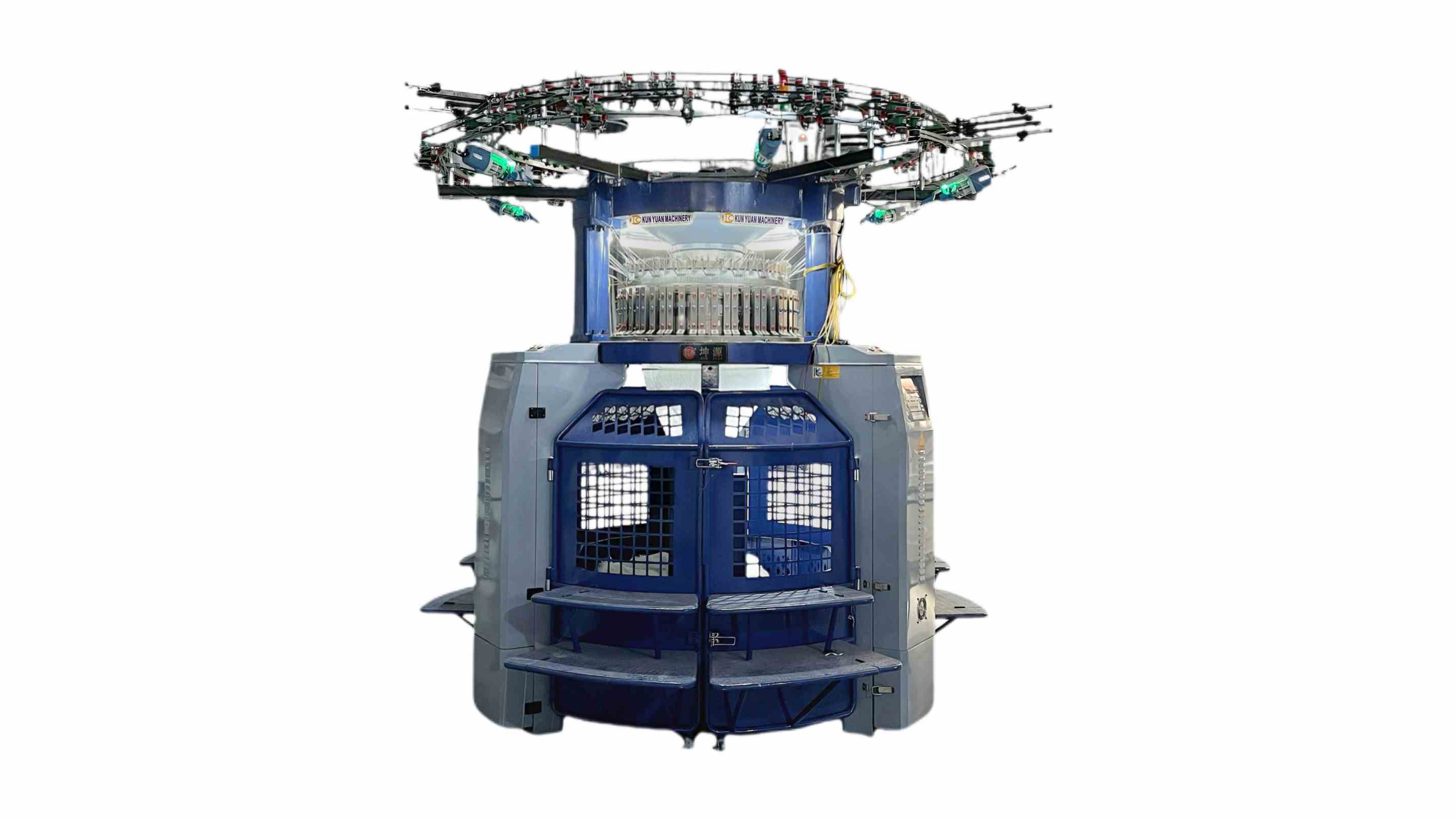
Use the same linked-sheet method when comparing the industrial circular knitting machine range so every alternative is judged by one real configuration and an equivalent buyer-yarn trial.

 Tel: +86-13859034518
 Email: info@kunyuanmachine.com
 MP/WhatsApp: +86-13859034518
 Manufacturer Address:Bacuo Village, Yonghe Town, Jinjiang City, Fujian Province