

Hot Keyword:
Author:KUNYUAN Machine Manufacturer TIME:2026-09-13
Seamless platforms can reduce selected seams and place engineered areas, but each style still needs a controlled route from body measurements and pattern revision to separation, finishing and wear review.
Begin with the finished product drawing and wearer-use brief. Mark relaxed and extended dimensions, openings, body length, support, ventilation, opacity, abrasion areas, logos or textures, seam or join locations and all post-knitting operations. Assign yarn roles and identify which zones are structural, visual or both. The sample must carry machine, cylinder or diameter, program revision, size, yarn lots, finish and inspection state.
Manufacturer seamless portfolios cover several garment categories and machine configurations; they do not prove that one platform, gauge or program makes every style. Confirm the exact offered build, selection scope and required options. Trial a common commercial size and a difficult boundary size, then route both through separation and finishing. Keep the design result distinct from unsupported physiological or medical performance claims.
Define the conditioning method and measure circumference, body length, opening dimensions and critical zone positions in relaxed and specified extended states. Use the brand's tolerance sheet and identify the body landmarks used for fit. A nominal size name cannot substitute for finished measurements.
Develop one central size, then test the size most likely to expose cylinder, grading or yarn-demand limits. Record whether another diameter, needle count, construction or program family is required. Do not extrapolate the accepted middle sample across the whole range without physical evidence.
Draw every zone on an inside-out garment and identify its course and needle region, yarn role and transition. Inspect face and reverse while relaxed and stretched in the intended direction. Check show-through, abrupt ridges, weak joins, floats and pattern movement around the complete garment.
Store the exact pattern file with a revision, machine identity and numbered sample. A controller file named final is not a controlled release when several trials exist. If the zone moves during grading, document the rule and inspect it on a worn or dimensioned form rather than assuming proportional scaling.
State how pieces leave the machine and where waste yarn, draw thread, cutting, opening, gusset work, binding, linking or sewing remains. Mark the separation area and inspect for dropped loops, damage or distortion. Include tools, labor and quality checks in sample time and cost.
Follow the same size mix through washing, dyeing, drying, heat setting and assembly. A garment described as seamless may still contain necessary joins or finishes. Show these honestly in the route map so automation, labor and capacity are compared on the complete product rather than the knitting head alone.
Inspect opacity, support feel, chafing risk, opening recovery and zone alignment under the brand's stated movement protocol. Use product-specific methods and qualified claims; visual or wearer feedback alone must not be converted into medical or quantified physiological performance.
Launder the identified garment under the intended care route and remeasure it after full drying and conditioning. Repeat the accepted setup with mill operators and compare the second piece. Release the style only when dimensions, zones, appearance and remaining operations can be reproduced from the controlled files.
| Route stage | Controlled input | Garment evidence | Decision |
|---|---|---|---|
| Size | Body and finish dimensions | Centre and boundary samples | Grade released |
| Zones | Program and yarn map | Both-face placement | Transitions accepted |
| Separation | Method and remaining operations | Damage and labor record | Make-up closed |
| Care and repeat | Wash route and setup | Remeasured second garment | Style released |
No. Openings, gussets, binding, separation and assembly may still require post-knitting work.
No. Trial at least the commercial centre and a difficult boundary size under the same finish.
Store a revision, machine identity, yarn set, size and numbered physical sample together.
No. Inspect the technical reverse, transitions, stretch condition and full garment position.
Repeatable finished dimensions, zones, appearance, care response and a documented make-up route.
A seamless sportswear sample is a controlled manufacturing route, not merely an attractive tube. Size grading, zone placement, separation and finishing need their own evidence, then must converge in a repeat garment. This record keeps the promised automation realistic and gives the mill a stable point for later colour, yarn or size changes.
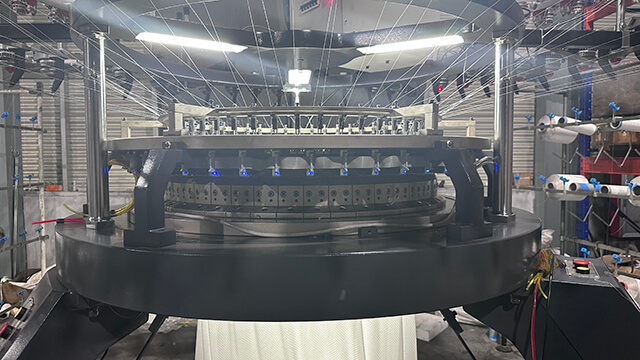
Use the route map when reviewing the body-size circular knitting machine range and ask for a finished centre size plus the hardest boundary size on the exact offered platform.

 Tel: +86-13859034518
 Email: info@kunyuanmachine.com
 MP/WhatsApp: +86-13859034518
 Manufacturer Address:Bacuo Village, Yonghe Town, Jinjiang City, Fujian Province