Rib tells you how loops relate; plating tells you where yarns sit
A plated rib brief needs two drawings. One shows the cylinder-and-dial loop structure. The other names the yarn intended to dominate each visible region. Combining those drawings prevents a two-colour appearance from being mistaken for a different knitted structure or a second fabric layer.
Mayer & Cie's D4-2.2 II page names rib structures and an elastomer plating function for that particular circular machine. This illustrates why a plating claim must identify the model and offered function; it does not qualify the non-elastomeric yarn pair considered here or a Kunyuan build. Groz-Beckert discusses yarn position during circular-knitting plating and the role of hook and latch geometry.
Use the component principles to write an observable fabric brief for two identified, non-elastomeric yarns. The circular machine's actual capability still needs OEM confirmation. A visual placement target is not a guarantee of complete face/back separation, warmth, moisture transport or durability. Each additional commercial property needs its own evidence.
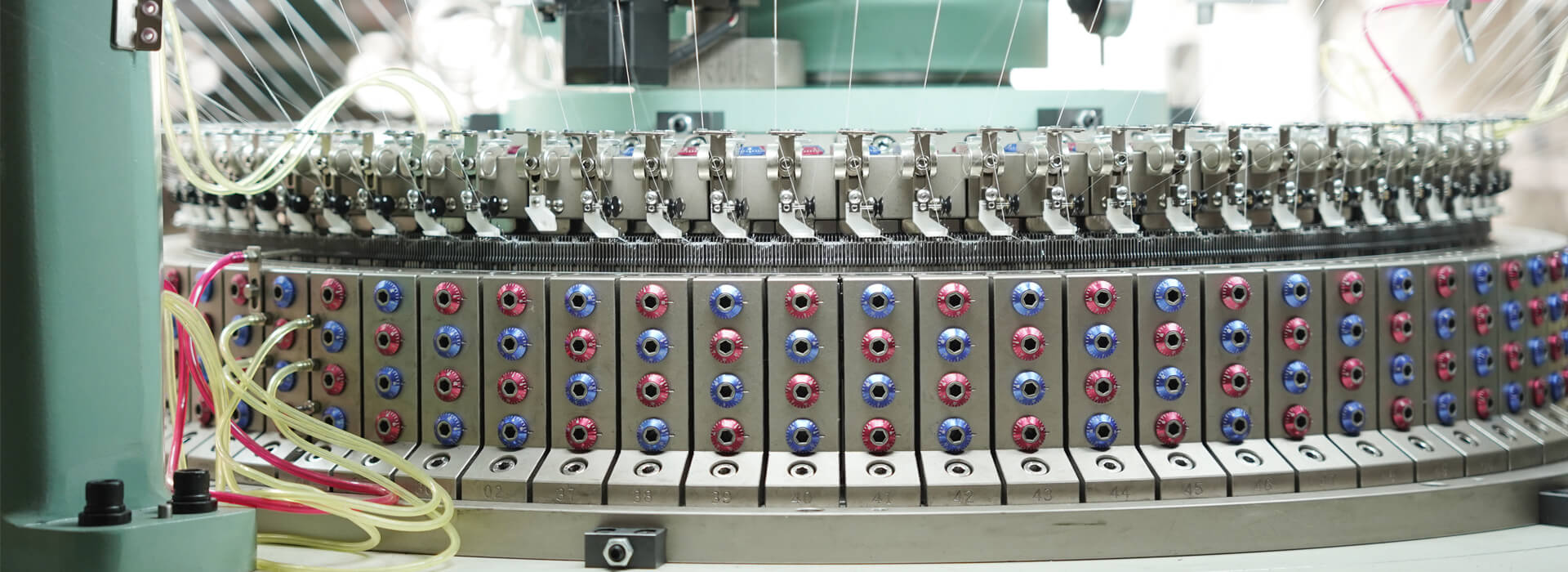
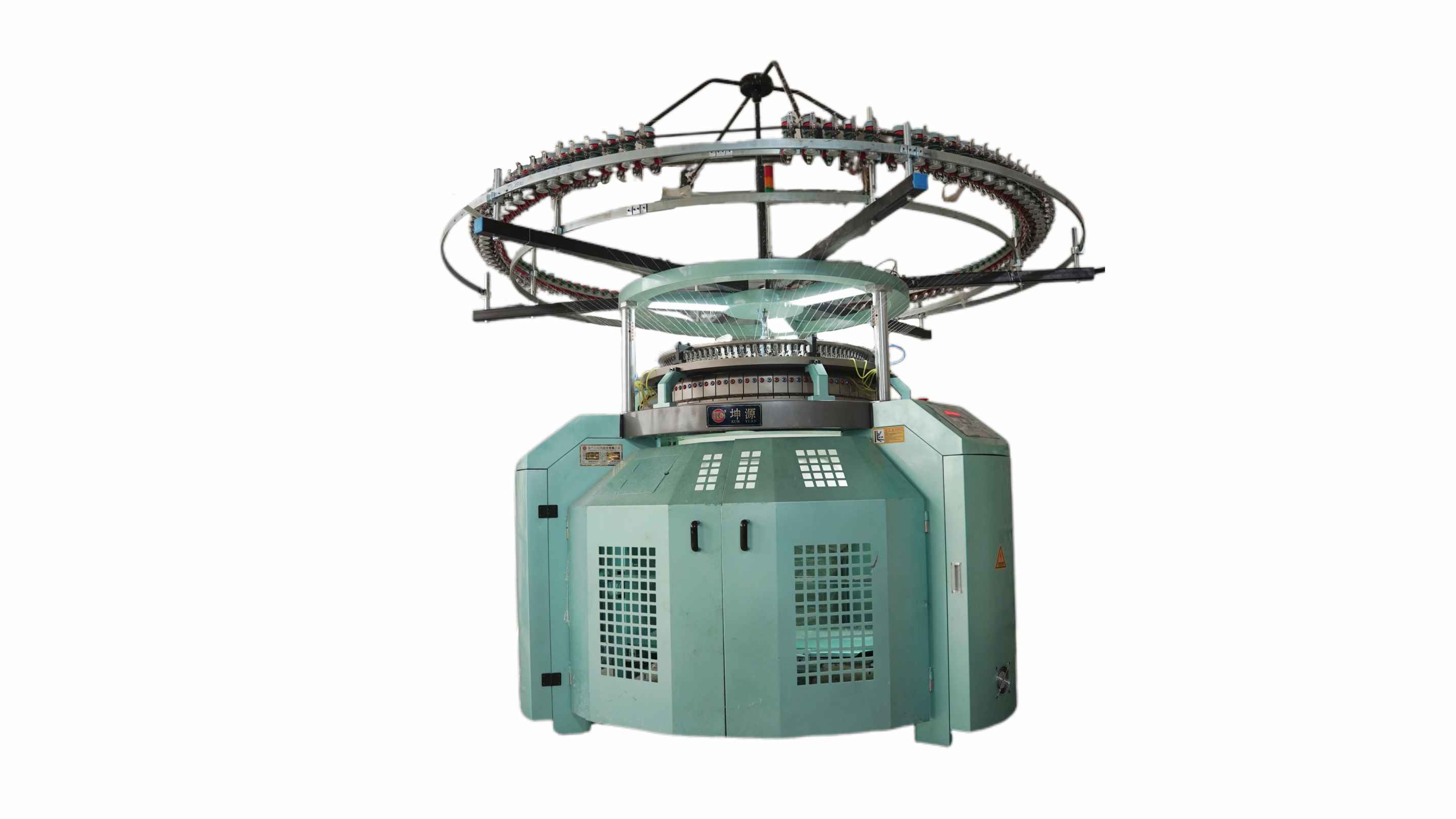
Double-jersey catalogue view; it does not demonstrate a plated-rib yarn pair.
Start with the rib repeat before assigning a colour to a face
Name the intended rib repeat and identify the technical faces, course direction and visible wale groups on a retained reference. Record the approved needle set-out and knitting configuration in the trial documentation through the OEM-qualified route. A colour sketch alone cannot specify which needles form which loops or how the cylinder and dial participate.
Give the fabric a consistent orientation mark before it is relaxed, cut or folded. In a rib construction, recesses and projecting wales change what the observer sees, and reversing the sample can change the apparent colour distribution. Keep the structure drawing independent of the yarn-placement annotation. That way a reviewer can decide whether a later difference concerns the loop architecture, the position of the two yarns or simply how the specimen was presented.
Write a placement target that acknowledges rib's visible valleys
Identify yarn A and yarn B by supplier designation, material, count system, lot and colour. State where each is intended to be visually dominant, including recessed wale regions and the reverse. Keep a yarn-role map tied to the approved feeding arrangement. Avoid calling one end a backing yarn without explaining what the buyer expects to see when the rib is opened.
Use contrasting development yarns where the authorized sampling plan permits them, because they can help distinguish position from subtle shade variation. A contrast sample is an observation aid, not automatic qualification of the final commercial pair. Different yarn surfaces and dimensions can change behaviour. Retain both development and production-yarn references, and describe allowable visibility with the buyer's actual sample language rather than promising an invisible reverse yarn.
Compare the same region at rest and under defined extension
Prepare an oriented specimen and compare both faces in a stated relaxed condition. Then use the buyer's agreed extension or presentation condition to reveal the valleys and inspect the same regions again. Record that condition and the viewing method so a darker stripe seen only when the rib opens is not judged against an unrelated unstretched photograph. This is a recommended comparison record, not a standardized extension test.
Separate regular geometry-driven colour visibility from an irregular change of yarn position. Groz-Beckert identifies yarn twisting as one source of plating colour errors, but appearance alone cannot identify the precise machine cause. Preserve suspicious regions for qualified review of the installed feeding and knitting system. Keep specimen images and physical references linked; a small close-up should not conceal whether the feature repeats across the full fabric.
Carry the placement drawing through the commercial finish
Send identified trial bands through the intended finish while retaining their yarn-role and orientation marks. Compare the finished placement map with the greige reference and the buyer's appearance standard. If finishing changes the apparent balance, preserve preparation, finish and specimen-state records rather than assuming the circular machine must be retimed. Treat a revised yarn pair or finishing route as a new comparison where it can affect the brief.
Record the accepted combination of structure, yarn identities, feeding configuration and finished viewing conditions. Qualify claims about each face only to the demonstrated regions and state. If the product needs recovery, dimensional stability or skin-contact performance, attach the separate agreed evaluations. The architecture map closes the placement question; it must not stand in for every performance requirement attached to the garment.
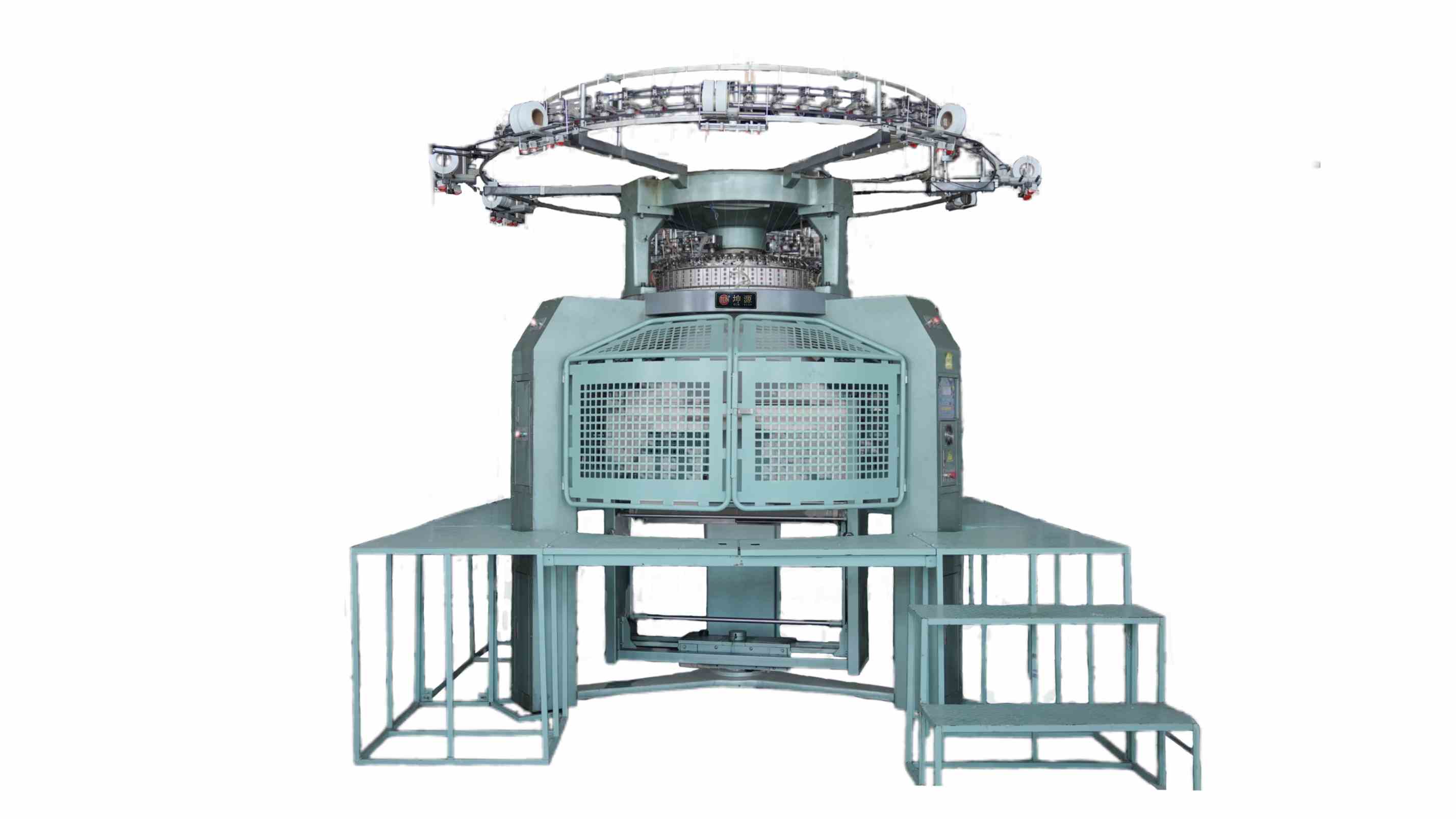
Double-jersey catalogue reference; the installed rib and plating arrangement needs OEM confirmation.
Rib structure and plating-position record
Drawing layer
Required identity
Observation
Separate decision
Loop architecture
Rib repeat and approved set-out
Technical faces and wale groups
Structure matches brief
Yarn position
Yarn A/B and feeding arrangement
Dominance in named regions
Placement matches reference
Presentation
Orientation and extension state
Valley and reverse visibility
View conditions are comparable
Finished state
Traceable band and finish
Changed colour distribution
Commercial appearance accepted
Application release boundary
This trial establishes the observed placement of two identified yarns in the stated rib structure and finished condition. It does not establish machine compatibility for every yarn pair or guarantee a completely hidden backing yarn. Confirm the offered configuration with the OEM before specifying a production trial.
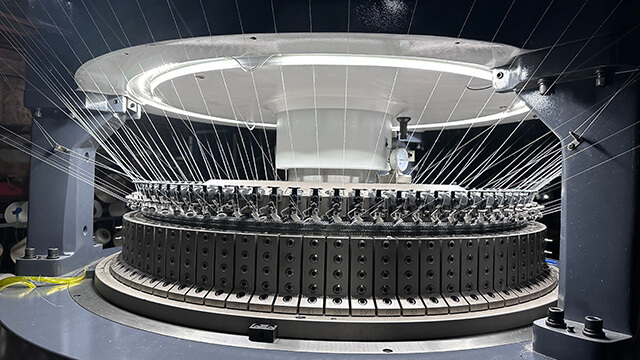
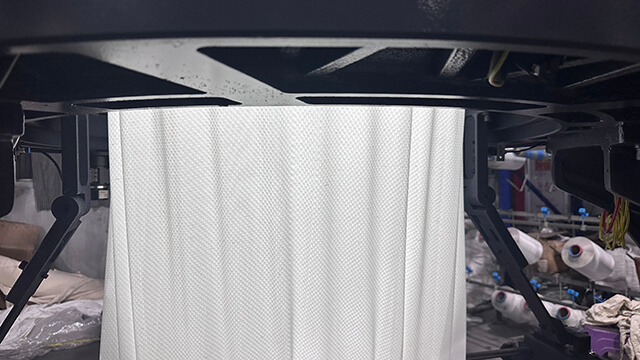
Double-jersey catalogue image; no face/back placement trial is shown.
Questions when defining plated rib
Does plating create another rib structure?
It describes the positional relationship of yarns within knitting. The rib repeat and needle-bed relationship still need their own definition.
Will one yarn be invisible from the other face?
Do not assume complete concealment. Rib geometry and specimen extension can reveal different regions; define the required visibility against actual samples.
Can flat-machine plating settings be copied?
No. A flat-machine example explains the principle, while threading and setup require the exact circular machine's OEM documentation.
Does a contrast development pair qualify the final yarns?
It helps observe placement. The commercial yarn identities and finished appearance still require their own demonstration.
Does an acceptable placement map prove recovery or comfort?
Those properties need separate agreed evaluation. A colour-position map cannot supply their results.
Conclusion
Two independent records make plated rib easier to specify: a loop-structure drawing and an oriented yarn-placement map. Following both faces through extension and finishing converts a vague two-colour request into an observable appearance decision, while keeping machine capability and additional fabric properties within their own evidence boundaries.
Take the structure and yarn-position drawings to a discussion of the Rib Double Jersey Circular Knitting Machine range and ask the OEM to confirm the offered build's plating scope before trial planning.





 Tel: +86-13859034518
 Email: info@kunyuanmachine.com
 MP/WhatsApp: +86-13859034518
 Manufacturer Address:Bacuo Village, Yonghe Town, Jinjiang City, Fujian Province