
Language
Hot Keyword:
Author:KUNYUAN Machine Manufacturer TIME:2026-11-11
Ground yarn can show through terry because the design exposes a plain or low-pile region, because loop coverage is insufficient, or because yarn placement has changed. Compare the suspect area with the intended motif at the same coordinates and finishing state before treating every visible ground colour as a machine fault.
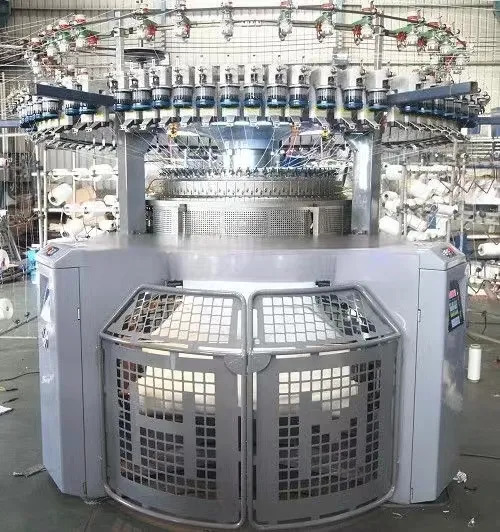
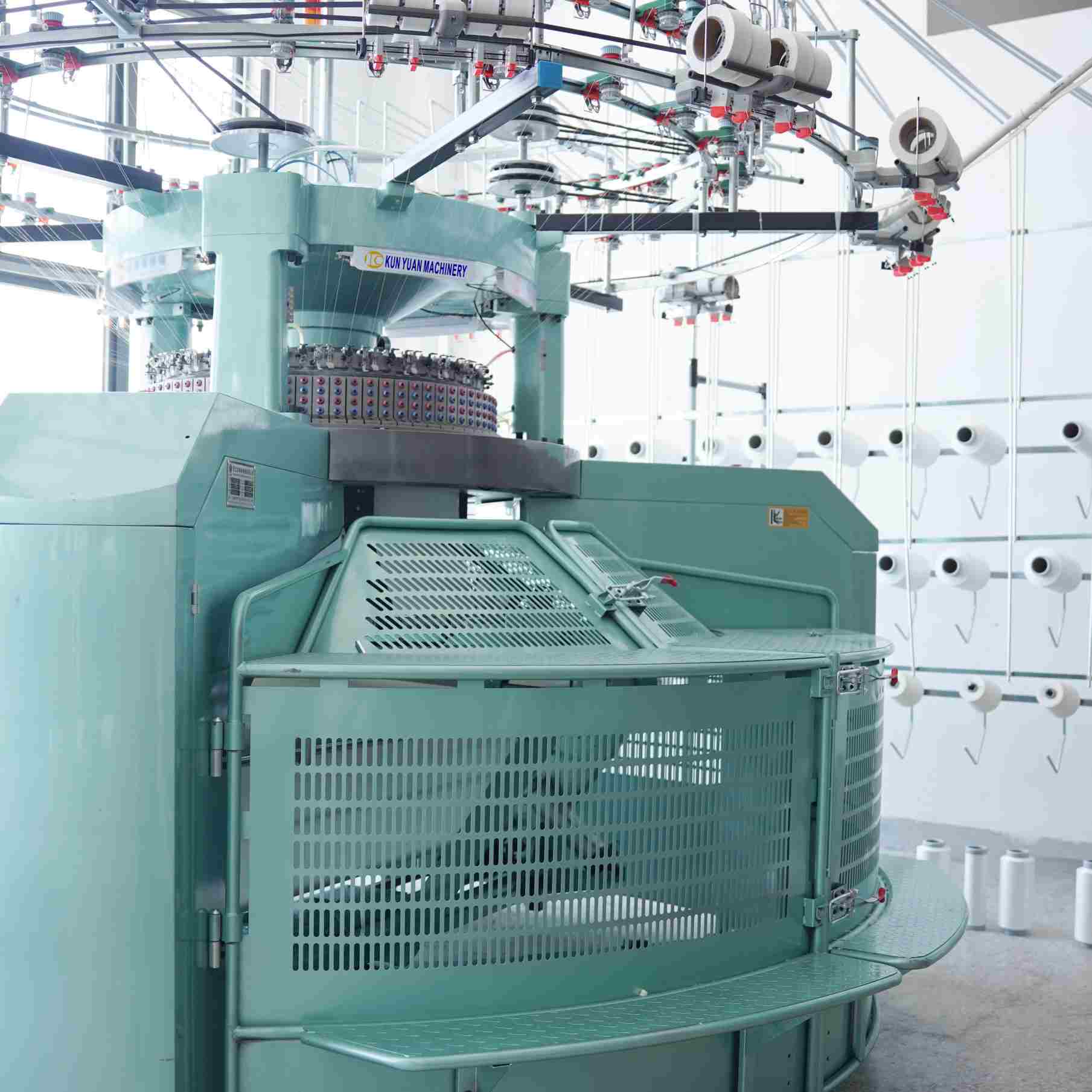
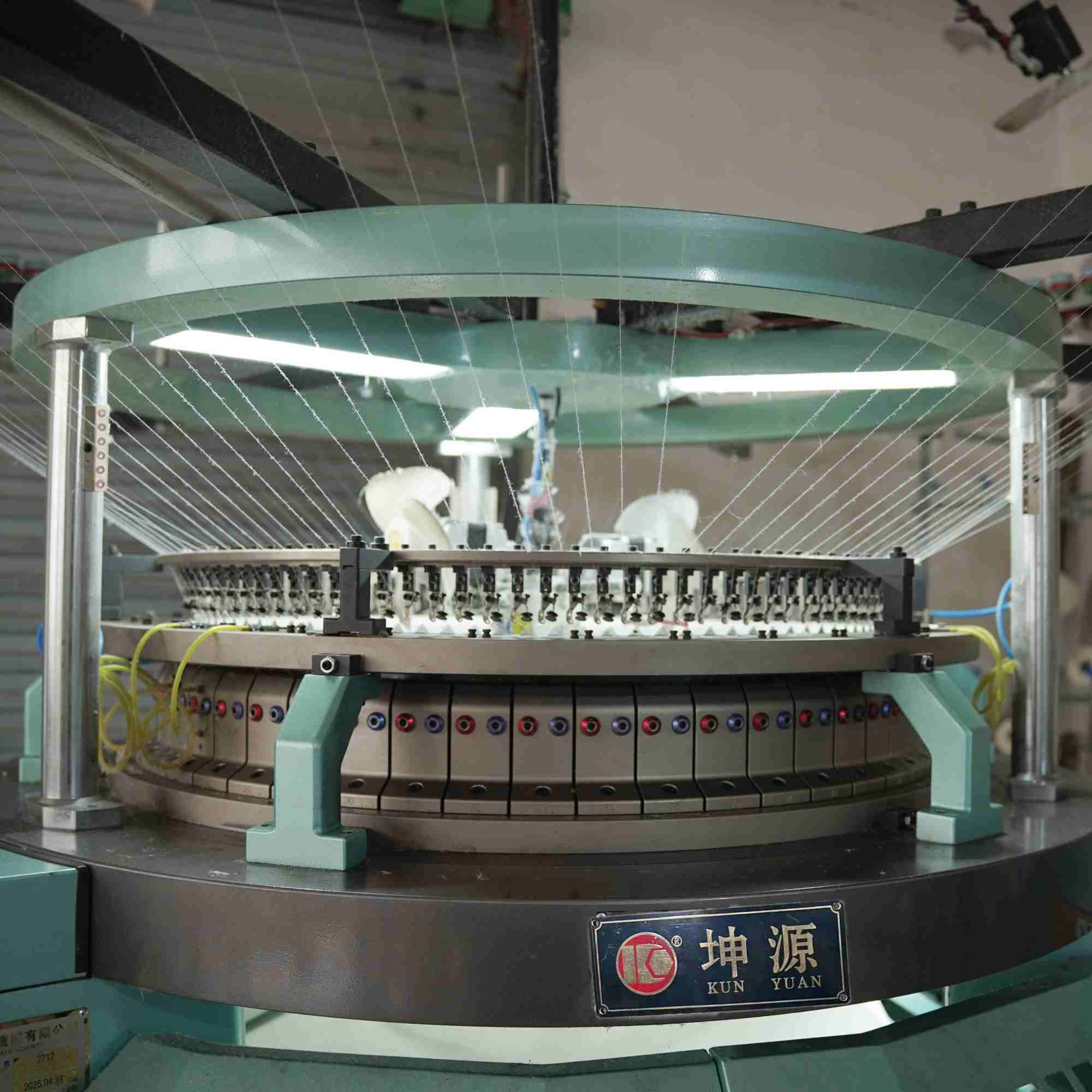
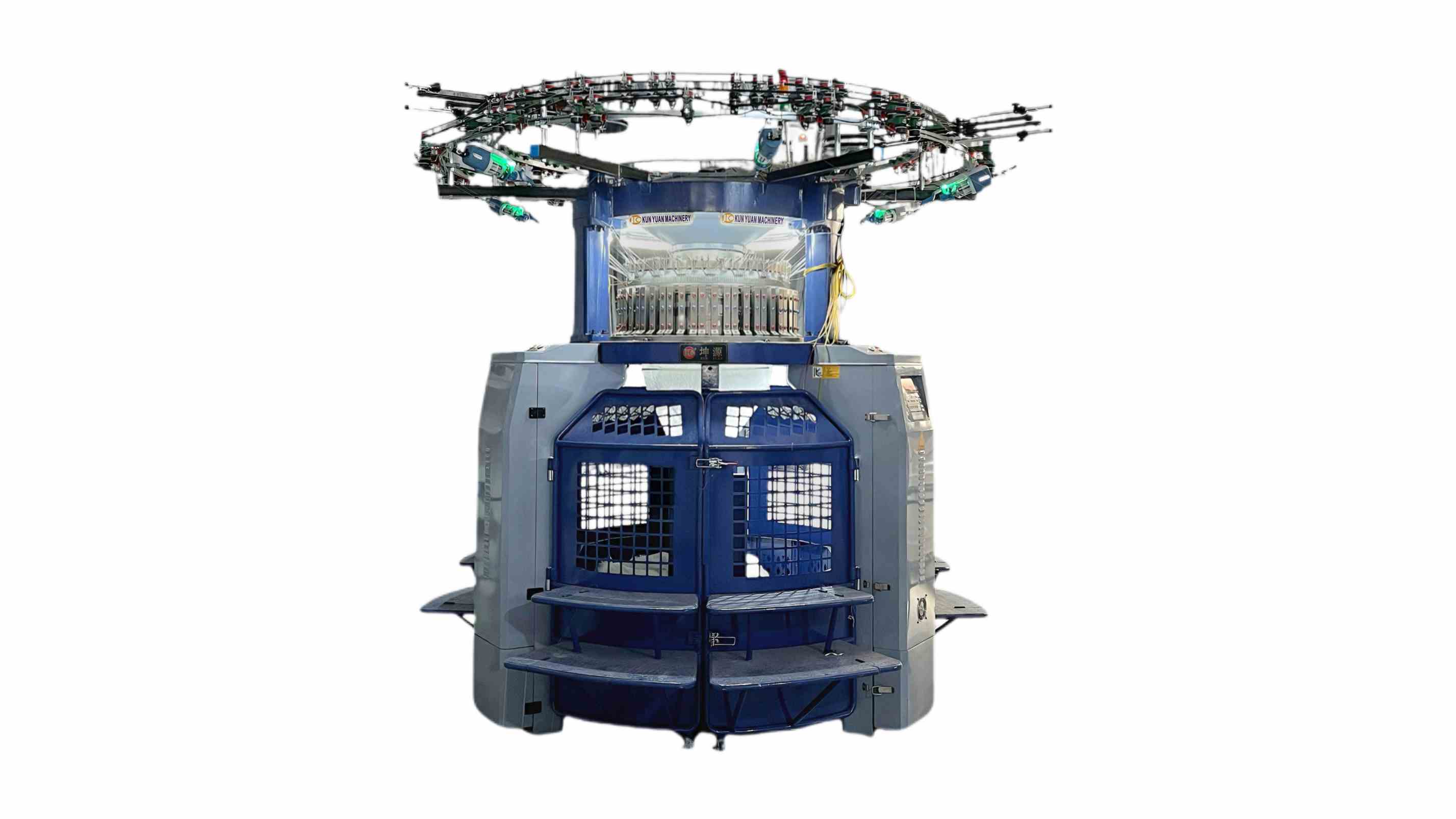
Kunyuan's TM/PM terry page lists 18-52 inches and 7G-28G, with XF-TM 36F-104F and XF-PM 28F-84F ranges. Its 1.5-5.0 mm loop-sinker options are starting geometry, not finished-height promises. Those facts help identify the offered route without merging it with the separate computerized product.
Groz-Beckert discusses plating colour errors and yarn position. Orizio's JSVE brochure illustrates programmed looped and plain regions in that manufacturer's selected-sinker system. The examples support different diagnostic questions; Orizio's electronic selection and height options do not prove that a Kunyuan TM/PM machine has the same mechanism.
Place the approved design and suspect sample in the same orientation. Identify the exact repeat coordinate and the intended surface there: full pile, lower pile, plain ground or a transition between them. A pale opening in a geometric motif may be deliberate negative space. Calling it a defect solely because adjacent regions are fuller can send the technician toward the wrong adjustment.
If the selected surface repeats consistently at the same artwork coordinate, compare it with the intended construction before inspecting a fixed needle position. If it appears at one machine-related location regardless of the artwork, a different investigation is needed. A regular repeat alone is not proof of correctness, but it helps separate a design question from a defect that ignores the pattern boundary.
| Visible clue | Candidate explanation | Useful comparison | Next decision |
|---|---|---|---|
| Matches plain motif zone | Intentional ground exposure | Artwork and accepted coordinate | Accept design or revise appearance |
| Missing loops in a full-pile zone | Coverage/loop-formation issue | Neighbouring loop population and reverse | Qualified delivery/formation review |
| Unexpected yarn colour in formed region | Yarn-placement change | Identified yarn paths and loop structure | Qualified plating review |
| Only appears after finish | Surface presentation or process change | Paired same-region specimens | Review the affected finishing step |
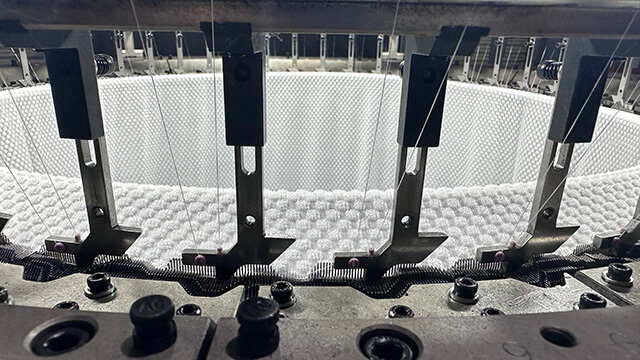
Inspect the suspect region with the pile relaxed, then gently part the loops to view the ground underneath. Sparse coverage leaves more of the base visible between otherwise correctly formed loops. A yarn-placement change can instead alter which yarn is prominent in the knitted region. These are different mechanisms and do not necessarily respond to the same action.
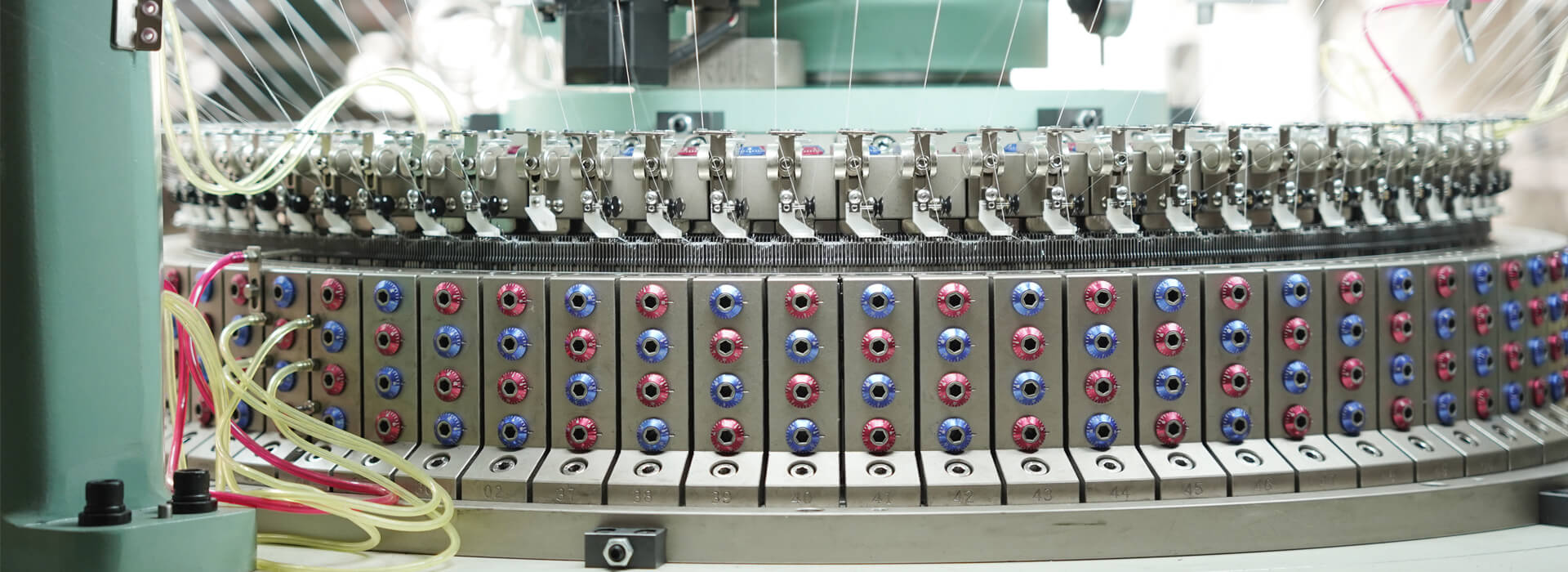
Compare loop population, missing-loop areas and the yarn identities visible in the structure with a neighbouring accepted region. Use the reverse face where it helps locate the same yarn. Groz-Beckert's plating discussion supports examining the relative yarn path and knitting-element interaction. It does not allow a photograph to establish hook damage, nor does it justify replacing needles whenever a light-coloured base appears through dark pile.
Use paired pieces from the same identified region before and after the commercial finish. A looped surface, a flattened wet sample and a sheared surface can present different amounts of base to the viewer. Place them in comparable dry states and viewing directions. If the greige piece already has missing loops, finishing may reveal the defect more clearly without having created it.
Where the finished sample alone looks thin, examine the agreed surface-development route before altering the knitting design. Ask whether the appearance follows contact, compression or shearing zones, and retain the corresponding untreated piece. This is a proposed comparison method, not a claim that any particular process caused the problem. The technician needs both the material history and the location of the visible change.
An intended exposed region calls for a design discussion if the customer dislikes it. A missing-loop region calls for configuration-specific review of pile delivery and loop formation. An unexpected change in yarn prominence calls for review of yarn presentation and the knitting-element relationship. Qualified personnel should choose the machine intervention from its supplied procedure; this guide gives no generic sinker, cam or yarn-guide setting.
Compare a proposed correction on the same demanding motif region using the commercial yarns and finish. A fuller-looking surface may alter weight, hand or motif detail, so check those customer requirements alongside coverage. The useful customer answer explains what changed structurally and why it addressed the visibility. It should not simply say that all settings were checked or that a clean photograph proves every future pattern.

Only if the construction and appearance brief require that result. Plain zones, low-pile effects and opened loops can expose the base deliberately.
Not automatically. Sinker geometry, yarn amount, loop population and finishing interact; the listed option is not a guaranteed finished surface.
They can make yarn position easier to see, but changed yarn bulk or friction can change behaviour. The final commercial yarns need their own comparison.
Only when the intended construction or its execution is the issue. A physical coverage or plating fault may persist after an unrelated artwork revision.
No. The JSVE example explains how one OEM defines surface selection. Kunyuan's exact installed route and service procedure must be established independently.
Ground show-through becomes easier to resolve when the buyer distinguishes intended exposure, sparse pile and changed yarn position. Compare the same motif region through equivalent surface states, then choose a correction that fits the mechanism. That preserves design detail and avoids exchanging a colour complaint for a weight or hand problem.
Discuss the motif and ground-visibility boundary with the Terry Jacquard Circular Knitting Machine range using a specified TM/PM arrangement and paired specimens rather than an assumed shared controller or universal sinker setting.

 Tel: +86-13859034518
 Email: info@kunyuanmachine.com
 MP/WhatsApp: +86-13859034518
 Manufacturer Address:Bacuo Village, Yonghe Town, Jinjiang City, Fujian Province