Can this soft fabric become a cover that fits and stays intact?
Choose plush cushion fabric by how its knitted backing, seams and closure behave around the intended insert. A soft, dense pile can conceal a backing that stretches or damages at a seam. Compare a sewn cover in its intended direction and after the planned care route before selecting the fabric for this application.
Coats explains why thread elongation, stitch and seam construction affect sewn performance, and its upholstery application guide separates cushion stitching from zip work. Those manufacturer examples supply questions for a sample maker, not a thread recipe or a verified cushion result.
Kunyuan's high-pile page separates HMC cylinder cutting, with 18-48 inches, 16G-26G and 12F-34F, from HMD dial cutting, with 16G-22G and 30F-72F. The catalogue provides equipment context. It does not establish that a particular knitted backing, finish or sewn cover meets this buyer's product requirements.
Screen the backing in the directions used by the finished cover
Part the pile and examine the base fabric before judging only the face. Identify course and wale direction on the cut panels. Compare their extension and recovery under a method suited to the intended cover. The actual insert shape, filling and fit can load different directions, so an isolated lengthwise observation may miss a coursewise fit problem.
Draw the cover and identify corners, panel joins and the closure opening. Decide whether the style needs a close fit, loose drape or another deliberate shape. A cover pulled tightly around an insert imposes a different duty from a loose decorative throw cover. Choose the fabric and pattern allowance together; do not ask pile height or machine gauge to answer a geometry-and-backing question.
Make the seam work with the backing rather than against it
A seam that extends much less than the surrounding knit can become the limiting line when the cover is fitted or handled. Conversely, a seam with excessive movement may alter the intended shape. Coats distinguishes thread elongation from elastic recovery and identifies stitch and seam construction as additional influences. Thread breaking extension alone therefore cannot predict the assembled cover's behaviour.
Have the sample maker choose a stitch, seam allowance, needle and thread for the actual material. Examine puckering, skipped stitches, damaged loops, visible opening and local distortion in a sewn specimen. Inspect beneath the pile, which may hide a weakened stitch line. The upholstery guide's example thread sizes are not instructions for every knitted plush; they must not be copied without the fabric and sewing-system comparison.
Test the opening the user will repeatedly handle
Build the sample with its intended zip, overlap or other closure rather than evaluating two straight seams alone. Opening the cover to insert or remove a cushion can concentrate strain near zip ends and corners. Inspect the attachment region after the agreed handling sequence. Note whether the backing distorts, pile interferes with closure movement or the corner pulls into an unintended shape.
Choose any reinforcement or closure revision with the garment or home-textile technician and compare it on the same construction. Added support can change bulk and hand as well as strength. This article sets no universal reinforcement width, stitch count or cycle requirement. The buyer should name the expected handling and acceptance method so a neat sample photographed once is not mistaken for demonstrated repeated-use performance.
Keep pile direction and care response in the application decision
Mark nap direction while cutting and compare the panels in the assembled orientation. Simplicity's directional-layout guidance explains why pieces facing different ways can appear to differ in shade. The relevant question is the appearance of this complete cushion, including any intentionally contrasting panels. An averaged fabric colour measurement cannot by itself approve that directional design choice.
Follow the proposed care route on the complete construction where the product specification requires it. Compare cover fit, seams, closure function and the visible surface after the same conditioning state. Additional requirements such as abrasion, colourfastness or flammability need separate suitable evidence; none is established by these comparisons. Select the knitted plush because the specific sewn cover meets its intended duty, keeping any unfinished evaluation visible in the order.
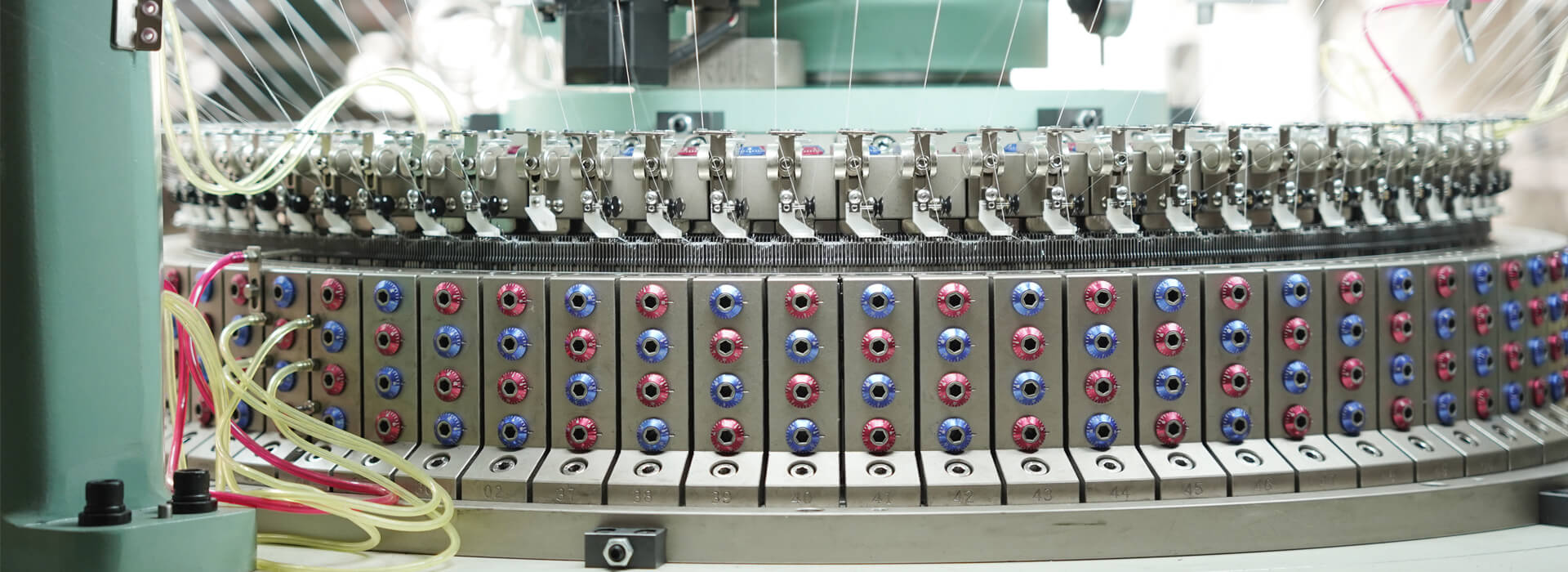
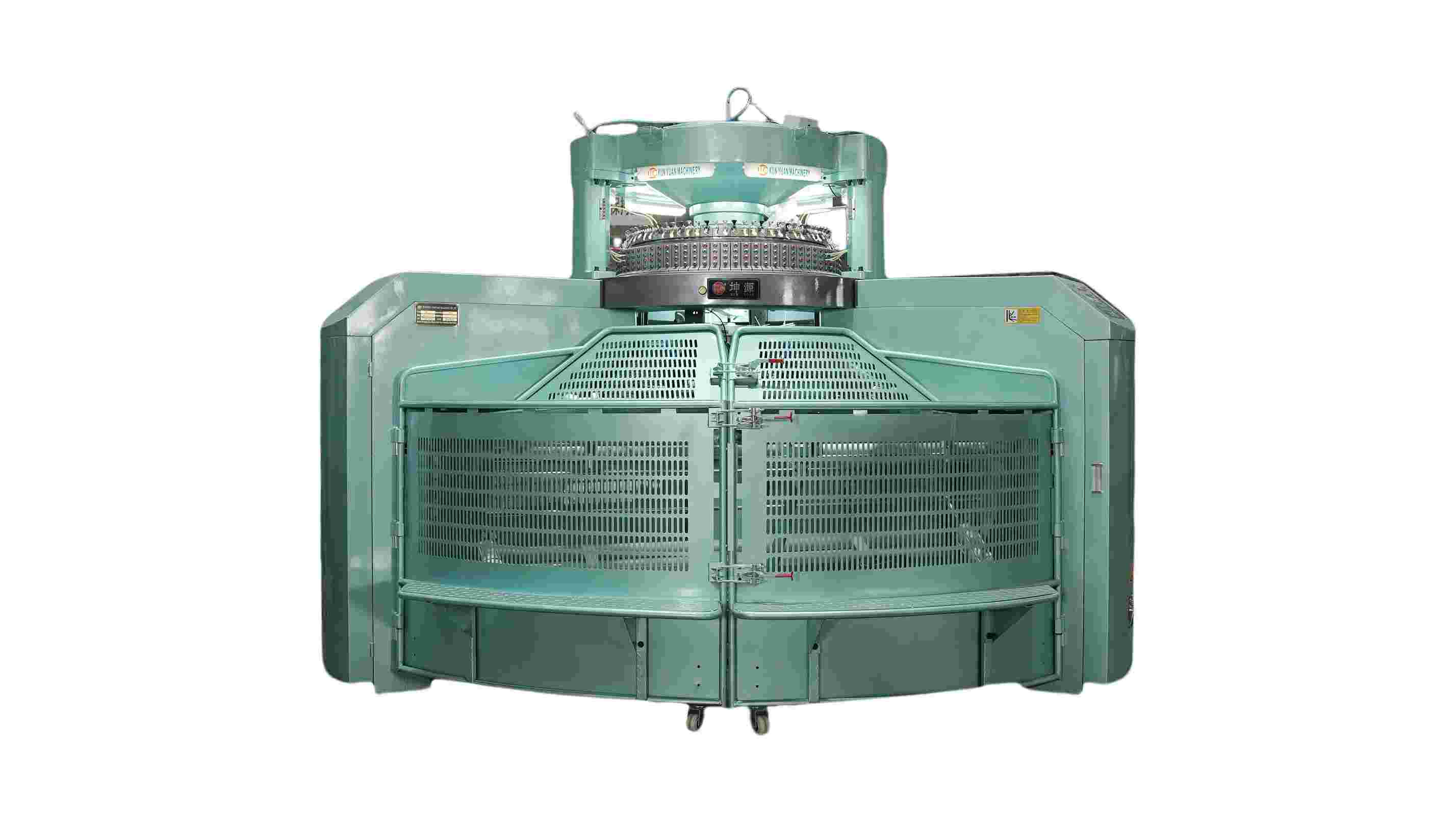
Approved existing equipment image; no cushion seam is pictured.
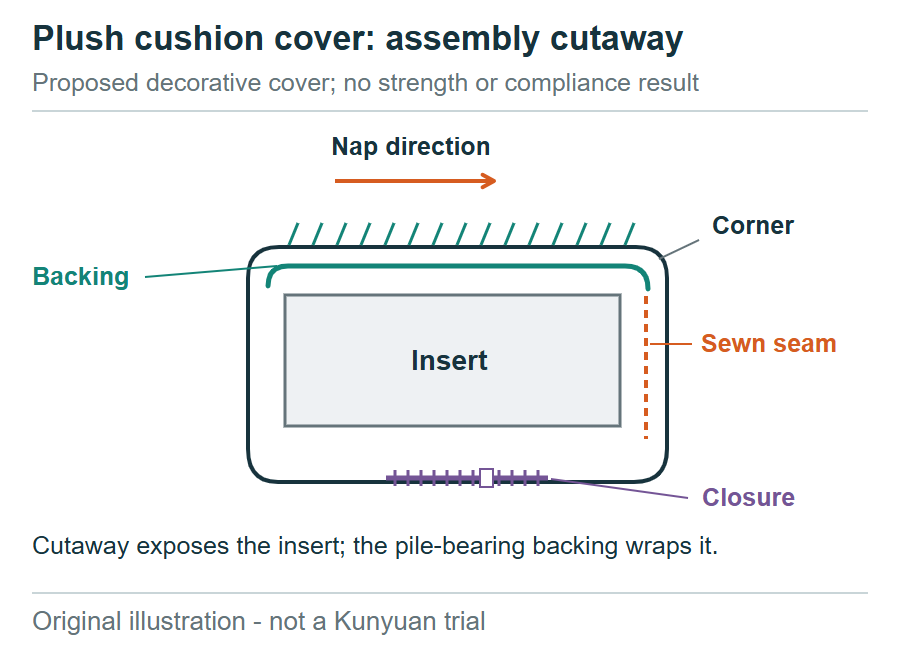
Original illustration. Original proposed cushion-cover cutaway: symbolic pile and a nap arrow identify the outward cover, the backing wraps the insert, and a sewn seam, corner and zipper-style closure are separate assembly features. The section exposes the insert for explanation; no completed sample, seam strength, life, furniture rating or compliance result is depicted. Kunyuan editorial; not a Kunyuan trial.
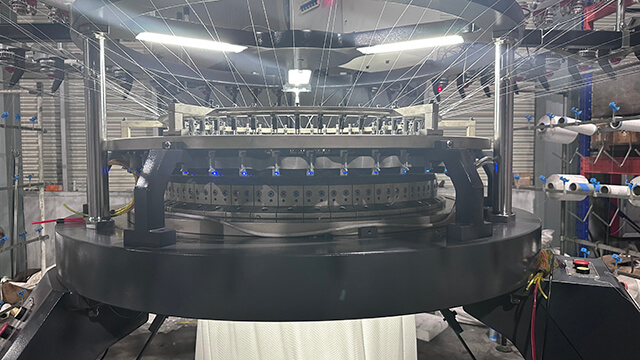
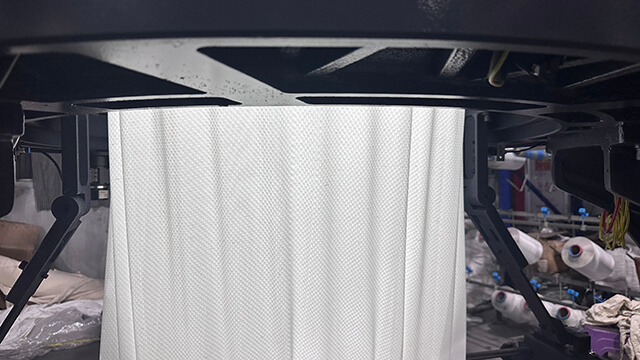
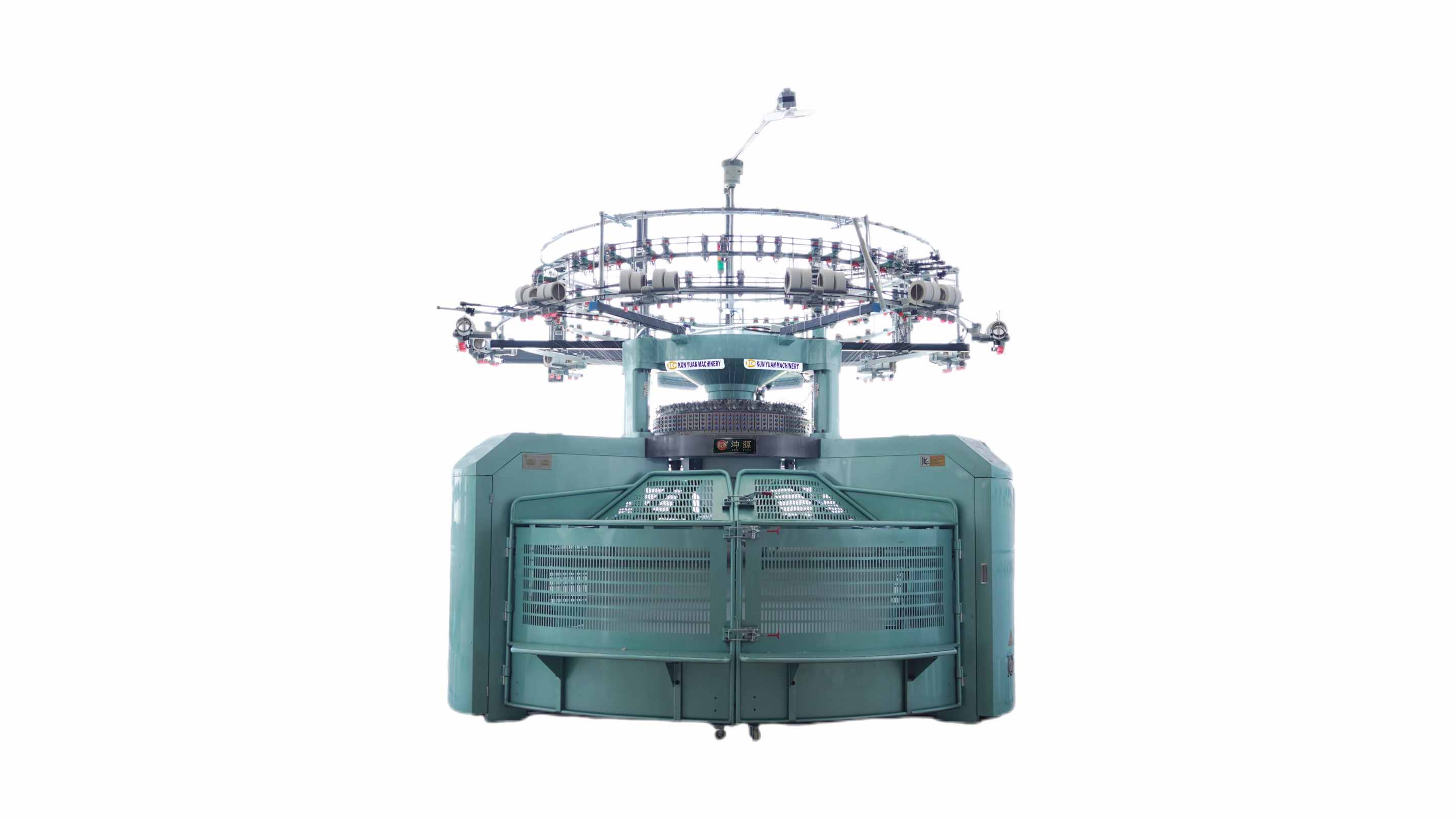
Equipment reference only; no plush-cover durability or compliance result is shown.
Plush cushion application questions
Product area
Buyer question
Mechanism
Sample to compare
Backing
Will the cover retain the intended fit?
Directional extension and recovery
Panels around the actual insert
Seam
Will fitting strain damage the join?
Seam/backing movement relationship
Sewn line and nearby ground
Closure
Can the insert be removed as intended?
Local load, bulk and interference
Actual zip or overlap assembly
Appearance
Do assembled panels look consistent?
Pile direction and care response
Complete conditioned cover
Plush cushion fabric questions
Does a dense pile prove a strong cover?
No. Surface cover and seam integrity answer different questions. Examine the knitted backing and the actual sewn construction.
Should the seam stretch as much as the fabric?
Its required movement depends on the cover duty. Compare the seam and backing in the intended assembly; no universal equality or elongation target is established here.
Can the upholstery guide's thread size be copied?
It is a manufacturer application example. The sample maker must select and evaluate thread, needle and stitch with the actual knitted pile material.
Why include the zip in the first sample?
The closure concentrates handling loads and can introduce pile interference or backing distortion that a straight seam specimen does not reveal.
Does this guide establish an upholstery or safety rating?
No. It describes proposed decorative-cover comparisons. Any additional performance or compliance requirement needs its own applicable evaluation and evidence.
Conclusion
Plush cushion selection succeeds when the soft face and the sewn backing are evaluated as one product. Fit around the insert, seam movement, closure handling and directional appearance each answer a different buyer question. Use that completed cover to choose the fabric and keep additional ratings separate until their evidence exists.
Bring the cushion drawing and finished-cover requirements to a review of the Pile Fabric Circular Knitting Machine range and request a pile/backing proposal for that application without treating catalogue ranges as seam-performance results.





 Tel: +86-13859034518
 Email: info@kunyuanmachine.com
 MP/WhatsApp: +86-13859034518
 Manufacturer Address:Bacuo Village, Yonghe Town, Jinjiang City, Fujian Province