Choose the knitting-bed relationship that the fabric requires
Single jersey and double jersey are not good-better labels. They describe different loop-forming architectures, and that difference changes fabric structures, access, timing, conversion work and trial evidence.
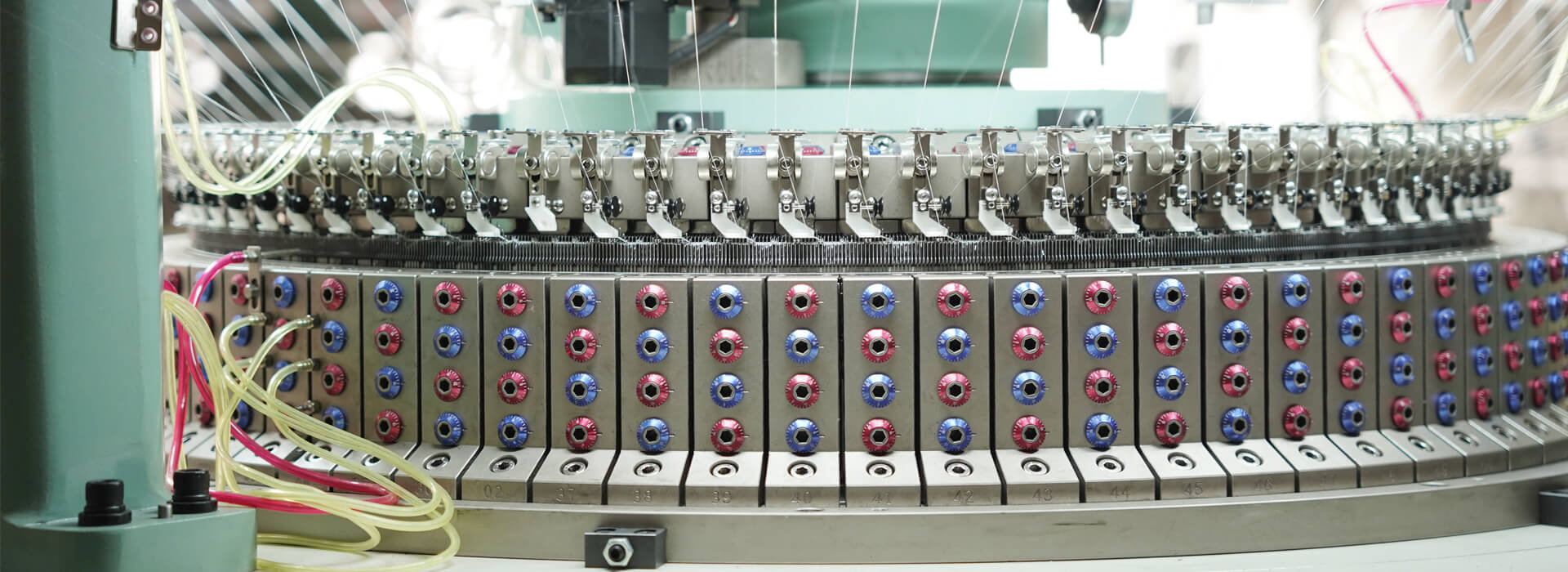
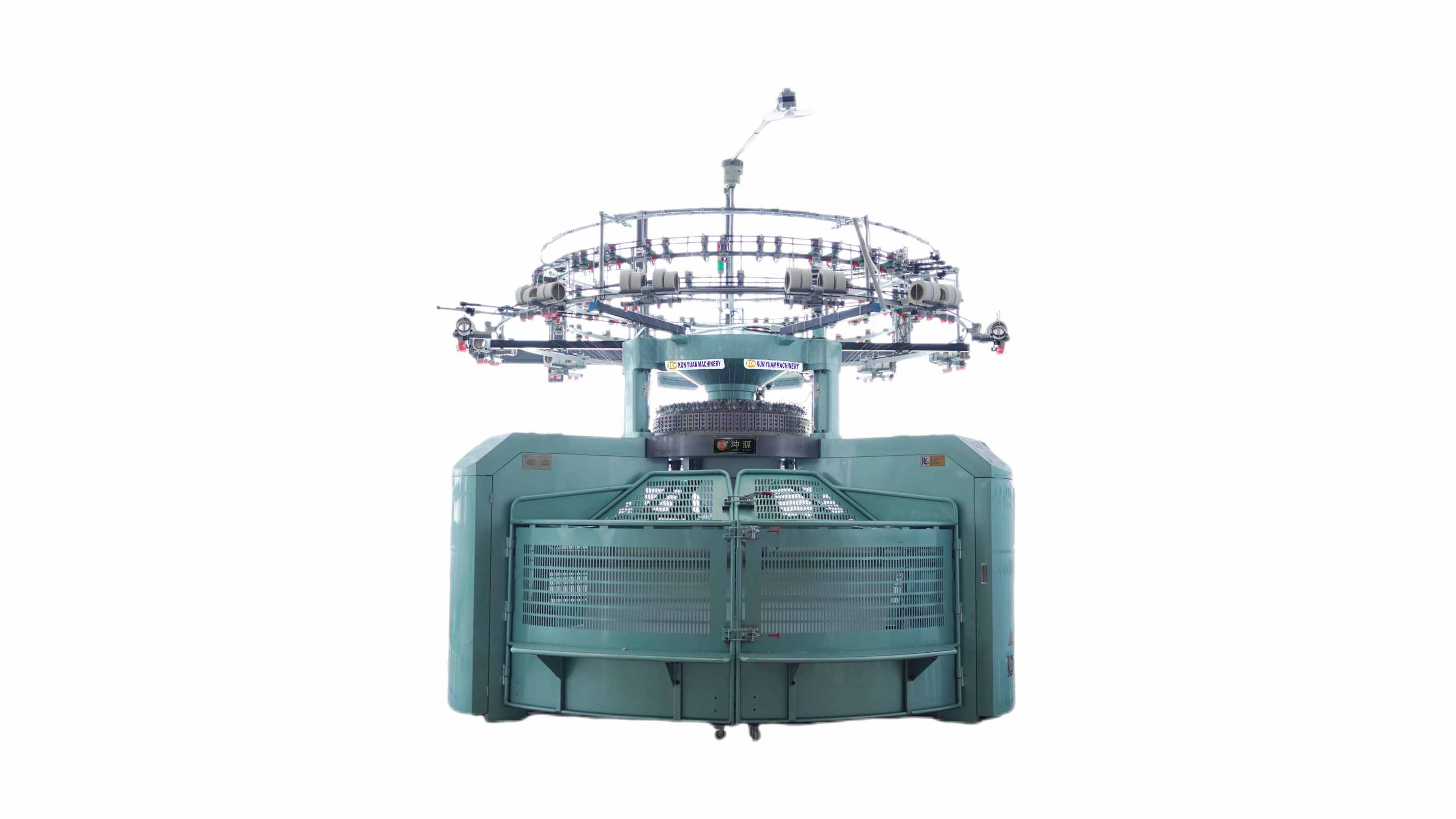
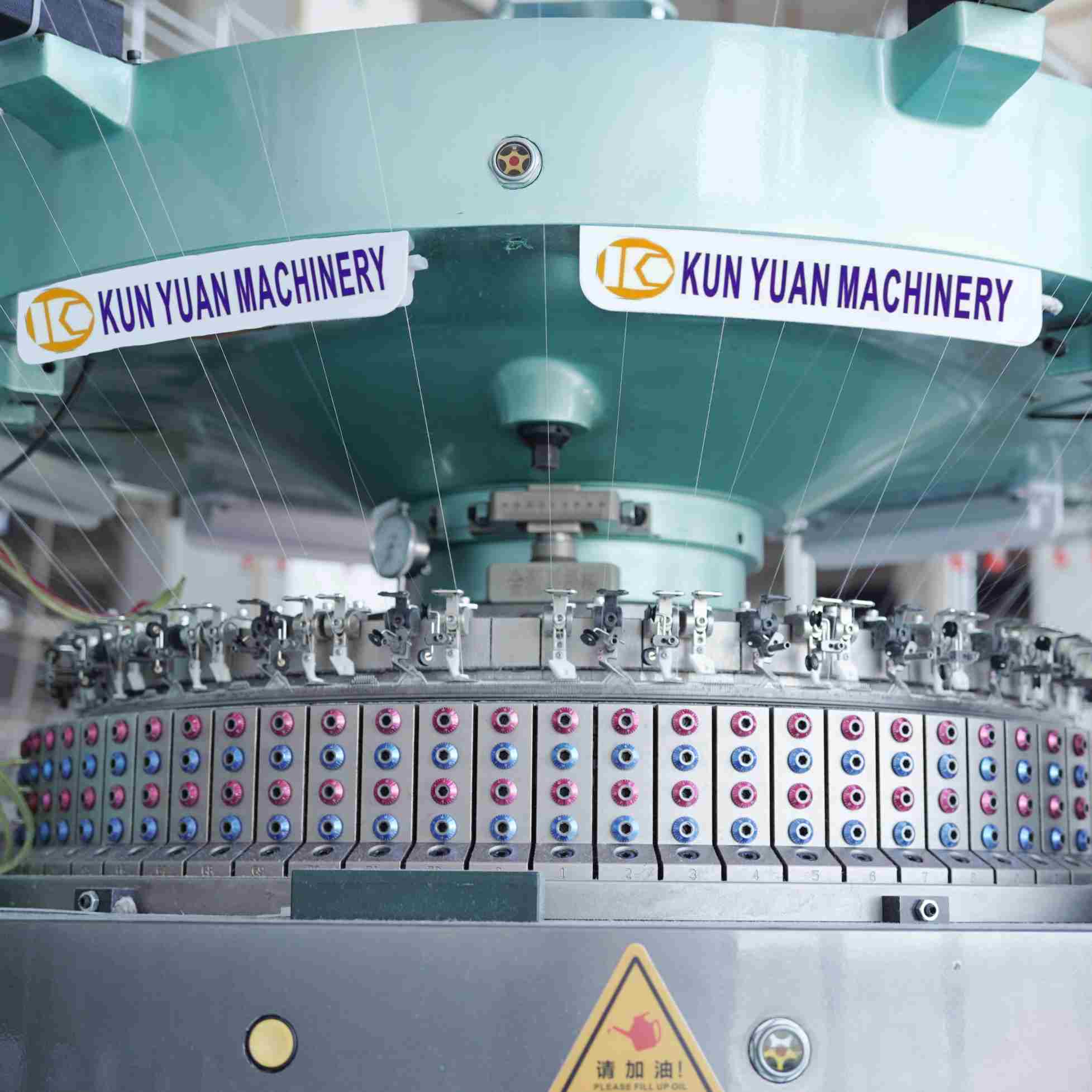
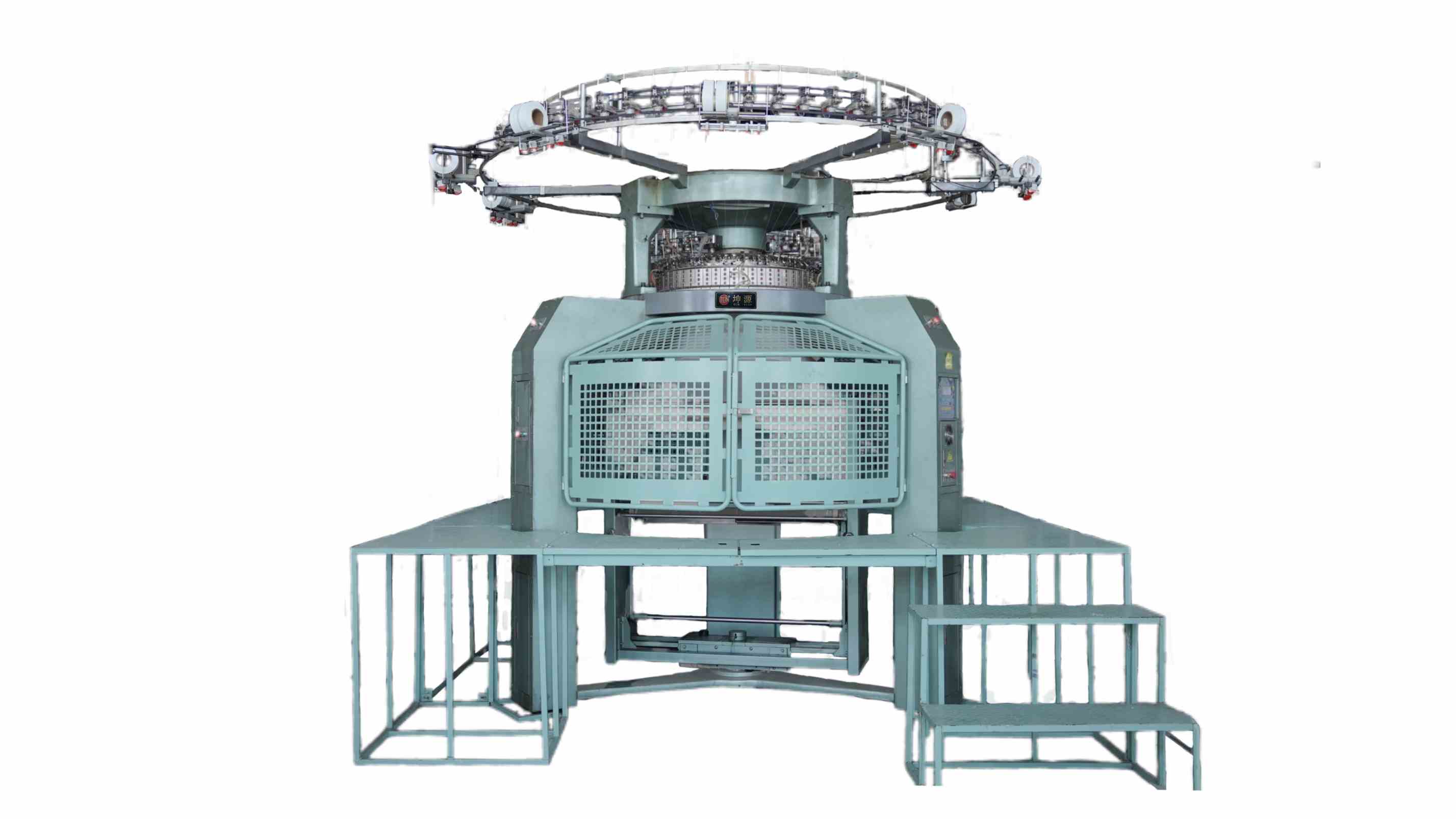
A typical single-knit circular arrangement forms loops on one cylinder bed with sinker and cam systems suited to its structures. A typical double-knit machine adds a second needle bed—commonly cylinder and dial—so rib, interlock and related structures can be formed. Exact mechanisms vary by model.
Start with the finished fabric and both faces. The machine category follows the structure; it should not be selected from headline RPM or a generic application list.
Single-knit route: face, curl and finishing consequences
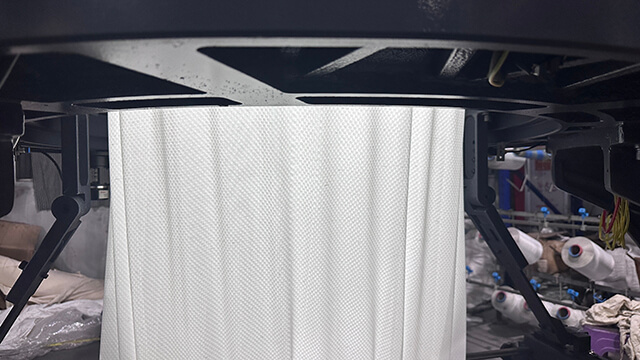
Single-jersey routes can serve lightweight apparel, plated fabrics and many engineered surfaces, but the fabric's face/back difference, edge curl and dimensional response belong in the trial. Define whether open-width take-down or later slitting is part of the process.
Inspect needle lines, barre, spirality, width and weight after the intended relaxation or finishing. The useful machine is the one that keeps those variables within the buyer's limit at a maintainable setting.
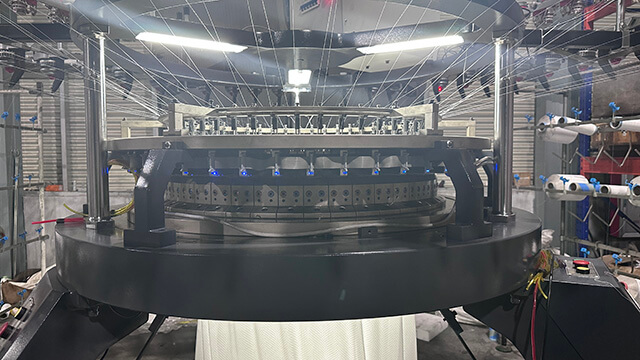
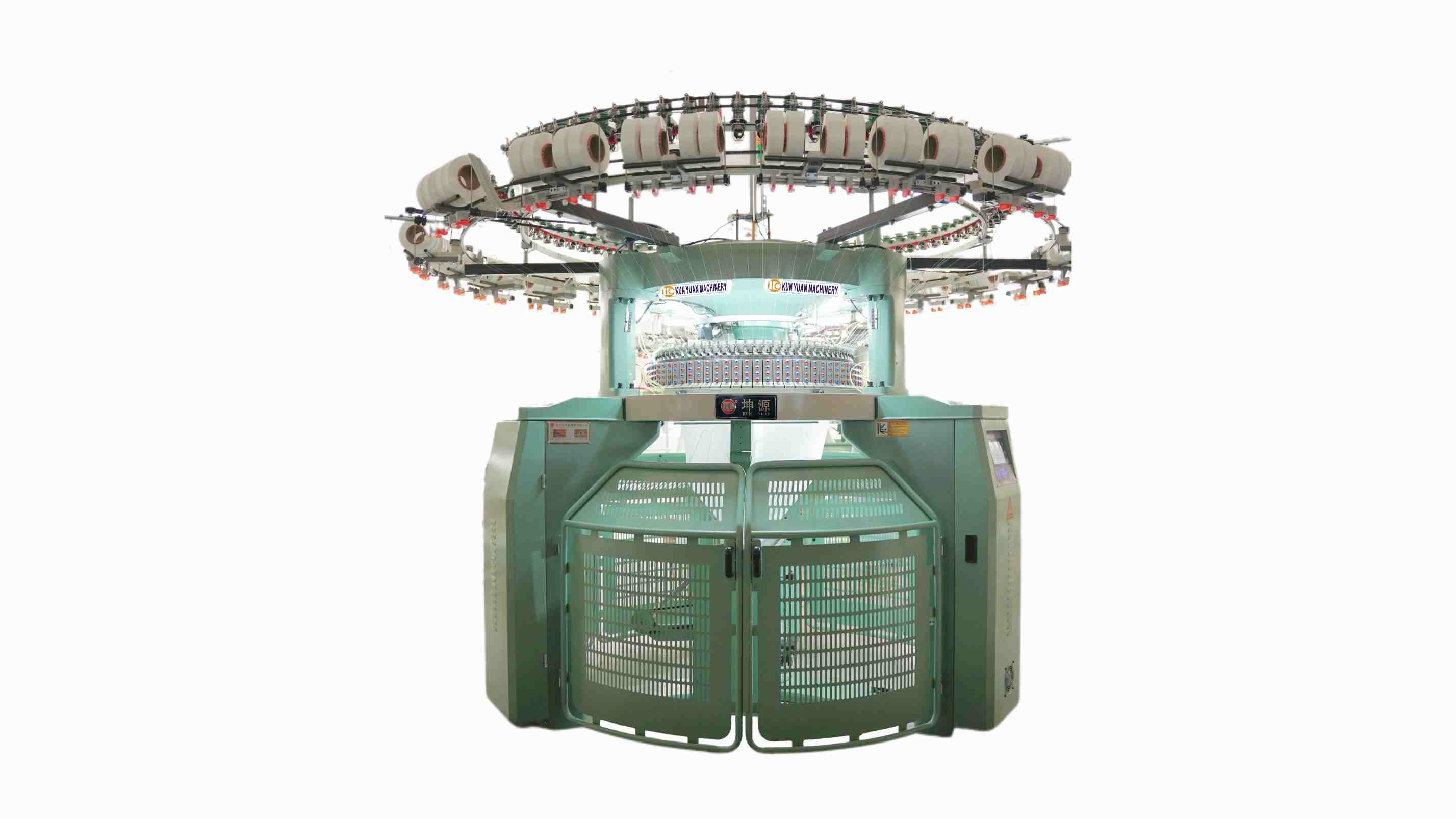
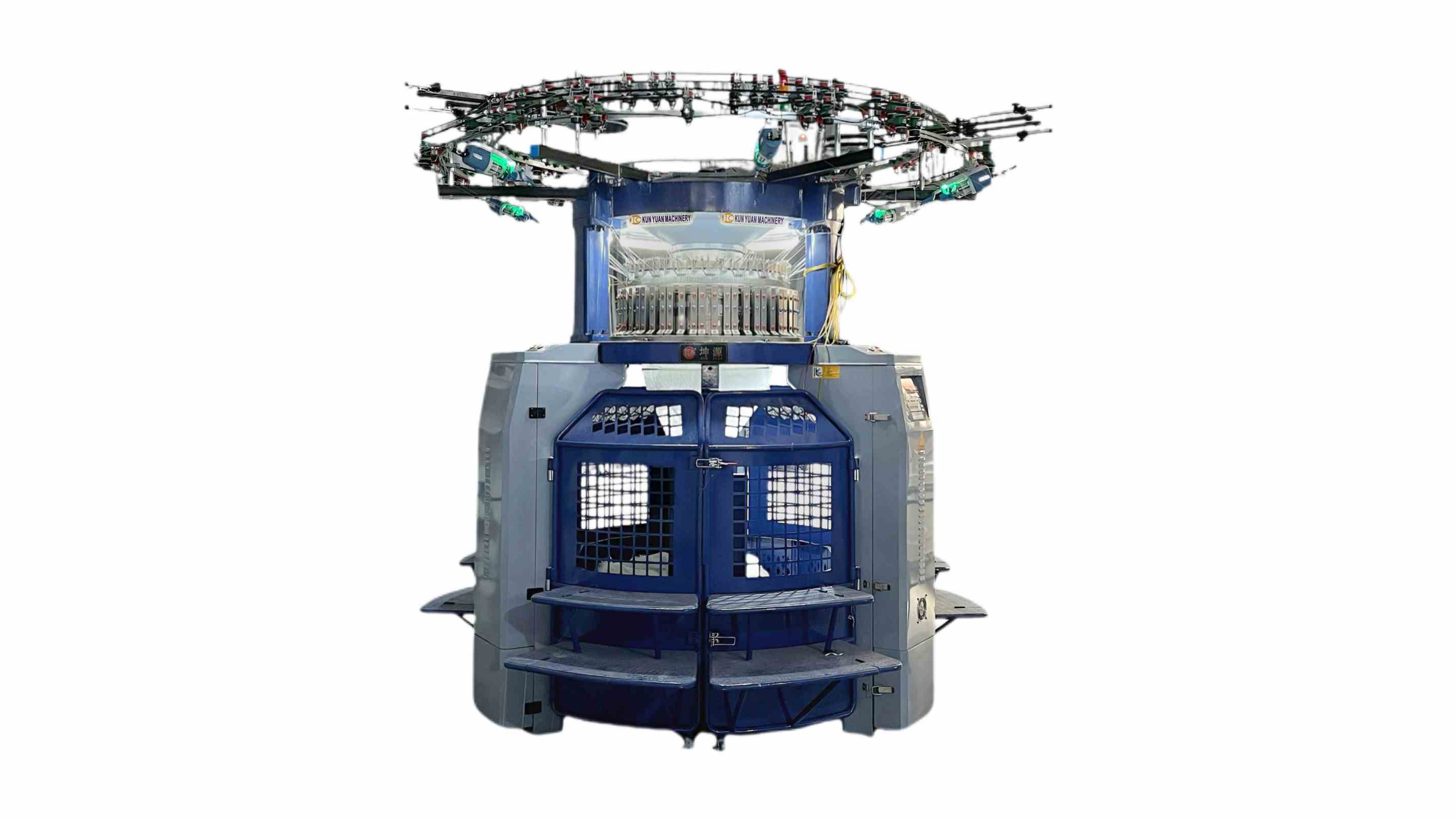
Assess the fabric route and take-down, not only the exterior of the machine.
Double-knit route: cylinder–dial coordination and structure range
Rib and interlock require coordinated beds and suitable needle/cam arrangements. That architecture can produce two-sided structures and different stretch or stability, but it adds timing, access and change-part questions.
Record cylinder and dial identification, needle arrangement, structure, yarn plan and both-face inspection. Conversion claims should list the actual kits and labour, not merely name several fabric families.
Confirm bed geometry, needle systems and available structures on the offered model.
Decision bands that should not be collapsed into one score
Fabric architectureOne cylinder bed in the common routeCylinder and dial or another two-bed route
Typical structuresSingle jersey, plated and compatible derivativesRib, interlock and compatible derivatives
Setup focusSinker/cam/feed/take-down balanceTwo-bed timing, needle arrangement and change parts
EvidenceFace/back, curl, spirality and finishBoth faces, bed-related lines, stretch and stability
Compare the commercial consequences of the architecture
A nominally faster machine can lose the comparison through longer changeovers, difficult cleaning, scarce change parts or lower accepted yield on the required fabric. Put setup hours, operator skill, planned maintenance and initial spares beside output.
Use the same yarn lot and finished inspection method for both routes where a fabric can plausibly be made either way. If the resulting structures are not equivalent, say so instead of forcing one score.
Paired trial record
Record
Single-knit sample
Double-knit sample
Comparison rule
Structure
Name exact construction
Name exact construction
Do not call unlike fabrics equivalent
Run
Time, stops and settings
Time, stops and settings
Use a stable window
Finish
Method and measurements
Method and measurements
Apply comparable conditions
Release
Accepted use and limits
Accepted use and limits
Keep separate scope statements
Run two relevant samples, not two unrelated demonstrations
Choose a buyer style that genuinely represents each architecture. Record stable speed, active feeds, settings, stops, manual work and roll position, then finish and measure the samples by the same documented method.
Retain the machine configuration with each sample. A swatch without its bed arrangement and yarn plan cannot answer a later quality question.
Compare identified samples after the intended finishing route.
Use a no-default-winner decision rule
Select single knit when the required structures and finishing route fit that architecture with acceptable quality and operating burden. Select double knit when rib, interlock or other two-bed structures are central and the mill can support their setup.
If the product portfolio spans both, compare separate machines or a documented conversion route. Do not assume one universal build will cover the full range without compromise.
Single versus double jersey questions
Is double jersey always heavier?
No. Structure, yarn, stitch setting and finishing determine weight. Double knit describes an architecture, not a guaranteed mass.
Can one machine be converted between the categories?
Some models offer documented conversion kits or structure changes, but scope varies. Confirm parts, labour, downtime and accepted samples on the exact model.
Which route is better for rib fabric?
Rib is normally associated with coordinated cylinder and dial needles on a double-knit route. Confirm the intended rib structure and machine arrangement.
Should RPM decide the purchase?
No. Compare accepted output for the required fabric, including setup, stops, defects, finishing and maintenance burden.
What should be included in a trial report?
Record machine architecture, needle beds, yarn, structure, settings, run data, roll position, finished measurements and release limits.
Conclusion
The comparison has no default winner. Fabric architecture chooses the machine route; operating evidence chooses the specific configuration. Keeping those decisions separate prevents a fast but unsuitable machine from winning on paper.




 Tel: +86-13859034518
 Email: info@kunyuanmachine.com
 MP/WhatsApp: +86-13859034518
 Manufacturer Address:Bacuo Village, Yonghe Town, Jinjiang City, Fujian Province