Hot Keyword:
YOUR POSITION:HOME > Blog >

Setting Finished Stripe Width on an Auto Striper Circular Knitting Machine

Author:KUNYUAN Machine Manufacturer TIME:2026-11-09

MENU
Finished stripe engineering

How many courses make the stripe the customer actually wants?

Set stripe width from the course density of the finished fabric, then choose a whole number of courses within the buyer's dimensional tolerance. A controller counts knitting actions; it does not directly guarantee centimetres after relaxation, compaction or laundering. The approved stripe must therefore have a defined measurement state.

A 2 cm stripe is a finished-product instruction. The knitting program needs a course instruction, and the conversion depends on how tightly those courses lie together. CottonWorks explains the course-and-wale distinction. Its dimensional-stability guidance also identifies construction and processing as influences on size; neither source supplies a shrinkage allowance for this order.

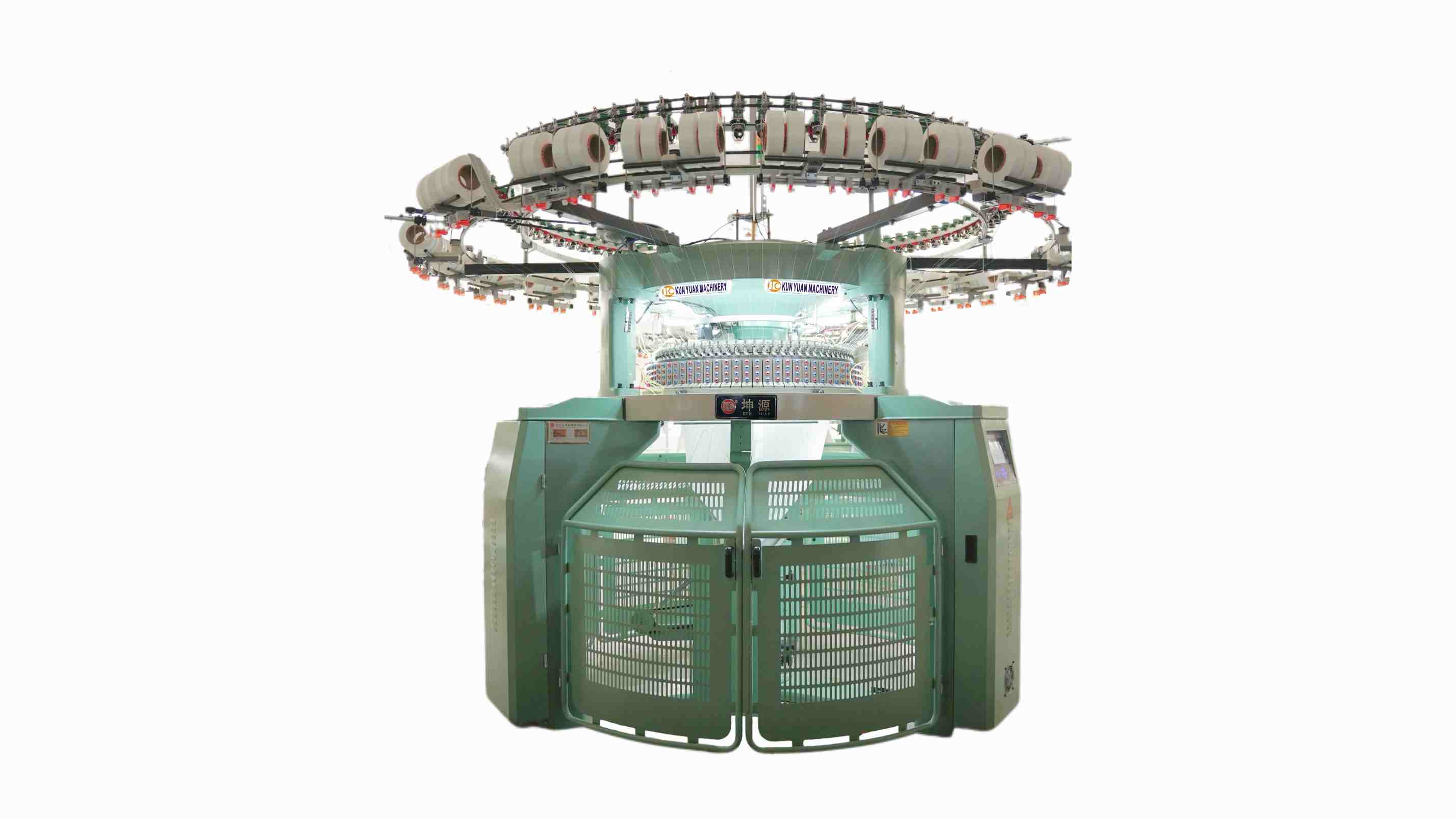
Kunyuan's single-jersey product page lists 18-38 inch diameters, 7G-50G and 54F-114F. Those catalogue ranges describe the base family, not its installed striper or colour capacity. Mayer & Cie's S4-3.2 R II is a separate manufacturer's programmable-striping example. Its conversion options do not establish Kunyuan equipment scope.

Measure the stripe in the state named on the garment specification

State whether the requested band width applies to finished fabric before cutting, to the sewn garment, or after the agreed care cycle. Include the permitted tolerance and identify which colour boundary is being measured. An edge softened by yarn hairiness can produce different readings from its structural course boundary, so agree whether the buyer judges the visual edge or the underlying course position.

Lay the material without stretching it to the target. Compare corresponding places at the centre and near both usable edges. A band that slopes across the width needs an orientation assessment as well as an average width. Keep the course count and physical band dimension as separate observations: a consistent digital repeat can coexist with inconsistent finishing or uneven fabric presentation.

Gate: The buyer has named the measurement state, boundary and tolerance.
Use finished course density and allow for whole-course rounding

Count courses over a known distance within the finished sample, preferably across several repeated bands rather than a tiny compressed edge. The design calculation is target band width multiplied by courses per centimetre. This is a geometric estimate, not an OEM programming command. Where the controller uses grouped feeds or another design unit, its instructions must first be translated into the actual fabric courses.

For a calculated example only, a sample with 20 finished courses per centimetre needs 40 courses for a 2 cm band. A 1.25 cm band needs 25 courses. If the measured density were 19 courses per centimetre, the latter target would need 23.75 courses; 24 courses predicts about 1.26 cm. Decide whether that rounded result fits the tolerance before changing stitch length to chase an exact drawing dimension.

Gate: The rounded course plan meets the specified dimensional tolerance.

Allocate rounding across the repeat without moving its visual centre

A design containing several narrow bands can accumulate rounding errors. Add the chosen integer course counts and compare the total repeat height with the artwork. For symmetrical designs, check whether opposite bands still have matching counts. If the total is too large or too small, discuss a revised band allocation with the designer rather than distributing hidden adjustments arbitrarily.

Use a contrast boundary to inspect the smallest band and any one-course line. Yarn bulk and colour contrast affect what the eye can distinguish even when the course plan is correct. The order should define whether a narrow accent may merge visually with its neighbour. A larger number of available colours does not solve an unsuitable course allocation or make an unproven one-course transition acceptable.

Gate: The individual bands and complete repeat satisfy the design together.

Find whether the course plan or the finishing route changed the dimension

Compare the same proposed construction before finishing, after finishing and after the specified care route. If the course count is unchanged but the physical stripe narrows, the fabric geometry changed. That distinction prevents unnecessary colour-program edits. If a course is missing or assigned to the wrong colour, investigate pattern execution separately from dimensional response.

For buyer discussions, show the finished band beside its course count, yarn identity and complete repeat. A different yarn or altered compaction route may need a different conversion from centimetres to courses. It is usually more useful to establish a workable tolerance over the intended product states than to promise one exact dimension everywhere. Keep any customer-approved artwork change explicit so knitting and garment cutting use the same repeat.

Gate: The selected repeat remains within the agreed finished and care-state limits.
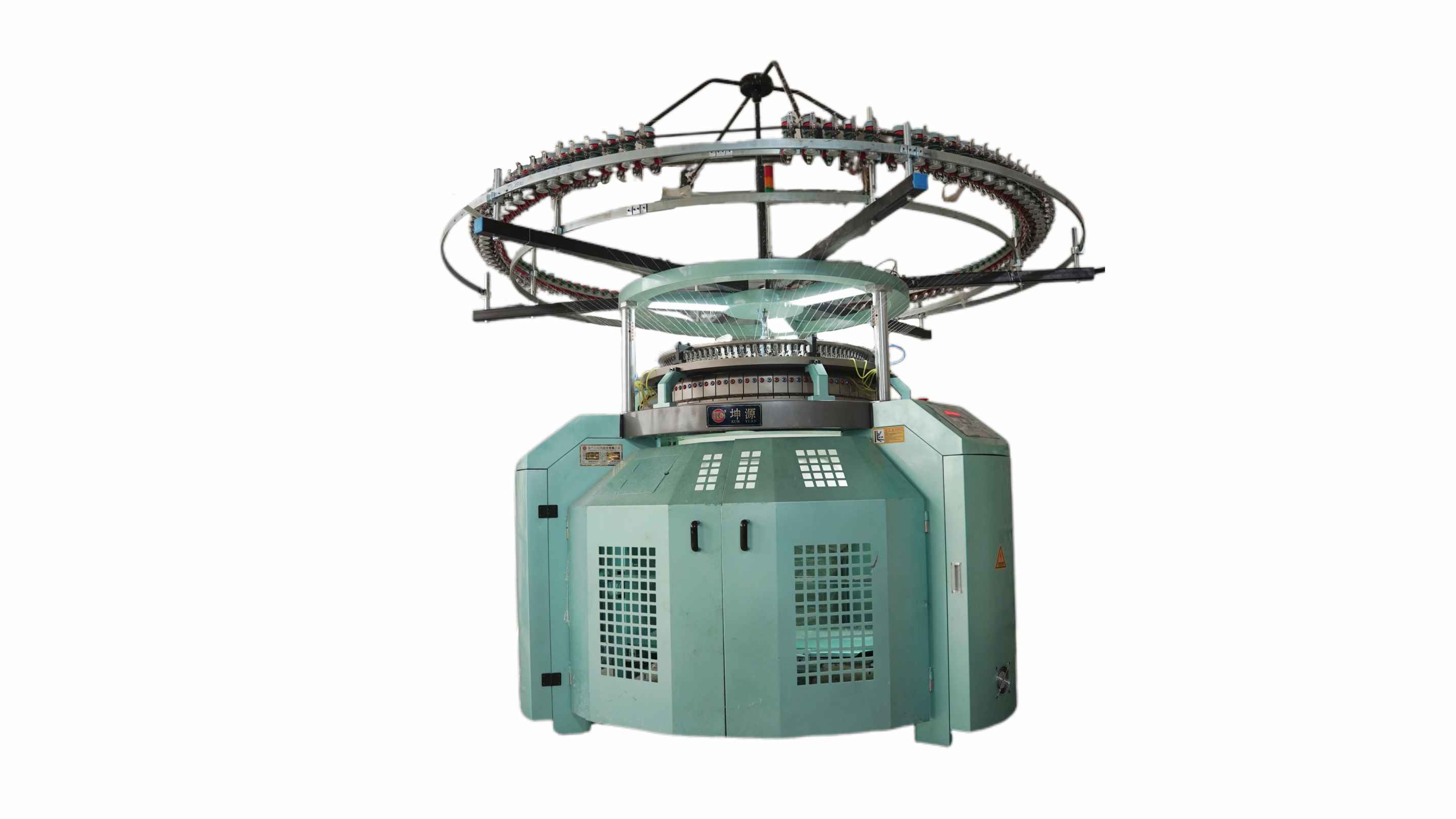
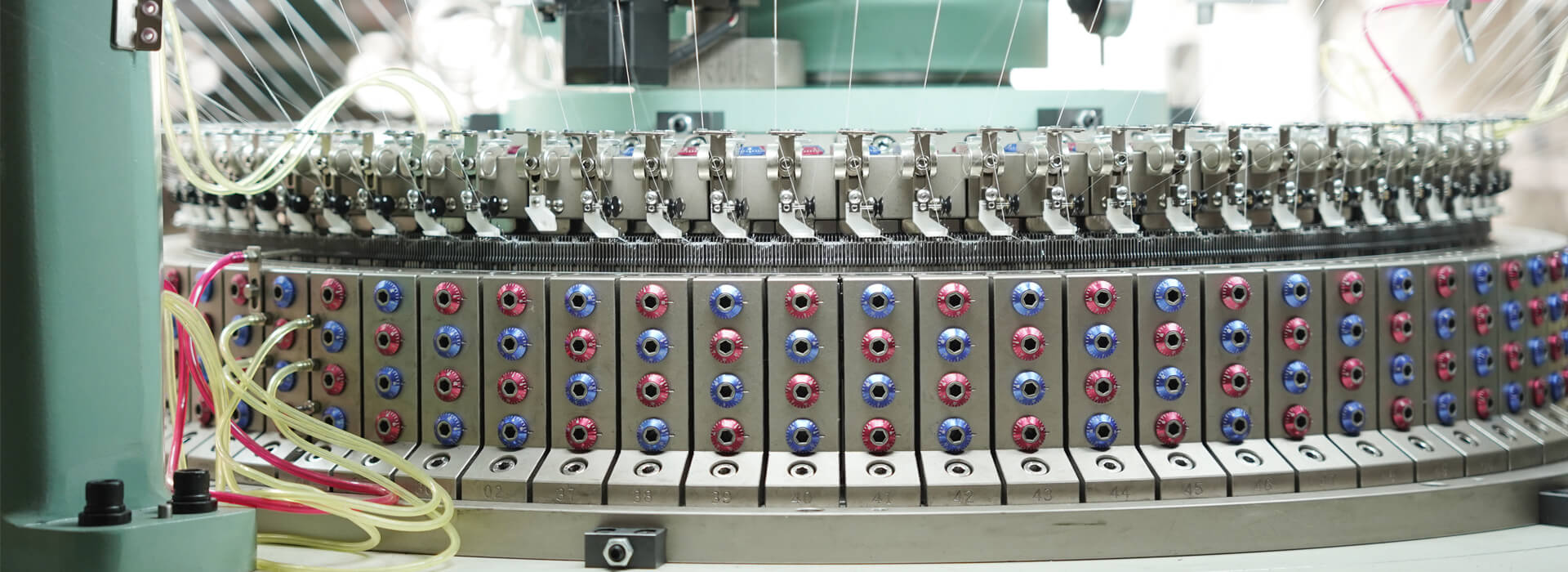
Kunyuan single-jersey machine catalogue view
Existing catalogue image; no stripe-width trial is shown.
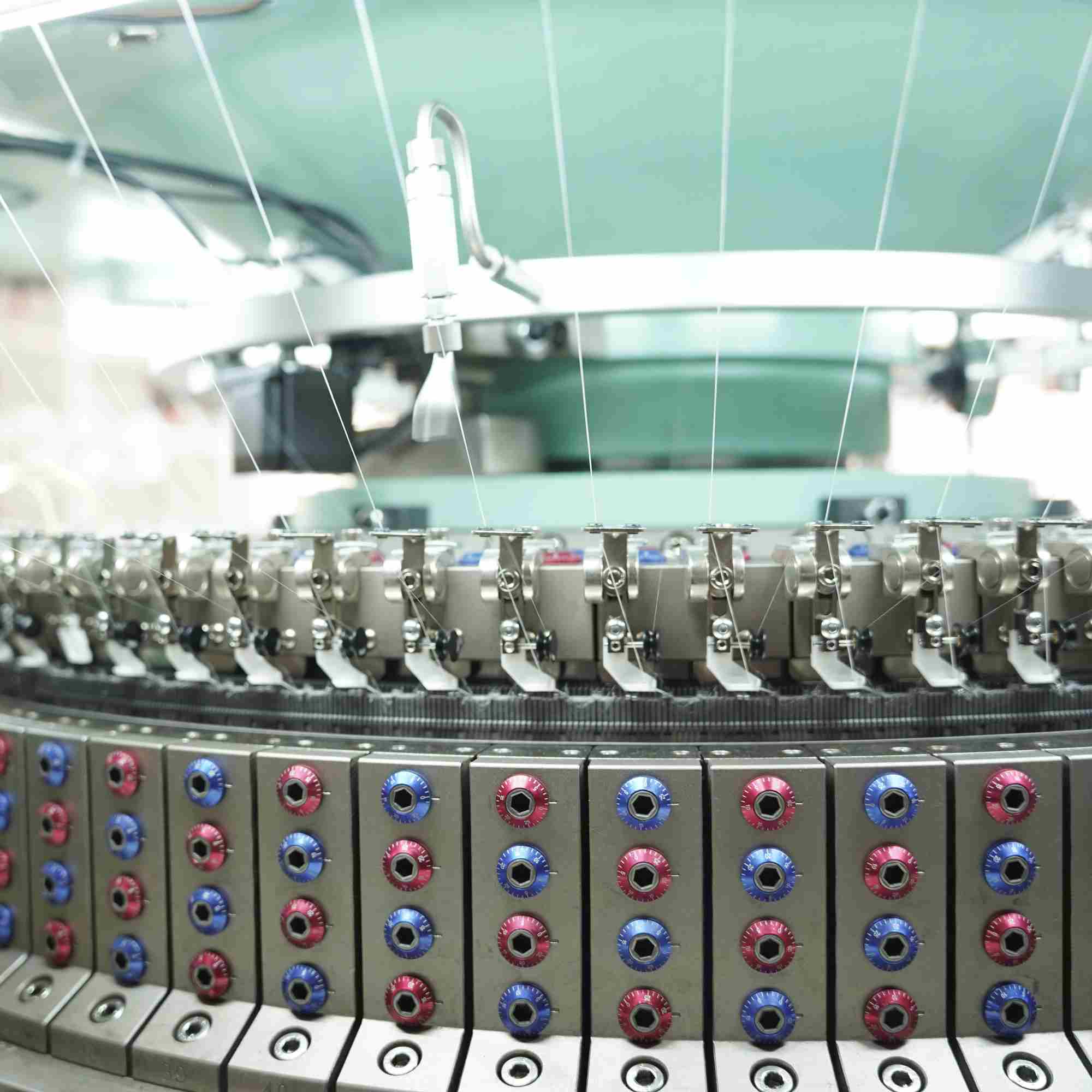
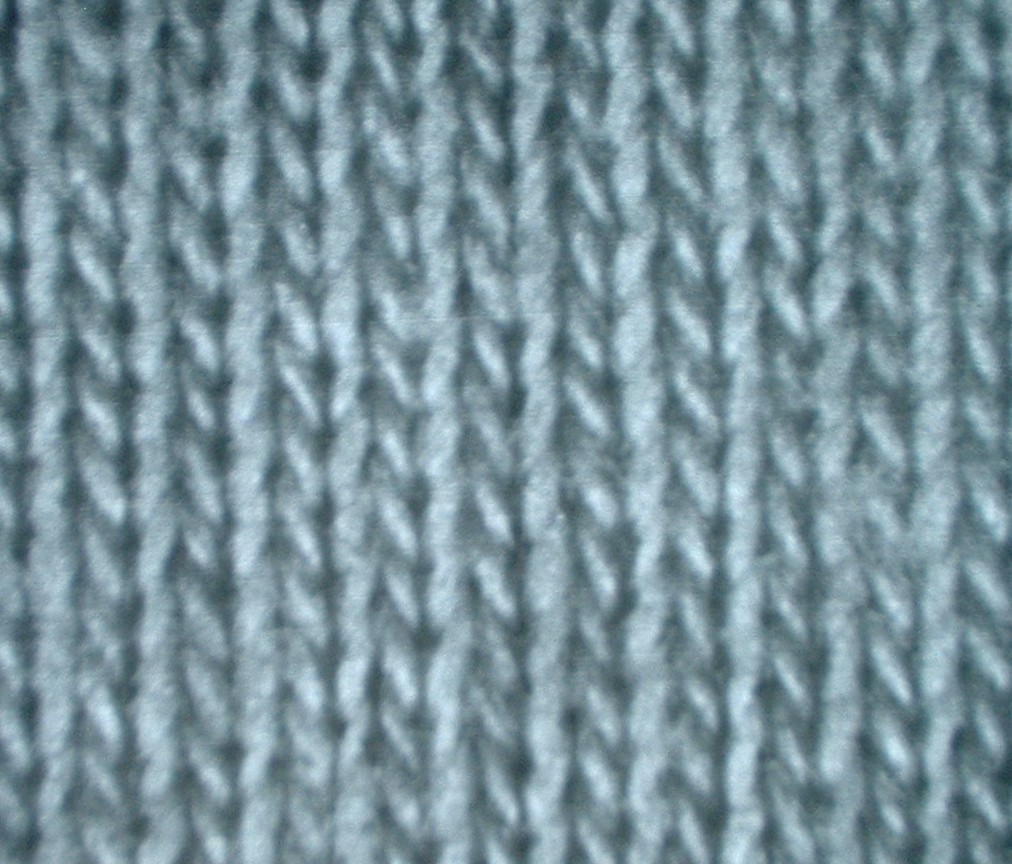
Illustrative plain jersey face with visible loop columns, without stripes or a measurement scale
Plain jersey columns offer a baseline for discussing course density, not a stripe-width measurement. Independent example by Ryj, public domain; not a Kunyuan trial.
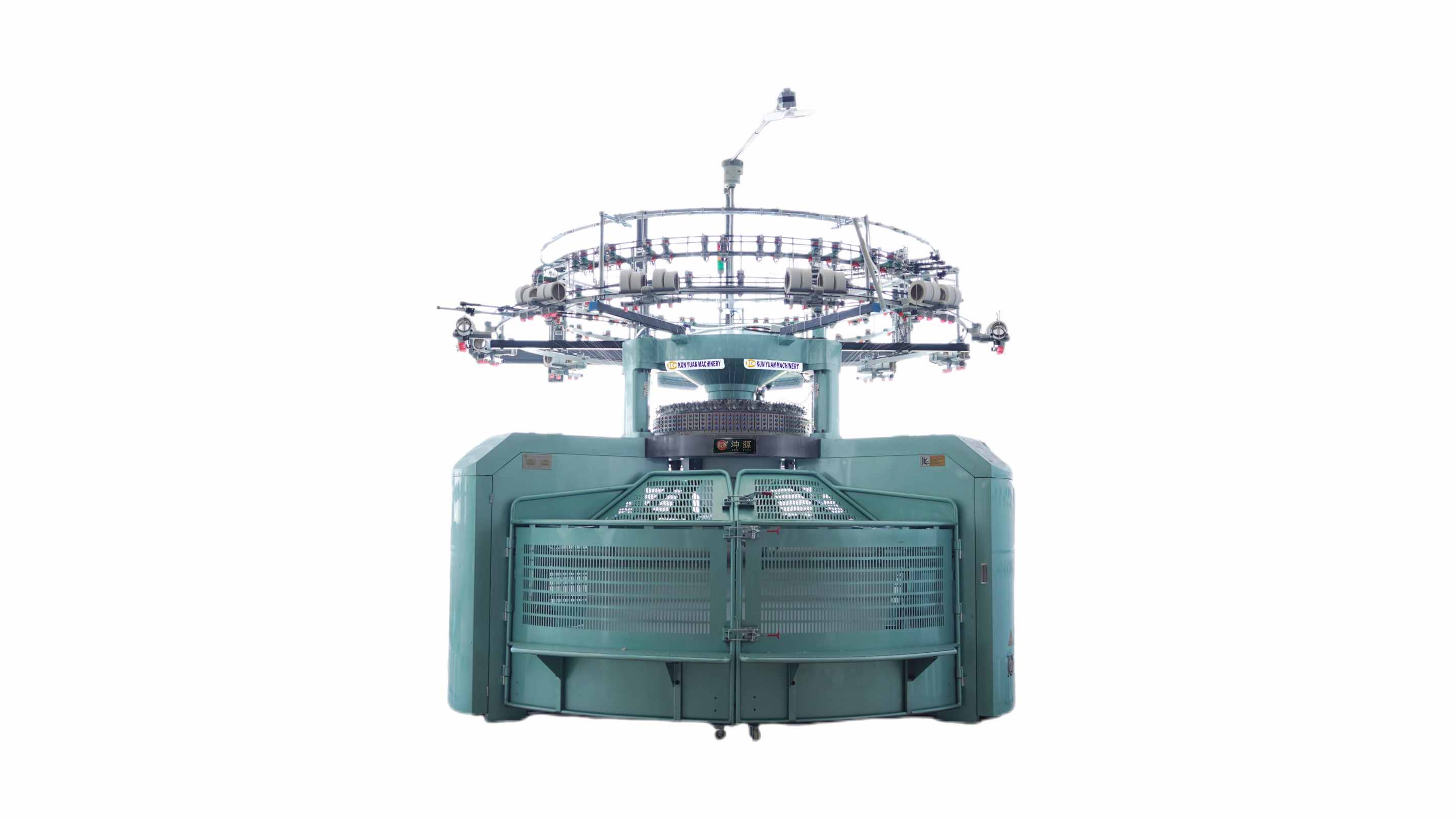
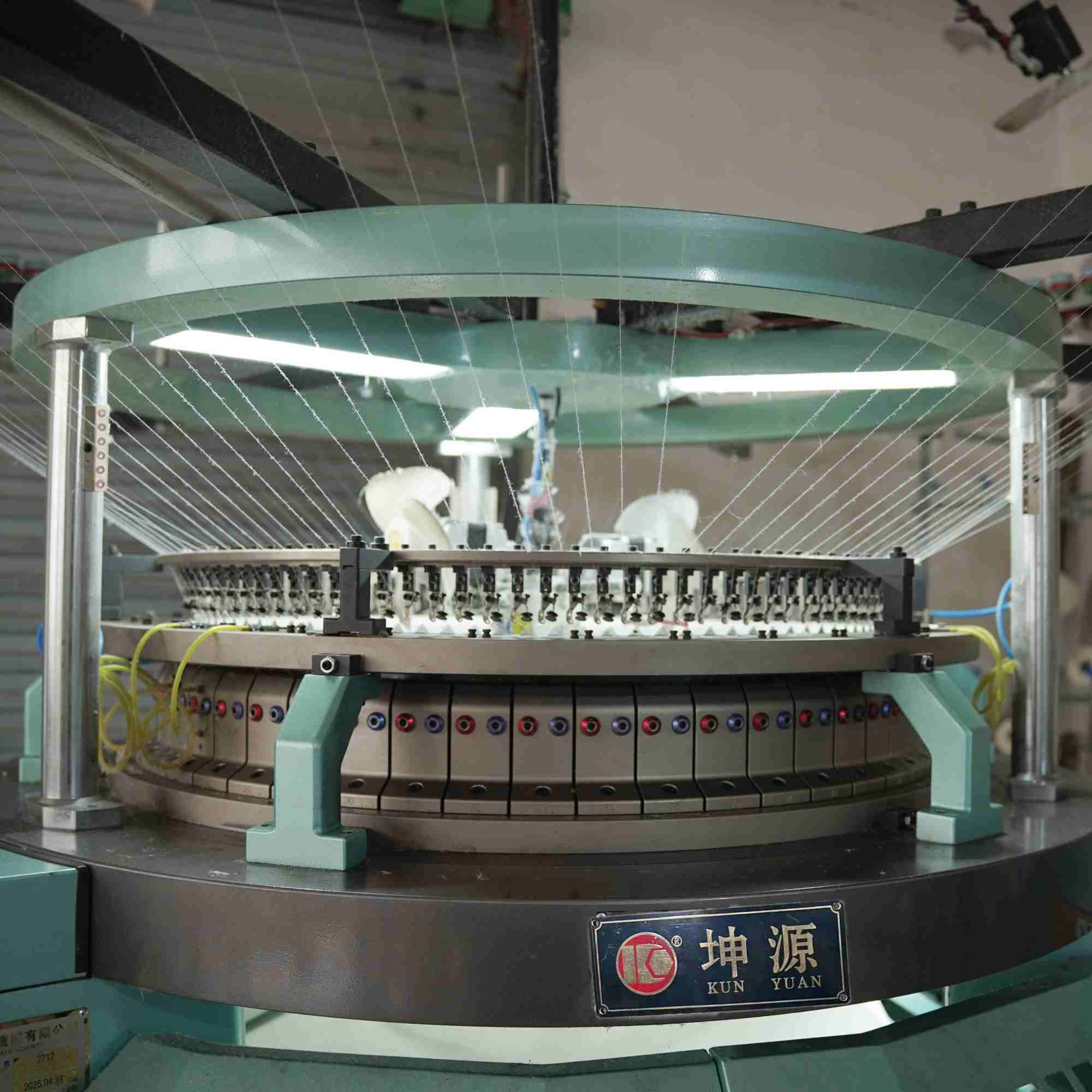
Kunyuan open-width machine catalogue view
Catalogue view only; course-density examples are calculations, not pictured results.

Calculated stripe examples, not production measurements

Finished densityTarget bandChosen coursesPredicted band
20 courses/cm2.00 cm402.00 cm
20 courses/cm1.25 cm251.25 cm
19 courses/cm1.25 cm24About 1.26 cm
Any revised densitySame artworkRecalculateCompare with tolerance

Stripe dimension questions

Can the controller be given a stripe width directly in centimetres?

Some systems may offer design conversions, but their result still depends on fabric density. Establish how the installed controller translates its units into actual courses.

Does more RPM change the programmed stripe width?

RPM alone is not the dimension conversion. If operating conditions change loop formation or finished density, the same course count may occupy a different physical distance.

Should stitch length be changed to fit one accent stripe?

First assess integer-course rounding and the whole fabric brief. Changing stitch length can also affect weight, width and hand, so one stripe should not dictate an unreviewed fabric change.

Why does the washed garment have narrower bands?

A plausible explanation is changed course spacing after care. Compare course counts and dimensions before assigning the cause; this article predicts no shrinkage rate.

What does the Kunyuan catalogue prove about striping?

The cited single-jersey ranges establish base catalogue context. The installed striper, supported colour plan and controller units need separate model-specific confirmation.

Choose courses against the finished stripe

The practical bridge between artwork and auto-striping is finished course density. It lets a buyer understand rounding, complete-repeat balance and care-related dimensional movement. Choose the course plan and finishing route together, so an apparently correct digital repeat becomes the stripe dimension the garment actually needs.

Use the finished stripe calculation when discussing the Single Jersey Circular Knitting Machine range and identify the offered striper and controller conversion separately from the base-machine catalogue ranges.

Stripe geometry defined
Need Help?
Please leave your contact information to get our latest catalog
Get In Touch Now >
Kunyuan Machinery Manufacturer

Tel: +86-13859034518

Email: info@kunyuanmachine.com

MP/WhatsApp: +86-13859034518

Manufacturer Address:Bacuo Village, Yonghe Town, Jinjiang City, Fujian Province

NEW KEYWORD

About Us

Products

Information